Showing posts with label Events. Show all posts

Sunday, June 6, 2021

1969: 20/20 & Isle of Wight

20/20

Brian Wilson at his own Radiant Radish Health Food Store, 1969.

Though the Beach Boys were enjoying their particular success after two successful albums (SMiLE and Wild Honey), things seemed to go sour behind the scenes. Throughout the year of 1968, Brian Wilson conducted the band into a wave of perfectionism, exemplified by the production of Wild Honey. Friend and Three Dog Night singer Danny Hutton recalled that Brian expressed suicidal wishes at the time. Afterward, Brian was admitted to a psychiatric hospital by his own volition, while the band started to record their fourteenth album with his absence.

During the recording sessions, Dennis Wilson befriended the ex-convict Charles Manson, both interested in Charles' musical talent and ambitions, and engaged to sign Manson into the Brother Records. In the same period of the sessions for 20/20, Carl and Dennis Wilson produced some of Charles Manson's tracks, with the tapes remaining unreleased, although producer Phil Kaufmann wanted to release them (instead, releasing previous versions in two albums). The Beach Boys recorded a version of Manson's song "Cease to Exist", as an altered version renamed to "Never Learnt Not to Love". Manson exchanged his writing credit for a sum of cash and a motorcycle.

Some tracks of the album were recorded previously, as Bluebirds over the Mountain is a cover produced in 1967 by Bruce Johnston. Time to Get Alone was written and produced by Brian for the group Redwood between the early sessions of Wild Honey. "Never Learnt Not to Love" was considered to be included in the album, but the idea was protested by Mike Love and Bruce Johnston. The band continued to record in 1969, with the sessions finished in March 1969, after a session for "Break Away".
"I knew from the start that we were going nowhere with that album. For sure it was our lowest point in the 60s, with Brian most of the time going to the hospital. We were afraid that we would step into the 70s behind everybody. And I think that if we had put that burglar's song [referring to Charles Manson and Never Learnt Not to Love], that would've tarnished with our reputation even more."
-Mike Love, 2014
20/20
 The Beach Boys - 20/20 (1969)
Genre: Rock, folk rock, psychedelic pop
Total: 42:10

Side A - 21:07
1. "Break Away" (B. Wilson, Murry Wilson) - 2:57
2. "Do It Again" (Brian Wilson, Mike Love) - 2:25
3. "Loop de Loop (Flip Flop Flyin' in an Aeroplane)" (B. Wilson, C. Wilson, Al Jardine) - 2:56
4. "I Can Hear Music" (Jeff Barry, Ellie Greenwich, Phil Spector) - 2:36
5. "Bluebirds over the Mountain" (Ersel Hickey) - 2:51
6. "We're Together Again" (Ron Wilson) - 1:49
7. "When Girls Get Together" (B. Wilson, Love) - 3:31
8. "All I Want to Do" (D. Wilson, Stephen Kalinich) - 2:02

Side B - 21:03
9. "I Went to Sleep" (B. Wilson, Carl Wilson) - 1:36
10. "Time to Get Alone" (B. Wilson) - 2:40
11. "Celebrate the News" (D. Wilson) - 3:05
12. "The Nearest Faraway Place" (Bruce Johnston) - 2:39
13. "Old Folks at Home/Ol' Man River" (Stephen Foster, Jerome Kern, Oscar Hammerstein II) - 2:52
14. "Be With Me" (Dennis Wilson) - 3:08
15. "Cool, Cool Water" (B. Wilson) - 5:03

20/20 is the fourteenth studio album by The Beach Boys, released on 23 April 1969 by Brother Records and distributed by Capitol. Brian, Carl, Dennis Wilson, Al Jardine, and Bruce Johnston received the credit of producers. The album is noted primarily by the background since it was mostly produced during Brian Wilson's absence and the presence of Charles Manson during the recording sessions.

Part of the songs shows a rapprochement of the band to the surf music, mostly shown in the opening track, "Do It Again" and "All I Want to Do". Many other songs were recycled from previous sessions of Wild Honey, such as "Bluebirds Over the Moutain" and "Time to Get Alone". Other tracks were composed by Brian before his admission to a psychiatric hospital. "Cool, Cool Water" was derived from the sessions of Smiley Smile, most precisely the track "In Blue Hawaii".

In the same sessions, Carl and Dennis Wilson co-produced a few songs by Charles Manson, which remain unreleased. A cover version of "Cease to Exist" was recorded by Dennis Wilson and released as B-side of "Bluebirds Over the Mountain", and was discarded as a song to be included in the album.

The record is generally considered a question mark in the so-called Golden Age, mostly being overshadowed by the successful releases by its side (Pet Sounds, Smile, Wild Honey and Landlocked), and their lowest-selling record in the 60s. 20/20 received mixed reviews and peaked in number 21 on Billboard and number 3 on the UK Album Charts. Break Away, Do It Again and All I Want to Do were released as singles, with Break Away becoming a song played by radio stations of the present.

Isle of Wight

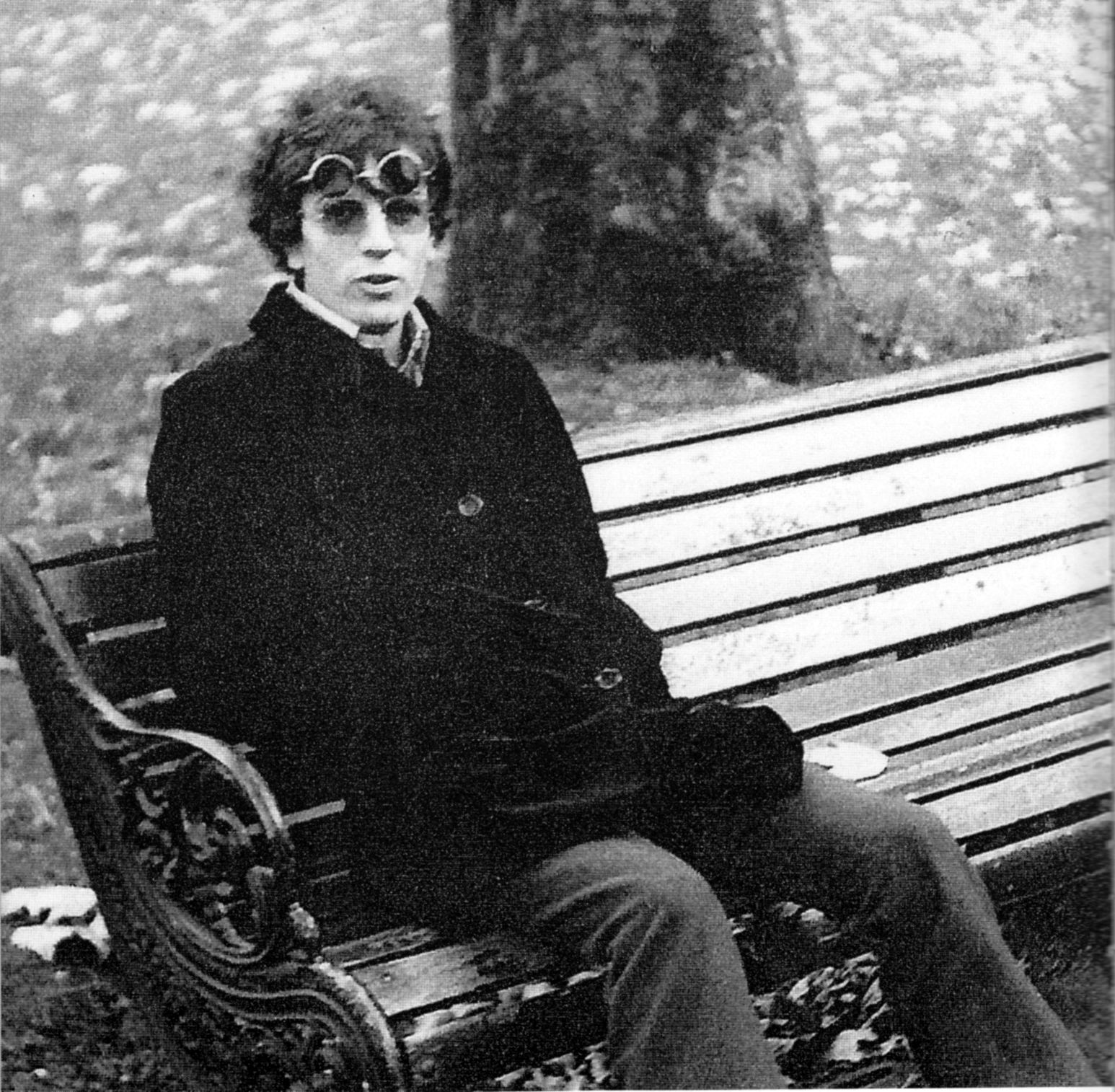
Syd Barrett (right) along with the audience at the Isle of Wight, 1969.

The festival was held a few weeks after Woodstock. The Blackhill artists that performed in the festival were Pink Floyd Sound, David Bowie, Syd Barrett, and Tailboard. Pink Floyd Sound performed the setlist from the upcoming tour, Tailboard performed their Woodstock set, while Syd Barrett, supported by Tailboard, performed his own setlist. Other artists that performed in the festival were the Edgar Broughton Band, The Pretty Things, Greasy Asylum, The Who, the headlining acts Bob Dylan & The Band, and many others.
"I consider the Isle of Wight as the starting point of our tour with Syd and Tailboard. We all performed, in a nice atmosphere, in almost the same way that we did in the rest of the tour. Even Syd preferred to go along with the people instead of the VIP zone, I recall seeing him from the stage when we were performing."
-Roger Waters, 1994
Syd Barrett was the first one in Blackhill Records to perform after the Bonzo Dog Band, on Saturday 30. Pink Floyd Sound would perform later in the night before Blonde on Blonde. David Bowie performed on Sunday 31 after Ritchie Havens, while Tailboard performed after Liverpool Scene. The Greasy Asylum performed before Syd Barrett. Bob Dylan & The Band were the first ones to perform on Sunday.

Syd Barrett performing at the Isle of Wight Festival.

Syd Barrett appeared around 3p.m. on stage supported by Tailboard and keyboardist Dave Stewart. Syd's setlist was divided between three sets, an electric set, consisting of psychedelic-driven songs, including a medley; an acoustic set consisting of an unreleased song, Milky Way, and his most folk-oriented songs, and the pop set with his most popular songs at the time.

Syd's performance received generally positive reviews, pointing an interesting plan by dividing the songs into three acts. Standout moments of Syd's show were the medley, the 10-minute rendition of Arnold Layne, and the singalong The Bike Song when Syd performed the song along with the audience. Fellow music partner Kevin Ayers wrote The Hat Song inspired by the moment.
"When Syd played that last song, I was at the VIP zone, watching how he was a wonderful conducer of the audience. That last song blew up my mind completely, and when I arrived home I immediately wrote The Hat Song, as a way to be more... interactive with the public. That song actually helped me in the early months without Daevid, when I 'assumed the office' of interact with the fans."
-Kevin Ayers, 2007 

Syd Barrett, Live at the Isle of Wight Festival, August 30th, 1969
Setlist
All tracks written by Syd Barrett, except when noted.

Electric set
1. "Medley: Scream Thy Last Scream/Let's Roll Another One/Vegetable Man/Lucifer Sam"
2. "Interstellar Overdrive" (Syd Barrett, Vincent Crane, Rick Wills, Willie Wilson)
3. "Clowns and Jugglers"
4. "Here I Go"
5. "Astronomy Domine"

Acoustic set
6. "Milky Way"
7. "The Gnome"
8. "Silas Lang (Swan Lee)"
9. "Golden Hair/Terrapin" (Barrett, James Joyce/Barrett)
10. "Jugband Blues"

Pop set
11. "Apples and Oranges"
12. "Arnold Layne" (Barrett, David Bowie)
13. "See Emily Play" (Barrett, Bowie)
14. "Late Night"
15. "The Bike Song"

David Bowie also performing at the Isle of Wight Festival.

David Bowie arrived on the early night of Friday 29, with the same band that performed with him in the studios. There, he stayed in a hotel paid by the Blackhill Enterprises, where also were most of the artists of the company. He also met his fellow and former bandmate Syd for the first time after several months with a few or no contact at all.
"Well, I arrived in the evening of Friday, and there wasn't a lot to do besides to talk to everyone there at the hotel. It was a wonderful time, finally I met Syd again and we chatted about our experiences in solo, and we seemed in the same level at the time. Everyone threw a party in that day, I almost missed the ride to the festival. *laughs*
At the same time I see some people speculating that Syd and I would appear together, even Edgar [Broughton] asked me about that. I'm not gonna lie that I wanted to do it, but Syd wasn't very fond of this, so we abandoned the idea."
-David Bowie, 2000
"Actually Bowie and I performed at the party in the hotel, the night before the Festival. Everything was improvised, we weren't that serious. If I recall, we just covered some blues tunes, and played Space Oddity, and that's really everything we played there, it was quite fun."
-Syd Barrett, 1984
Bowie's catalogue was slightly shorter than Syd's, containing a mix of songs from the Rubber Band era, Cygnet Committee, the upcoming album, An Occasional Dream, and a cover rendition of Lou Reed's I'm Waiting For The Man. Afterwards, the performance of David Bowie was generally approved and described as creative and whimsical. Highlights from Bowie's presentation were Space Oddity, the cover version of I'm Waiting For The Man and See Emily Play, which was also performed by Syd one day earlier.

David Bowie, Live at the Isle of Wight Festival, August 31st, 1969
Setlist
All tracks written by David Bowie, except when noted.
1. "Space Oddity"
2. "Love You 'till Tuesday" (Syd Barrett, David Bowie)
3. "Did You Ever Have a Dream"
4. "When I Live My Dream"
5. "Rubber Band's Theme" (Barrett, Bowie)
6. "Sell Me a Coat"
7. "Lover to the Dawn"
8. "Wild Eyed Boy from Freecloud"
9. "In the Heat of the Morning"

Encore
10. "I'm Waiting For the Man" (Lou Reed)
11. "You've Got a Habit of Leaving"
12. "See Emily Play" (Barrett, Bowie)
13. "Memory of a Free Festival"

Author's comment:
And with the festivities of the Isle of Wight, we finally finish the 1960s... again.
As I said previously, there are still some bands that happen to enter in the seventies, and I need to give a bit of the context of what's going to happen before we dig into the '70s. Anyway, I hope you like this return (of what I hope that is a return again indeed, lol).

And, at last, I hope you like it, and see you in the next post! :)

Friday, June 4, 2021

1969: Woodstock

Regarding Woodstock...

Yes, Woodstock is here too! 1969.

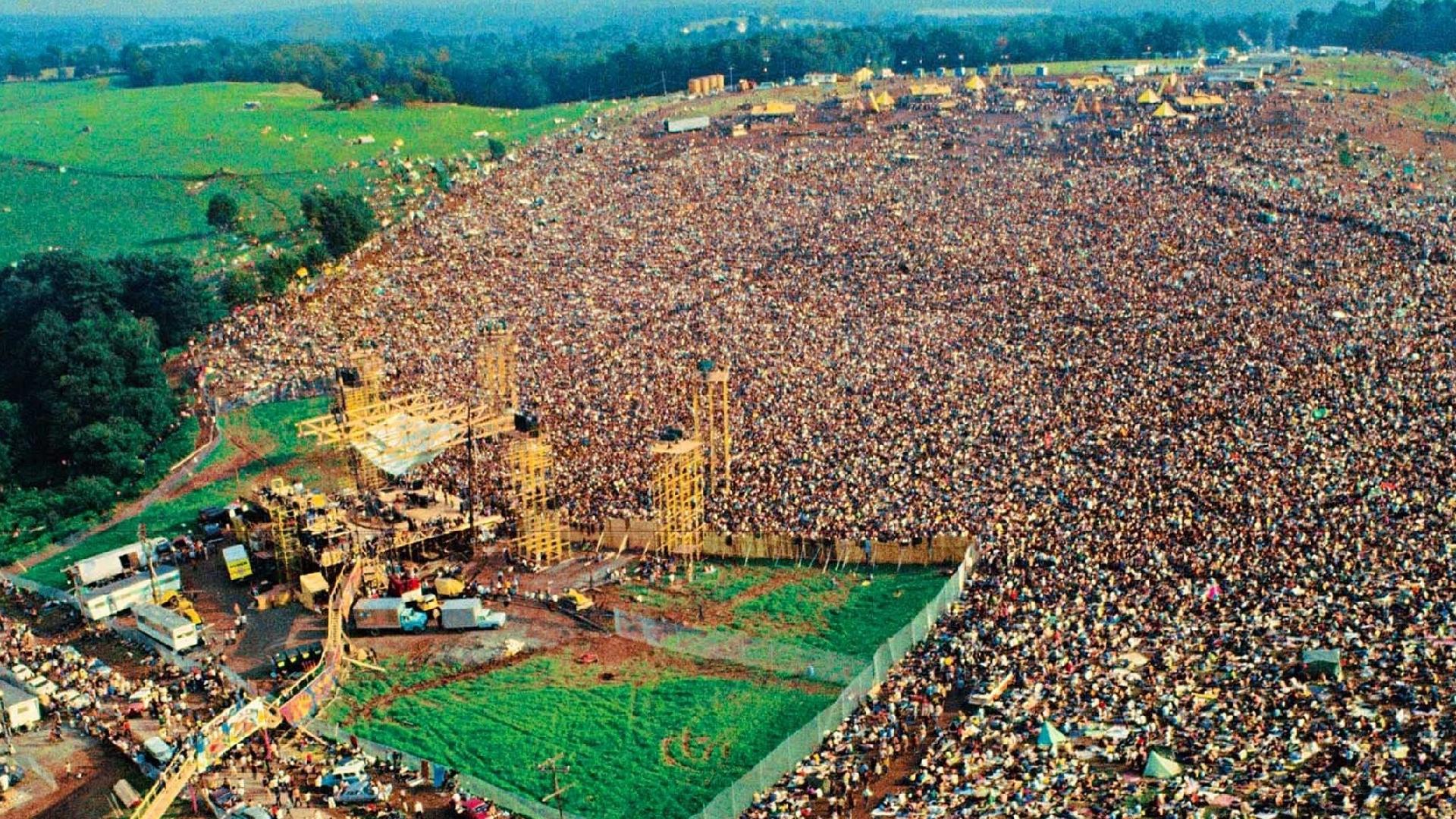
For Blackhill, August of 1969 was certainly a month of defining events. From the tour including Pink Floyd Sound, Syd Barrett, and Tailboard, which carried to the eventual crisis in the company during the 70s, to the Woodstock and Isle of Wight Festivals for promoting the artists, certainly, August 1969 was the month that transformed the company into a gateway between the underground and the mainstream.

Right before the Pink Floyd Sound/Syd Barrett/Tailboard tour begun, Blackhill negotiated some of their artists to perform in the Woodstock Festival, as did with the Isle of Wight. "The negotiations with... the Foulk Brothers were far more organized than the Woodstock one. I really can barely say if there was any negotiation with the Woodstock organizers since everything seemed so improvised.", Keith Noble.

In the end, Soft Machine, Edgar Broughton Band, Tailboard, and initially, Syd Barrett agreed to perform (declining to perform one day before the concert). David Bowie declined the idea since he was working on his upcoming album as did Pink Floyd Sound (although both performed later on the Isle of Wight Festival).
"Well, I was up to perform in the Isle of Wight, and I was preparing myself for the tour with the Floyd, and then, two weeks before, Drew [Andrew King] asked if I was going to perform in the Woodstock Festival and I agreed with that. I was scheduled for Sunday, so I had a good ammount of time to think about that decision, even if I was in NY at the time *laughs*. And honestly, until today I feel pity for Kevin and Robert, they didn't like large audiences and had to deal with a shit-ton of people. Actually, they influenced me to decline to perform. Tailboard seemed chilled about that, though."
 -Syd Barrett, 1984
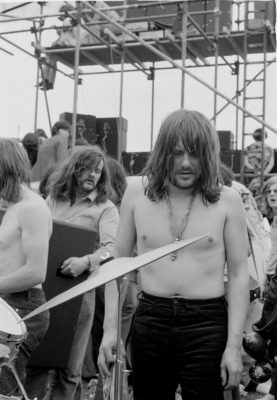
Robert Wyatt leaving the stage in Woodstock.

Soft Machine was billed for the Saturday, right after Santana. When the band first arrived on stage, it was noticed a massive amount of people cheering the newcomers, shocking Kevin Ayers. "So, I didn't know about the audience until we went to the festival... When we were backstage, Robert just said to me to not see the outside, otherwise, I was going to panic. He was quite right, I panicked. But Daevid [Allen] handled the entire thing, so I chilled out a little bit.", said Ayers.

The performance of Soft Machine ended up being shorter, rearranging the setlist right on stage. The band decided to focus on Daevid's songs and instrumentals, including songs that weren't released at the time, such as Esther's Nose Job and Lunatics Lament. After the performance, Soft Machine attended a meeting with Jimi Hendrix back in New York, and then returned to England.

Tailboard's Woodstock was... different. The group was recently formed, and Woodstock was their first relevant performance, although, the band was billed to perform right after Crosby, Stills, Nash & Young. The group performed their entire (then unreleased) album, plus A Summer Song. According to the frontman Keith Noble, the crowd was very receptive to the band, even though it was 5 a.m. when they arrived on stage. In backstage, the band talked with CSN&Y, and the jazz group, Blood, Sweat & Tears. Tailboard would return to England on Wednesday.

Joe Cocker playing his well-known "air guitar" on stage.

Greasy Asylum was billed as the first band to perform on the daytime Sunday, arriving on stage 2:00 p.m. and performing throughout one and a half hours a big set consisting of tracks from Look Inside the Greasy Asylum and Delta Lady, two medleys and cover renditions of Joe Cocker and Leon Russell. The performance of Greasy Asylum is considered by many as one of the highlights of the festival, along with Jimi Hendrix, Creedence Clearwater Revival, and many others.

A few days ago, Delta Lady was released as the second Greasy Asylum's studio album by Shelter Records and distributed by Blue Thumb Records in the United States, as a way intended to promote the band with the Woodstock Festival. The strategy was effective since Delta Lady managed to be ranging between positions 43 and 45 for three months on Billboard. "It was Blue Thumb's idea, not ours. We've just agreed since we had a contract.", Leon Russell.

The Woodstock Festival served as a stair to bands such as the Greasy Asylum, becoming one of their most remarkable shows. Even though members expressed bitter feelings towards the audience, it was a consensus that the performance was pretty enjoyable to everyone, despite Cocker's reluctance to venture again after that year. "As I said, 1968 and '69 were pretty intense, but Woodstock was like an eclipse ... it was a very special day.", Joe Cocker.

Soft Machine, Live in Woodstock, August 15th, 1969
Setlist
1. "Memories" (Hugh Hopper)
2. "Hope for Happiness" (Kevin Ayers, Ratledge, Brian Hopper)
3. "You Don't Remember" (Daevid Allen, Robert Wyatt)
4. "I Should've Known" (Ayers, Ratledge, Wyatt, Allen, H. Hopper)
5. "5 and 20 Schoolgirls" (Allen)
6. "A Certain Kind" (H. Hopper) [sung by Daevid Allen]
7. "We Did It Again" (Ayers)
8. "Gong Song" (Allen)
9. "Esther's Nose Job" (Ratledge, Wyatt, H. Hopper)
10. "Lunatics Lament" (Ayers, Allen)
11. "Rational Anthem" (Allen)
12. "Magick Brother" (Allen)
13. "Why Are We Sleeping/Once I Awakened" (Ayers) [sung by Kevin Ayers and Daevid Allen]
14. "Singing a Song in the Morning" (Ayers)

Greasy Asylum, Live in Woodstock, August 17th, 1969
Setlist
1. "Dear Landlord" (Bob Dylan) [JC]
2. "Something's Coming On" (Joe Cocker, Chris Stainton) [JC]
3. "Delta Lady" (Leon Russell) [JC/LR]
4. "Feelin' Alright" (Dave Mason) [JC]
5. "Crystal Closet Queen" (Russell) [LR]
6. "Let's Go Get Stoned" (Nickolas Ashford, Valerie Simpson) [JC]
7. "Dixie Lullaby" (Russell, Stainton) [LR]
8. "Medley: Jumpin' Jack Flash/Young Blood" (Mick Jagger, Keith Richards, Jerry Leiber, Mike Stoller, Doc Pomus) [JC/LR]
9. "Hitchcock Railway" (Don Dunn, Tony McCashen) [JC]
10. "Something to Say" (Cocker, Peter Nichols) [JC]
11. "Medley: Of Thee I Sing/Yes I Am" (Don Preston, Russell) [LR]
12. "With a Little Help from My Friends" (John Lennon, Paul McCartney) [JC]
[JC] = Joe Cocker
[LR] = Leon Russell 

Tailboard, Live in Woodstock, August 18th, 1969
Setlist
All tracks composed and performed by Keith Noble, except when noted.
1. "Mr. Compromise"
2. "Narcissus"
3. "Secretary Jane"
4. "Red-Current Tide"
5. "Up and Down Way (of It All)"
6. "Only When I Laugh"
7. "Dandelions Have Their Day"
8. "Weather"
9. "King of the Icemen"
10. "Ashes and Silver"
11. "A Summer Song" (Keith Noble, David Stuart)

Friday, May 28, 2021

1968: Records and Festivals

More beautiful than a dustbin

Soft Machine performing at the Ce Soir On Danse, 1968.


David Bowie during a photo session.

Despite not performing in Britain for a while, this was an opportunity to Soft Machine as the opening act for Jimi Hendrix Experience to promote the band, which was receiving attention in Europe. During the break of the tour, the Soft Machine booked sessions throughout April 1968 at the Record Plant in New York to record their first full-length album. The band was helped by Chas Chandler, in charge of production, and Brian Hopper, who was assistant producer and arranger.

At the same time, David Bowie was also recording his debut solo album in the same place in which the band was recording their album. Bowie was finishing a portion of his record since he was there since February 1968, while the band just started to re-record demos which were done during the sessions of Shooting at the Moon and record new stuff which was played during the tour in the US.
"So we were chatting at the studio when Kevin saw that bowl-haired, skinny picture walking around the studio, and that was when we surprisingly met Bowie, who was also recording his album there. We actually hadn't that kind of friendship until that moment, he looked very shy, but excited to meet us, and I can't say that I didn't feel the same for him. *laughs*"
-Robert Wyatt, 2006
"Me and the folks from Soft Machine almost went bankrupt at that time *laughs*. We hanged out almost every day in NY, it was a fun moment until I had to return to London to finish some stuff for my album. It was during the sessions of Cygnet Committee when I developed Lover to the Dawn, and part of the concept of the album. It was a hidden story inside the album, virtually, which came at the last moment."
-David Bowie, 2001
The Soft Machine recorded the album in one month. The title track, Hope for Happiness, along with the Side B was recorded in one take, while Why Are We Sleeping? received overdubs, such as the backing vocals in the chorus. After the sessions, the band left the mixing part with Chas Chandler and Brian Hopper, mixed at the Olympic Studios.

Hope for Happiness was announced by Blackhill Records and quite promoted in magazines and newspapers. A Certain Kind was released as the promotional single for the album, backed by Priscilla. The single became a hit in the United Kingdom and France, topping in the French Single Charts while it peaked in number 6 in Britain. In 2017, singer-songwriter Weyes Blood would release a cover version of the song.
"It was not our best, but it was a satisfying work, though. It's quite strange to see the evolution from that extended play to our debut album, we really looked to ourselves as professionals."
 -Daevid Allen, 2005
As for David Bowie, he still proceeded to record the album back in London with producer Tony Visconti, as suggested by Marc Bolan. Lover to the Dawn was a sort-of whimsical song besides the others, a trigger into Bowie's mind to shift his thoughts towards the album. Bowie worked on the track for one week, recording sixteen takes. The new name of the album, Cygnet Committee, was related to the track, to the revolutionaries and the committee which was formed afterward.

The album was announced with certain anticipation as Cygnet Committee. In the Heat of the Morning was the lead single, receiving good reviews in general, which appointed several similarities with the Bee Gees work. The single was backed by a version of Life is a Circus, by Roger Bunn. In the Heat of the Morning peaked in number 12 in Britain, while it failed to chart in the US, and peaked in number 46 in West Germany.

Soft Machine – Hope for Happiness
Soft Machine - Hope for Happiness (1968)
Genre: Canterbury scene, psychedelic jazz, acid rock, freakbeat
Total: 41:59

Side A - 23:39
1. "Box 25/4 Lid" (Mike Ratledge, Hugh Hopper) - 0:49
2. "Hope for Happiness" (Kevin Ayers, Ratledge, Brian Hopper) - 8:49
3. "You Don't Remember" (Daevid Allen, Robert Wyatt) - 3:42
4. "I'd Rather Be With You" (Ayers) - 3:38
5. "She's Gone" (Ayers) - 2:28
6. "A Certain Kind" (H. Hopper) - 4:13

Side B - 18:20
7. "Save Yourself" (Wyatt) - 2:26
8. "Priscilla" (Ayers, Ratledge, Wyatt, Allen) - 1:03
9. "Lullabye Letter" (Ayers) - 4:32
10. "We Did It Again" (Ayers) - 3:46
11. "Plus Belle qu'une Poubelle" (Ayers) - 1:03
12. "Why Are We Sleeping?" (Ayers, Ratledge, Wyatt, Allen) - 5:30

Hope for Happiness is the debut, full-length studio album by the Canterbury scene band Soft Machine. The record was recorded in April 1968 at the Record Plant Studios in New York, produced by Chas Chandler and Brian Hopper, and released by Blackhill Records in the United Kingdom on 29 June 1968, and by CBS in the United States on 01 August 1968. The album was recorded during the "period-on-exile" by the band since lead guitarist Daevid Allen couldn't enter the United Kingdom for a year.

Soft Machine's record is characterized by long and extended jams (such as the title track and the entire second side), pop, love, and beat-oriented songs, and its whimsical lyrics, mostly by Kevin Ayers, who co-wrote 8 out of 12 tracks. A Certain Kind, the lead single, was a hit in the United Kingdom, France, and parts of Europe, while the second single, Why Are We Sleeping?, was more successful in the United States, but essentially in the West Coast, in San Francisco.

The album was commercially successful, reaching number 4 in the UK Album Charts, topping in France, and peaking in number 79 in the Billboard Top LP's & Records. In later years, Hope for Happiness gained a status as a cult favorite. It is regularly reissued with the Shooting at the Moon EP.

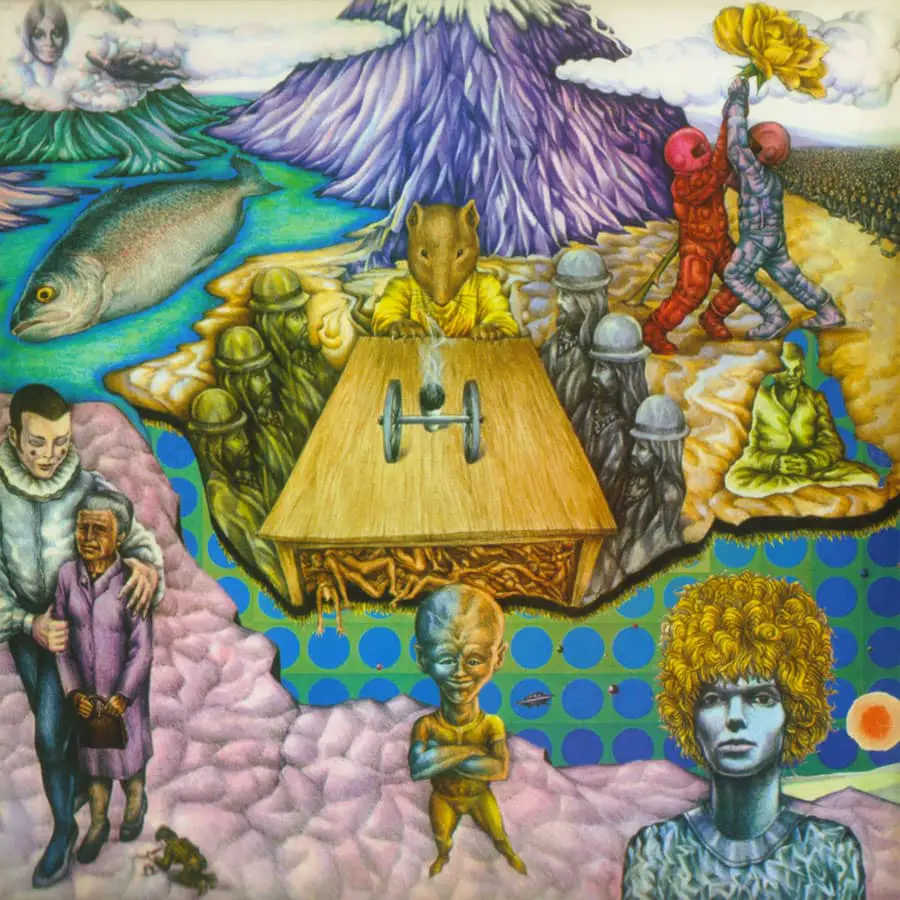
David Bowie – Cygnet Committee
David Bowie - Cygnet Committee (1968)
Genre: Progressive folk, baroque pop, psychedelic rock
Total: 39:45

Side A - 20:52
1. "Uncle Arthur" - 2:07
2. "She's Got Medals" - 2:23
3. "Come and Buy My Toys" - 2:07
4. "Maid of Bond Street" - 1:43
5. "We Are Hungry Men" - 2:59
6. "Lover to the Dawn" - 9:33

Side B - 18:53
7. "Let Me Sleep Beside You" - 3:20
8. "The Gospel According to Tony Day" - 2:46
9. "Little Bombardier" - 3:23
10. "Did You Ever Have a Dream" - 2:05
11. "Karma Man" - 3:03
12. "In the Heat of the Morning" - 4:16

Cygnet Committee is the debut solo album by David Bowie after the break-up of Rubber Band. The album was recorded at the Record Plant Studios in New York between February and April 1968, and at the Trident Studios in London between May and June. The album was produced by Mike Vernon and Tony Visconti and released by Blackhill Records on 27 September 1968 in Britain and on 29 September in the US. The album, along with Space Oddity, is considered a part of the transition of Bowie to the Art rock and Glam rock influences.

According to Bowie, Cygnet Committee has a hidden concept, which is more noticeable on We Are Hungry Men and Lover to the Dawn. Themes of the album focuses around loneliness, anti-war music, dystopian themes, day by day issues and social concerns. By most of the musicologists, Cygnet Committee is the start of a story hidden in a portion of Bowie's records, such as Space Oddity, The Man Who Sold the World, even Ziggy Stardust and Diamond Dogs.

The record was very successful, receiving generally positive reviews by the critics. It peaked in number 3 in Britain, and number 102 in Billboard. In the Heat of the Morning was released as single. In an analysis, the contrast between Bowie's Cygnet Committee, Bolan's Beyond the Rising Sun or the Beginning of Doves, and Syd Barrett's Rooftop in a Thunderstorm Row Missing the Point was evident, since while Bowie shifted towards an art-oriented direction, Syd preferred to move into an experimental verge on his career, and Bolan pursued a more psychedelic folk-sound.

Hyde Park - June 29th, 1968

The Fleetwood Mac performing at the Hyde Park Festival, June 29th, 1968.

In 1968, the Blackhill Enterprises held the first music festival at Hyde Park, between 27 and 30 June of that year. Famous artists and bands in Britain and some American ones were invited to perform at the festival. It was opened by directors Andrew King and Peter Jenner, and following them, Jethro Tull was the first band to perform at the festival.

Pink Floyd


Pink Floyd at Hyde Park, 1968.

Pink Floyd first appeared on stage on the night of June 28th, around 7PM. The group performed Keep Smiling People entirely and performed four more songs from the previous album as the encore. Live footage was shortly recorded from songs such as Careful With That Axe, Eugene, and The Massed Gadgets of Hercules. Bootlegs are widely available, but Pink Floyd released an official recording in the boxset of The Early Years.

Setlist
Keep Smiling People
1. "Let There Be More Light" (Roger Waters)
2. "See-Saw" (Richard Wright)
3. "Careful With That Axe, Eugene" (Waters, Wright, David Gilmour, Nick Mason)
4. "Corporal Clegg" (Waters)
5. "Julia Dream" (Waters)
6. "The Massed Gadgets of Hercules" (Waters, Wright, Gilmour, Mason)
7. "Paintbox" (Wright)
8. "It Would Be So Nice" (Wright)

Encore
9. "Reactioning" (Waters, Wright, Gilmour, Mason)
10. "Set the Controls for the Heart of the Sun" (Waters)
11. "I Must Tell You Why" (Michael Magne, Gilmour)
12. "Remember a Day" (Wright)


Syd Barrett
Syd Barrett, a few days before the festival.

Barrett's performance started on the evening of June 29th, 5PM. For the highlight of the concert, he invited two of the Pink Floyd members, David Gilmour and Richard Wright, and also Arthur Brown, to play on a few songs from the Rubber Band albums. Syd released some of the recorded stuff from the Festival as B-Sides for his singles. He recalls the concert as one of the most wonderful gigs that he ever made.

Setlist
Rooftop in a Thunderstorm Row Missing the Point (provisionally titled 'Just a Syd Barrett Album')
1. "Vegetable Man" (Syd Barrett)
2. "Apples and Oranges" (Barrett)
3. "In the Beechwoods" (Barrett)
4. "Pow R. Toc H." (Barrett, Vincent Crane, Rick Wills, Willie Wilson)
5. "Scarecrow" (Barrett)
6. "Scream Thy Last Scream" (Barrett)
7. "The Gnome" (Barrett)
8. "Jugband Blues" (Barrett)

Encore (featuring David Gilmour and Richard Wright from Pink Floyd; and Arthur Brown)
9. "Astronomy Domine" (Barrett)
10. "Interstellar Overdrive" (Barrett, Crane, Wills, Wilson)
11. "Matilda Mother" (Barrett, Hilaire Belloc)
12. "Arnold Layne" (Barrett, Bowie)
13. "See Emily Play" (Barrett, Bowie)
14. "The Bike Song" (Barrett)


Soft Machine
Soft Machine with Jimi Hendrix Experience.

During the break of Jimi Hendrix's tour, Soft Machine recorded the debut album and received an invitation of Blackhill to perform at the festival, which all agreed. The group, supported by bass player Hugh Hopper and guitarist Andy Summers, arrived a day earlier, due to problems with Allen's passport, and performed their usual setlist at the time. The group appeared at the festival in the afternoon, about 4PM. In 2004, Soft Machine would release the official live album of the performance.

Setlist
Hope for Happiness/Shooting at the Moon
1. "A Certain Kind" (Hugh Hopper)
2. "Love Makes Sweet Music" (Kevin Ayers)
3. "Memories" (H. Hopper)
4. "That's How Much I Need You Now" (Robert Wyatt)
5. "You Don't Remember" (Daevid Allen, Wyatt)
6. "Jet-Propelled Photograph" (Ayers)
7. "Save Yourself" (Wyatt)
8. "Lullabye Letter" (Ayers)
9. "She's Gone" (Ayers)
10. "Hope for Happiness" (Ayers, Mike Ratledge, Brian Hopper)

Encore
11. "I Should've Known" (Ayers, Ratledge, Wyatt, Allen, H. Hopper)
12. "We Did It Again" (Ayers)
13. "Why Are We Sleeping?" (Ayers)

Sources:
Soft Machine - Hope for Happiness
  • Soft Machine - Faces and Places Vol. 7
  • The Soft Machine - Volume One
David Bowie - Cygnet Committee
  • David Bowie - David Bowie (1967; Deluxe edition)
  • David Bowie - David Bowie (aka Space Oddity)