Showing posts with label Tailboard. Show all posts

Wednesday, July 14, 2021

1970: Paths that unleash and finish

Dandelions having their day

The charming Keith Noble, 1970.

Between 1969 and 1970, it felt like a school reunion for Pink Floyd. The tour with Syd Barrett and Tailboard was something far from their routine as a proper band, which was the usual routine for Tailboard themselves. But the new promising band seemed a bit apart from what they were in a few months back, mostly disinterest coming from part of the members.
"There was times that the entire group didn't came to the sessions, like, what the hell? They are supposed to be here, record new stuff for the album, but none of them came!"

 -Roger Waters

In fact, the ones that were committed on finish the album were Keith Noble, the lead vocalist, and Bob Klose, former 'modern-era' Pink Floyd member and guitarist. Willie Wilson was sometimes absent as he was negotiating his entry to the country rock band Cochise, and Clive Metcalfe was nowhere to be found. Still, Andrew King gave a ultimatum to the group to release their album and fulfil their contract, if needed.

Thus, this was the case of Tailboard. The band finished the recording sessions of Mr. Compromise in April 1970, and just sorta entered into a hiatus until it effectively announced their break-up. Some of the members still pursued career as session musicians, while some others retired, becoming professors. That was the case of Keith Noble and Clive Metcalfe. And that's how we reach the end of Tailboard, folks. But not before I show their album, of course.

The album was named Mr. Compromise, an ironically fitting name to the sessions. It was promoted by Blackhill and it was promoted by the folk-oriented Ashes and Silver. The single failed to chart in the United States and reached number 28 in UK Singles Charts before falling out quickly. The group did a short tour as part of their contractual obligations before entering into a hiatus and breaking up.

"It was relatively a good period. It was nice to meet with the guys for a last time before we've parted on our own ways. I still gave a few shots as a songwriter, but nothing too radical, and I thank the Pink Floyd and Syd a lot by helping us during that time, but it was too much business that I preferred to stick around being a professor, haha!"

-Keith Noble

Tailboard – Mr. Compromise
Tailboard - Mr. Compromise (1970)
Genre: Folk rock, psychedelic folk
Total: 43:03
All lyrics written by Keith Noble.

Side A - 20:01
1. "Mr. Compromise" - 3:28
2. "Narcissus" - 3:53
3. "Secretary Jane" - 4:07
4. "Red-Current Tide" - 1:57
5. "Up and Down Way (of It All)" - 3:43
6. "Only When I Laugh" - 2:53

Side B - 23:02
7. "Dandelions Have Their Day" - 4:52
8. "Weather" - 7:01
9. "King of the Icemen" - 5:40
10. "Ashes and Silver" - 5:29

Mr. Compromise is the debut and only studio album by British folk group Tailboard. Tailboard was a group active between 1969 and 1971, with one-off reunions in 1979, 1991, and 2003. The group was mostly formed by former members of pre-Pink Floyd, except for Willie Wilson. Mr. Compromise was released in 29 May 1970 by Blackhill Records in the United Kingdom only, being released in the US in 1992.

The album was recorded between 1969 and 1970 with the assistance from the members of Pink Floyd. Tailboard was promoted by Blackhill as a new hot folk group, backing Syd Barrett in the tours throughout Europe and the United States. The setlist was composed by the album's catalogue, plus the hit song "A Summer's Song", composed by Keith Noble.

Although it was promoted by the label, Mr. Compromise only reached number 43 in the UK Album Charts., passing unnoticed by the general public, despite being well-received by the critics and attracting a fraction of fans and Pink Floyd fanatics. Currently, the record is quite overlooked by Pink Floyd completionists, while the publishing rights were bought by Pink Floyd Records, being re-issued in 2020. The cover was drawn by fellow singer-songwriter and friend Syd Barrett.


Locking doors and switching lights (Atomic Rooster)

Vincent Crane and his kitties.

As it was told before, the first line-up from the Atomic Rooster wasn't going to last too long. Carl Palmer would leave to form Emerson, Lake and Palmer, while Nick Graham would become an organiser to the Glastonbury Festival. To fill up the roles, John Du Cann picked the bass while Martin Steer picked the drums, beginning the second incarnation of Atomic Rooster in less than a year.

As a few remaining songs from the previous album were lying unreleased and not recorded, Atomic Rooster started to record their second album. The sessions of this album would prove to be very useful to the band, particularly to Du Cann, who was seen as a skilled songwriter, as Brown was mostly missing in action throughout the sessions.

The lead singer of  the group finally appeared consistently in the final stages of the album, and it was his idea to merge several unreleased songs from the past sessions into Creepy Monsters. Brown also suggested to re-record What's Happening, the B-side of Nightmare, a single from the Crazy World of Arthur Brown era. The idea was accepted due to Arthur Brown being seen as the frontman of the group by the label and because the length would increase.

By early September, Death Walks Behind You would be announced and the fans of the new band would be caught by surprise, as the album would be released late that month. At the same time, Atomic Rooster was rising as one of the main hard/progressive rock-driven bands at the time, along with Led Zeppelin, Black Sabbath and Deep Purple. The group would perform later that year at Top of the Pops to promote the album.

Atomic Rooster – Death Walks Behind You
Atomic Rooster - Death Walks Behind You (1970)
Genre: Progressive rock, hard rock
Total: 46:54

Side A - 22:35
1. "Death Walks Behind You" (John Du Cann, Vincent Crane) - 7:28
2. "What's Happening" (Arthur Brown, Crane) - 3:56
3. "I Can't Take No More" (Du Cann) - 3:33
4. "Gypsy Escape" (Brown, Crane, Du Cann) - 7:38

Side B - 24:19
5. "Tomorrow Night" (Crane) - 3:56
6. "Creepy Monsters" (Brown, Crane, Dalby, Du Cann) - 5:57
a. "Creep"
b. "Metal Monster"
c. "Night of the Pigs"
d. "Trouble"
7. "Gershatzer" (Crane) - 7:58
8. "No Time" (Brown, Du Cann) - 6:28

Death Walks Behind You is the second studio album by the British band Atomic Rooster, released on 21 September 1970. It was the first album with bass player John Du Cann, who co-wrote and sang in a lot of the songs. The album was produced by the band themselves and released by Blackhill Records, and features the William Blake monotype Nebuchadnezzar.

The album spawned one of the band's most successful singles, Tomorrow Night, which reached number 11 in the UK Singles Charts. The sessions of Death Walks Behind You lasted a month, while the new line-up of the band was formed in June of the same year, less than a month after the release of the more successful Galactic Zoo Dossier. Some songs were previously recorded and written by Arthur Brown, such as the medley of Creepy Monsters and What's Happening? (previously recorded as the Crazy World of Arthur Brown).

Atomic Rooster's new album was considered a bit underwhelming by the critics, while the fans considered a great effort. Throughout the years, Death Walks Behind You became re-evaluated and considered one of Atomic Rooster's classic records. It reached number 90 in the US Billboard 200 and number 12 in the UK Album Charts.


A dilemma over needs and desires

Soft Machine (except Kevin Ayers) in 1970 (Robert Wyatt, Mike Ratledge, Hugh Hopper and Daevid Allen).

Oh boy, and here we are with the Soft Machine again! After Woodstock, the group would gather at the Pye Studios and begin to record the sketches of what would become their third album. During the sessions, the rift between keyboard player Mike Ratledge and Daevid Allen would enlarge, as both were divergent in the direction that the band should take in the next few years. While Mike wanted the group to pursue a jazz-rock direction, Allen wanted the band to go further on the experimentation done in the last album.

The sessions of the new album were quite turbulent, with the rift between the two members: "We were kind of a powerful band on our own, I believe. But problems were caused by the ambitiousness of some members. Kevin was the good-looking boy of the group, I was the fun spirit, Rob was the typical drummer, Hugh was the quiet one, and Mike was the one who gave the texture to the music.", Daevid Allen.

At the time, Soft Machine was backed by the recently-formed backing band The Whole World, which assembled David Bedford on additional keyboards, Elton Dean on alto saxophone, Lol Coxhill on saxophone and zoblophone, a young Mike Oldfield on bass, guitar and backing vocals, and Bridget St. John on backing vocals. The group helped to increment the arrangements of the album and providing help in later tours.

During the same sessions, the band also recorded the unreleased album The Garden of Love, a fairly more avant-garde and jazz-rock project widely associated with David Bedford. The project was shelved due to objections of the management of Blackhill Enterprises, recalling the same fate as the Crazy World of Arthur Brown had. However, Facelift and Out-Bloody-Rageous, two of the songs which emerged from these sessions, were performed live by the Soft Machine after the departure of Daevid Allen, and released in the debut of Mike Ratledge's Pigling Band. The Dillema also originated from the same sessions.
"Magick Brother was the main reason to why we didn't make another double album. We like to experiment, we like jazz, but we most liked free-time. A lot of our songs are about living in peace and tranquillity and that's what we've always managed to do. And the sessions of that album were the opposite. I'd rather spend the rest of my life in Deià than touring."

 -Kevin Ayers, 1993

Blackhill Records announced Magick Brother as the third album of the Soft Machine. Lunatics Lament was released as the promotional single, reaching number 3 in the UK Singles Charts, number 37 in the Billboard Hot 100, and number 14 in the Billboard Hot Rock Songs. The album was widely promoted, focusing in the ambitiousness of the band as their newest peak in music. Pretty Miss Titty, released as Pretty Miss Diddy, also made a minor success in Europe.

"That record [Magick Brother] was a quite nice record. We put a lot of useless effort into it and that other failed project [The Garden of Love], but thankfully we were recompensed as we deserved."

 -Robert Wyatt, 2005


Soft Machine and the Whole World – Magick Brother
Soft Machine and The Whole World - Magick Brother (1970)
Genre: Canterbury scene, progressive rock, art jazz, experimental rock
Total: 91:14

Disc One (Early Morning) - 43:53
Side A - 19:33
1. "Chainstore Chant/May I?" (Daevid Allen, Kevin Ayers) - 4:52
2. "Pretty Miss Titty" (Allen) - 4:05
3. "Town Feeling" (Ayers) - 4:54
4. "Clarence in Wonderland" (Ayers) - 2:06
5. "Rational Anthem" (Allen) - 3:43

Side B - 24:20
6. "Mystic Sister & Magick Brother" (Allen) - 5:55
7. "We Know What You Mean" (Ayers) - 3:23
8. "Stop This Train (Again Doing It)" (Ayers) - 6:05
9. "Rivmic Melodies" (Ratledge, Wyatt, Hugh Hopper) - 8:57
a. "Hulloder"
b. "Dada Was Here"
c. "Thank You Pierrot Lunaire"
d. "Have You Ever Bean Green?"
e. "Out of Tunes"

Disc Two (Late Night) - 47:21
Side C - 25:22
10. "Lunatics Lament" (Ayers, Allen) - 4:53
11. "Ego" (Allen) - 3:57
12. "The Dilemma" (Robert Wyatt) - 6:14
13. "Princess Dreaming" (Allen) - 2:56
14. "Girl on a Swing" (Ayers) - 2:49
15. "Fredfish/Hope You Feel Okay" (Allen) - 4:33

Side D - 21:59
16. "Esther's Nose Job" (Mike Ratledge, Wyatt, H. Hopper) - 11:13
a. "Fire Engine Passing with Bells Clanging"
b. "Pig"
c. "Orange Skin Food"
d. "A Door Opens and Closes"
e. "10:30 Returns to the Bedroom"
17. "'Cos You Got Green Hair" (Allen) - 5:05
18. "Rheinhardt & Geraldine/Colores Para Dolores" (Ayers) - 5:41

Magick Brother is the third studio album by the Canterbury scene band Soft Machine (entitled Soft Machine and the Whole World). The album was co-produced by the Soft Machine and Peter Jenner and released in 14 October 1970 by Blackhill Records in the United Kingdom and Europe, and by CBS Records in the rest of the world. Magick Brother was recorded in a year period, right after the previous album, in late 1969 to August 1970. It is the last album featuring lead guitarist Daevid Allen, who left the band to form Gong.

As the previous album was defined by its jazz tones, the experimentation of Magick Brother is considered wider and far more complex, and the key element of the album, alternating between structured the suites of Rivmic Melodies and Esther's Nose Job, and the more fast-forward and mainstream Lunatics Lament and Clarice in Wonderland, with surrealistic lyricism mostly charged by Kevin Ayers and Daevid Allen, influenced by comedy, philosophy, and love.

The record was considered the Soft Machine's breakthrough in the United Kingdom by leading the UK Album Charts for three weeks, and number 39 in the US Billboard 200, being certified Gold. Lunatics Lament was the first single to be released, followed by Pretty Miss Titty. We Know What You Mean was the last song released as single, backed by The Dilemma.

Rolling Stone defines the album as 'the perfect crossroads between experimental, pure jazz, and mainstream music', ranking it in number 167 in the 500 Greatest Albums of All-Time. The concept of the album is refined by the songs set 'in the early morning and the late night of a Saturday'. It was regarded very influential by its contemporaries, such as Brian Eno, and later recognised by David Byrne as a key record to the composition of Talking Heads' Remain in Light.

Too lovely to understand

Daevid Allen with Gong, ca. 1970s.

With the release and the success of Magick Brother, the Soft Machine begun to prepare themselves and rehearsal for the next tour. Daevid Allen was the one that was actually amused with the success and the subsequent tour, while Mike Ratledge and Hugh Hopper were indifferent, and Kevin Ayers and Robert Wyatt were far more worried.
"I'm not a man of performances. Knowing that we did great with the album, I panicked for the rest of the week, considered going to Deià to distress, but Jimi Hendrix called me a day and he calmed me down. He wasn't used to call people, but specifically that day he wanted to talk with us about the album and other stuff. That encouraged me to go on tours."

-Kevin Ayers

"That was the time that I drank the most, apart from certain tours. I was actually feeling anxious all the time, it certainly wasn't going to be a few tours here and there like with Exiled from Canterbury, it was going to be a longer tour that we were used to."

-Robert Wyatt

However, in the middle of the tour, in Marseille, the tensions between Daevid and Mike finally broke out. The fight led to Allen promptly quit the band in the middle of the tour, leading the band to rearrange themselves to the next gigs. Daevid's songs were taken off the setlist, except for Pretty Miss Titty being sung by Kevin, but most of the setlist was replaced by improvisations, previous songs, and unreleased songs from The Garden of Love.

The Magick Brother tour lasted from November 1970 to July 1971, and Daevid split off the band in February 1971. He went and formed Gong, while the group passed through various incarnations, such as Pierre Moerlen's Gong. As of Soft Machine, but mostly Kevin Ayers, who was already exhausted, he was the one that felt Daevid's departure more than anyone, while the company tried to ease such a casualty.

"If I learned something with his [Daevid Allen] departure, surely it was about building confidence enough, and overcome the fear to be the frontman. Probably the first exercise was The Hat Song. It was a singalong between the audience and the band, trying to give some good vibrations to the audience. It was very helpful, really, in a few months I was doing far better than in the previous tours altogether."

-Kevin Ayers

Author's comment:
In this chapter, we've seen a lot of new changes and ends for some bands. Tailboard was a special band that I wanted to do something with it, but only Keith Noble had an album so we are seeing them departing from this timeline sooner. Initially was planned to do a Soft Machine entirely with Daevid Allen, but in some point there the albums were just not as good as I thought. In Magick Brother, the only different track there is The Dilemma, which is a heavily edited version of Moon in June.

Oh, and by the way, sorry about the sudden absence! I'm having final exams in college, and I'm transferring to another one! So I'll be a little bit absent in the next two weeks, but I'll try to release a new chapter as soon as possible, then return to the regular schedule. Anyway, thank you for you patience, and to enjoy A Crazy Gift of Time! :)

Sources:
  • Tailboard - Mr. Compromise
    • Keith Noble and Bob Klose - Mr. Compromise
  • Atomic Rooster - Death Walks Behind You
    • Atomic Rooster - Death Walks Behind You
    • Arthur Brown's Kingdom Come - Galactic Zoo Dossier
    • The Crazy World of Arthur Brown - Nightmare/What's Happening?
  • Soft Machine - Magick Brother
    • Gong - Magick Brother
    • Kevin Ayers - Joy of a Toy
    • Kevin Ayers and the Whole World - Shooting at the Moon
    • Soft Machine - Volume Two
    • Soft Machine - Third

Friday, June 4, 2021

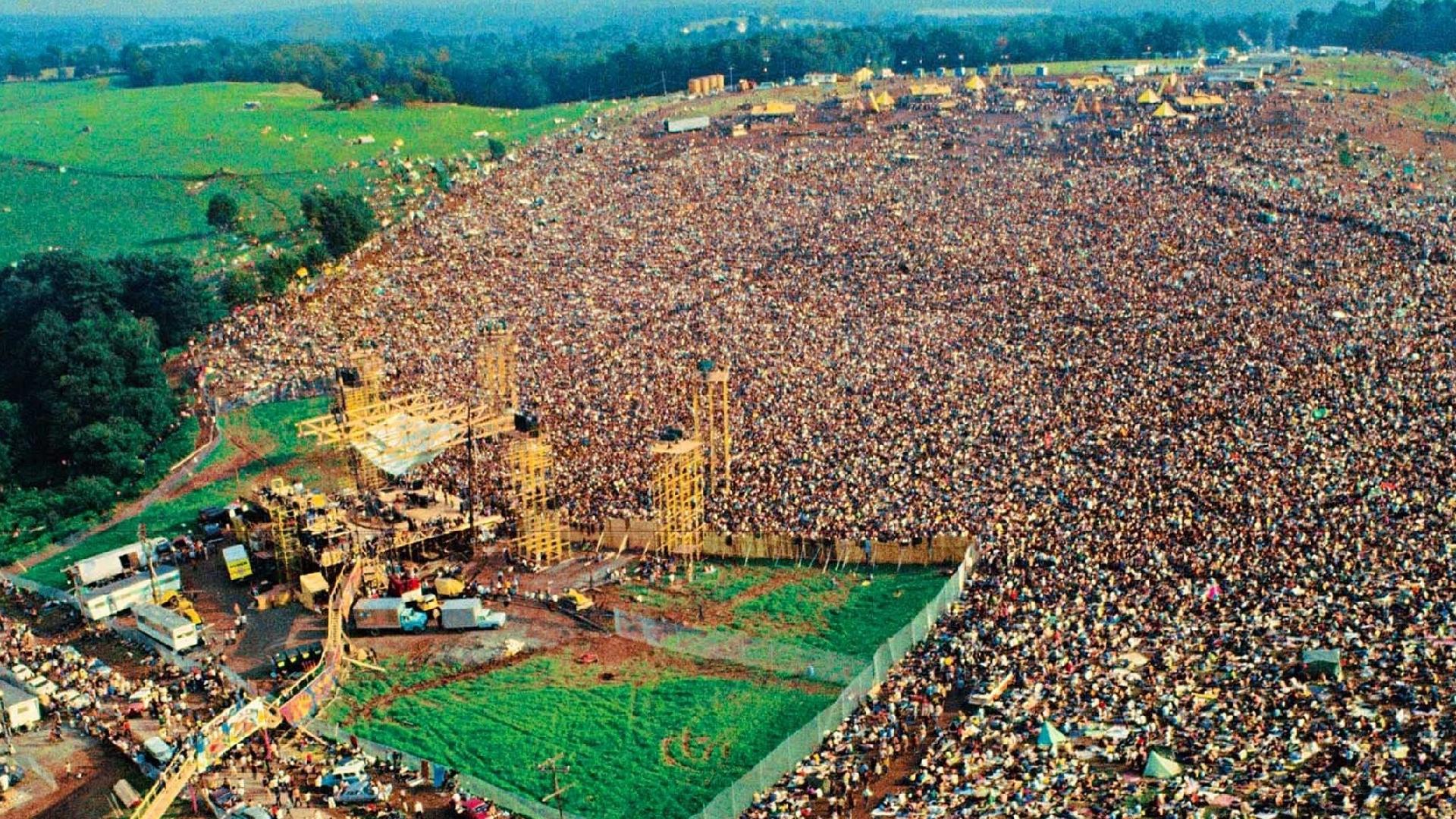
1969: Woodstock

Regarding Woodstock...

Yes, Woodstock is here too! 1969.

For Blackhill, August of 1969 was certainly a month of defining events. From the tour including Pink Floyd Sound, Syd Barrett, and Tailboard, which carried to the eventual crisis in the company during the 70s, to the Woodstock and Isle of Wight Festivals for promoting the artists, certainly, August 1969 was the month that transformed the company into a gateway between the underground and the mainstream.

Right before the Pink Floyd Sound/Syd Barrett/Tailboard tour begun, Blackhill negotiated some of their artists to perform in the Woodstock Festival, as did with the Isle of Wight. "The negotiations with... the Foulk Brothers were far more organized than the Woodstock one. I really can barely say if there was any negotiation with the Woodstock organizers since everything seemed so improvised.", Keith Noble.

In the end, Soft Machine, Edgar Broughton Band, Tailboard, and initially, Syd Barrett agreed to perform (declining to perform one day before the concert). David Bowie declined the idea since he was working on his upcoming album as did Pink Floyd Sound (although both performed later on the Isle of Wight Festival).
"Well, I was up to perform in the Isle of Wight, and I was preparing myself for the tour with the Floyd, and then, two weeks before, Drew [Andrew King] asked if I was going to perform in the Woodstock Festival and I agreed with that. I was scheduled for Sunday, so I had a good ammount of time to think about that decision, even if I was in NY at the time *laughs*. And honestly, until today I feel pity for Kevin and Robert, they didn't like large audiences and had to deal with a shit-ton of people. Actually, they influenced me to decline to perform. Tailboard seemed chilled about that, though."
 -Syd Barrett, 1984
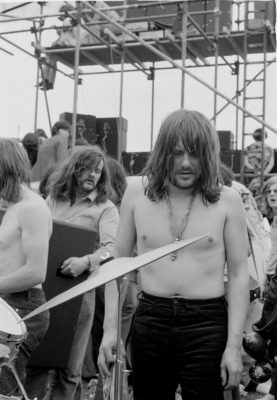
Robert Wyatt leaving the stage in Woodstock.

Soft Machine was billed for the Saturday, right after Santana. When the band first arrived on stage, it was noticed a massive amount of people cheering the newcomers, shocking Kevin Ayers. "So, I didn't know about the audience until we went to the festival... When we were backstage, Robert just said to me to not see the outside, otherwise, I was going to panic. He was quite right, I panicked. But Daevid [Allen] handled the entire thing, so I chilled out a little bit.", said Ayers.

The performance of Soft Machine ended up being shorter, rearranging the setlist right on stage. The band decided to focus on Daevid's songs and instrumentals, including songs that weren't released at the time, such as Esther's Nose Job and Lunatics Lament. After the performance, Soft Machine attended a meeting with Jimi Hendrix back in New York, and then returned to England.

Tailboard's Woodstock was... different. The group was recently formed, and Woodstock was their first relevant performance, although, the band was billed to perform right after Crosby, Stills, Nash & Young. The group performed their entire (then unreleased) album, plus A Summer Song. According to the frontman Keith Noble, the crowd was very receptive to the band, even though it was 5 a.m. when they arrived on stage. In backstage, the band talked with CSN&Y, and the jazz group, Blood, Sweat & Tears. Tailboard would return to England on Wednesday.

Joe Cocker playing his well-known "air guitar" on stage.

Greasy Asylum was billed as the first band to perform on the daytime Sunday, arriving on stage 2:00 p.m. and performing throughout one and a half hours a big set consisting of tracks from Look Inside the Greasy Asylum and Delta Lady, two medleys and cover renditions of Joe Cocker and Leon Russell. The performance of Greasy Asylum is considered by many as one of the highlights of the festival, along with Jimi Hendrix, Creedence Clearwater Revival, and many others.

A few days ago, Delta Lady was released as the second Greasy Asylum's studio album by Shelter Records and distributed by Blue Thumb Records in the United States, as a way intended to promote the band with the Woodstock Festival. The strategy was effective since Delta Lady managed to be ranging between positions 43 and 45 for three months on Billboard. "It was Blue Thumb's idea, not ours. We've just agreed since we had a contract.", Leon Russell.

The Woodstock Festival served as a stair to bands such as the Greasy Asylum, becoming one of their most remarkable shows. Even though members expressed bitter feelings towards the audience, it was a consensus that the performance was pretty enjoyable to everyone, despite Cocker's reluctance to venture again after that year. "As I said, 1968 and '69 were pretty intense, but Woodstock was like an eclipse ... it was a very special day.", Joe Cocker.

Soft Machine, Live in Woodstock, August 15th, 1969
Setlist
1. "Memories" (Hugh Hopper)
2. "Hope for Happiness" (Kevin Ayers, Ratledge, Brian Hopper)
3. "You Don't Remember" (Daevid Allen, Robert Wyatt)
4. "I Should've Known" (Ayers, Ratledge, Wyatt, Allen, H. Hopper)
5. "5 and 20 Schoolgirls" (Allen)
6. "A Certain Kind" (H. Hopper) [sung by Daevid Allen]
7. "We Did It Again" (Ayers)
8. "Gong Song" (Allen)
9. "Esther's Nose Job" (Ratledge, Wyatt, H. Hopper)
10. "Lunatics Lament" (Ayers, Allen)
11. "Rational Anthem" (Allen)
12. "Magick Brother" (Allen)
13. "Why Are We Sleeping/Once I Awakened" (Ayers) [sung by Kevin Ayers and Daevid Allen]
14. "Singing a Song in the Morning" (Ayers)

Greasy Asylum, Live in Woodstock, August 17th, 1969
Setlist
1. "Dear Landlord" (Bob Dylan) [JC]
2. "Something's Coming On" (Joe Cocker, Chris Stainton) [JC]
3. "Delta Lady" (Leon Russell) [JC/LR]
4. "Feelin' Alright" (Dave Mason) [JC]
5. "Crystal Closet Queen" (Russell) [LR]
6. "Let's Go Get Stoned" (Nickolas Ashford, Valerie Simpson) [JC]
7. "Dixie Lullaby" (Russell, Stainton) [LR]
8. "Medley: Jumpin' Jack Flash/Young Blood" (Mick Jagger, Keith Richards, Jerry Leiber, Mike Stoller, Doc Pomus) [JC/LR]
9. "Hitchcock Railway" (Don Dunn, Tony McCashen) [JC]
10. "Something to Say" (Cocker, Peter Nichols) [JC]
11. "Medley: Of Thee I Sing/Yes I Am" (Don Preston, Russell) [LR]
12. "With a Little Help from My Friends" (John Lennon, Paul McCartney) [JC]
[JC] = Joe Cocker
[LR] = Leon Russell 

Tailboard, Live in Woodstock, August 18th, 1969
Setlist
All tracks composed and performed by Keith Noble, except when noted.
1. "Mr. Compromise"
2. "Narcissus"
3. "Secretary Jane"
4. "Red-Current Tide"
5. "Up and Down Way (of It All)"
6. "Only When I Laugh"
7. "Dandelions Have Their Day"
8. "Weather"
9. "King of the Icemen"
10. "Ashes and Silver"
11. "A Summer Song" (Keith Noble, David Stuart)

Tuesday, June 1, 2021

1969: All This Crazy Gift of Time

From the past!

Pink Floyd a few years back, performing as Sigma 6, 1963.
"Out of all years, one of the most strangest ones was 1969. I mean, I accidentally met Clive [Metcalfe] and Keith [Noble] during a walk in the park. And then, a few weeks later, there was me, David, Rick and Nick producing their album, their try to reach the stardom. Oh, and Rado [Klose] was there too, doing his guitar work as usual."
-Roger Waters, 1976
The meeting between Roger and his two former bandmates led to the entry of both to the Blackhill Records. At the time, Clive and Keith Noble were reforming their duo into a band, searching for a drummer and another guitarist. Roger suggested Rado Klose, who just returned from the military service and Willie Wilson, who recently left Tyrannosaurus Rex. The group was formed under the name of Tailboard. Andrew King was appointed as the manager of the band, leaving Steve O'Rourke to Pink Floyd and Peter Jenner to Syd Barrett.

Tailboard:
Keith Noble - lead vocals, acoustic guitar
Rado Klose - lead guitar
Clive Metcalfe - bass guitar, violin
Willie Wilson - drums, percussion

Tailboard started to perform as the backing band to Syd Barrett (joined by Egg's keyboardist Dave Stewart), sometimes performing their own acts with Keith Noble. "Tailboard was like the second half of Pink Floyd, an amalgam of previous incarnations of former members into one, solid ball.", Roger Waters. Through the second half of 1969, Syd Barrett and Tailboard (billed as Syd Barrett & Tailboard) joined Pink Floyd on a tour through the United Kingdom and Europe, rising their popularity on the Old World.

Dutch poster promoting a concert of Pink Floyd/Syd Barrett/Tailboard tour, 1969.

Pink Floyd, Syd Barrett & Tailboard
Setlist (excerpt from Antwerp, Belgium; September 30th, 1969):
Syd Barrett & Tailboard
1. "Clowns and Jugglers" (Syd Barrett)
2. "Here I Go" (Barrett)
3. "Mr. Compromise" (Keith Noble)
4. "Apples and Oranges" (Barrett)
5. "Up and Down Way" (Noble)
6. "Golden Hair/Terrapin" (Barrett, James Joyce/Barrett)
7. "Weather" (Noble)
8. "Arnold Layne" (Barrett, David Bowie)
9. "Only When I Laugh" (Noble)
10. "See Emily Play" (Barrett, Bowie)
11. "Late Night" (Barrett)

First Encore [Syd Barrett & Tailboard/Pink Floyd]
1. "Astronomy Domine" (Barrett)
2. "The Massed Gadgets of Hercules" (Roger Waters, Richard Wright, David Gilmour, Nick Mason)
3. "Interstellar Overdrive" (Barrett, Vincent Crane, Rick Wills, Willie Wilson)
4. "Careful With That Axe, Eugene" (Waters, Wright, Gilmour, Mason)

Pink Floyd
1. "Grantchester Meadows" (Waters)
2. "Biding My Time" (Waters)
3. "Set the Controls for the Heart of the Sun" (Waters)
4. "The Nile" (Waters, Gilmour)
5. "Ibiza Bar" (Waters, Gilmour)
6. "See-Saw" (Wright)
7. "Embryo" (Waters, Wright, Gilmour, Mason)
8. "Cymbaline" (Waters, Gilmour)

Second Encore [Pink Floyd/Syd Barrett & Tailboard]
1. "A Summer Song" (Noble, David Stuart)
2. "Point Me at the Sky" (Waters, Gilmour)
3. "The Bike Song (Singalong)" (Barrett)

Although the tour seemed enjoyable by the bands and artists involved, the expenses of the tour caused problems to everyone, especially to Blackhill Enterprises. The costs of the tour was one of the main reasons that forced their label, Blackhill Records, to become extinct a few years later. For those who were involved, the main exit was to record a new album to pay the charges.
"At least we had fun! *laughs*; But sure it was fantastic to tour with Pink Floyd [Sound] and Syd, the problems started to appear a few days after the last concert when the bill came to almost everyone in Blackhill. We almost had no chance to tour again, but Andrew [King] was very kind to talk with us about that. I even own a bootleg which I bought a few months after the tour. They didn't want to release a live record, so I bought one by myself."
-Keith Noble, 2009
"Recording 'Basking in the Sunshine...' was... quite spontaneous. Since Peter Jenner yelled at us due to the high cost of the tour, we were quite obliged to make a new record. Anyway, we met in the front of the studios and Roger said something like 'Well, let's make another record, aight?', and we just started jamming for a while until new ideas came during the jam. We also had a few bits from 'Are Going Insane!' which we started to work on it later. [...]"
-Richard Wright, 2001 (Wearing the Inside Out: Stories Inside the Pink Floyd)

As long as they lie perfectly still

Robert Wyatt performing with Soft Machine at Ronnie Scott's, 1969. During that time, Soft Machine was temporarily reformed with Wyatt, Mike Ratledge, and Hugh Hopper.

In late 1968, the Soft Machine briefly disbanded. Kevin Ayers and Daevid Allen (along with his partner, Gilli Smyth) were found at their retreat in Deià, Robert Wyatt stayed with the Jimi Hendrix Experience in Laurel Canyon, and Mike Ratledge went back to England. After a month, Wyatt reformed the band with Mike Ratledge (keyboards), Hugh Hopper (bass) and Andy Summers (guitar), who left the band at the end of a series of gigs in the UK. Wyatt couldn't reach Kevin and Daevid Allen at the time.
"I never liked to have any kind of commitment or obligation, I always had a free spirit, actually the entire band had a free spirit, to be honest. That's why I never liked to tour and why I was afraid from the success in the United States. I was fearing that my lifetyle could be dragged from me, replacing it with a robotic lifestyle of touring and recording, and that almost happened. That's why I wrote 'Am I Really Marcel?', for an example.
But Jimi was the one who wanted me to continue with music. This was evident when he gave me my acoustic guitar. I was quite happy, and that gave me confidence enough to continue in the music business instead of simply retiring."
-Kevin Ayers, 2008 
In February, Soft Machine started to record their second album with Hibou, Anemone and Bear, and As Long as He Lies Perfectly Still. During the recording sessions, the band developed Esther's Nose Job (which was shelved to Magick Brother) while Hugh Hopper wrote Dedicated to You, But You Weren't Listening. "Yeah, part of the songs composed before the arrival of Kevin and Daevid were dropping a hint on 'em. And somehow they liked these songs.", Robert Wyatt.

During the recording sessions, Syd Barrett, who was recording his second studio album Clowns and Jugglers, invited Soft Machine to play along, recording four out of six songs of the first side of Syd's album. "I knew that Robert, Mike, and Hugh played along with Syd when I arrived in London and I was glad for them. Hopefully, I could bring him for our session right before he could embark on his tour with Pink Floyd.", Kevin Ayers.

Kevin, along with Daevid and Gilli arrived in London in late May 1969. Surprised with the sudden news that Robert reformed Soft Machine without both, Kevin and Daevid argued with Robert and Mike about the issue. "Well, that was the start of my departure from Soft Machine. I couldn't believe that they did that to us.", Daevid Allen. "The main problem there was Mike. He didn't want me to be on Soft Machine again.". The personal conflicts between Daevid and Mike would result in Daevid's departure from Soft Machine during the Magick Brother tour.

Throughout June and July, Soft Machine focused on the songs from Kevin and Daevid. Syd Barrett would be invited by Kevin to play the lead guitar on the track Singing a Song in the Morning. The album was named Exiled from Canterbury from the incident which Daevid wasn't allowed to enter the United Kingdom, with the entire band staying out of Britain for almost one year. After the sessions of Exiled from Canterbury were finished, the band immediately started to record their next album, Magick Brother.

Exiled from Canterbury was announced as the second album by Soft Machine, while the release was scheduled to October 1969. Singing a Song in the Morning b/w Gong Song was released as promotional single and earned a new hit from the band by topping in Britain Singles Charts and peaking in number 12 in Billboard Hot 100. The band did a promotional concert in London but opted to focus on the follow-up of the album.

Soft Machine – Exiled from Canterbury
(L-R): UK version; US version
Soft Machine - Exiled from Canterbury (1969)
Genre: Canterbury scene, psychedelic rock, jazz-rock
Total: 43:44

Side A - 21:11
1. "A Concise British Alphabet" (Robert Wyatt, Hugh Hopper) - 1:23
2. "5 and 20 Schoolgirls" (Daevid Allen) - 4:30
3. "Hibou, Anemone and Bear" (Mike Ratledge, Wyatt, H. Hopper) - 5:58
4. "Song for Insane Times" (Ayers) - 4:00
5. "As Long as He Lies Perfectly Still" (Ratledge, Wyatt) - 2:30
6. "Singing a Song in the Morning" (Ayers) - 2:50

Side B - 22:33
7. "Dedicated to You But You Weren't Listening" (H. Hopper) - 2:30
8. "Eleanor's Cake (Which Ate Her)" (Ayers) - 2:53
9. "Gong Song" (Allen) - 4:11
10. "Glad to Sad to Say" (Allen) - 3:43
11. "The Lady Rachel" (Ayers) - 5:17
12. "All This Crazy Gift of Time" (Ayers) - 3:57

Exiled from Canterbury is the second studio album by Canterbury scene band Soft Machine, produced by Nick Mason and Soft Machine. It is the first album with Hugh Hopper being credited as an official member. The album was recorded between February and July 1969 at the Abbey Road Studios and released on 10 October 1969 by Blackhill Records in the United States and 24 October 1969 by CBS Records in the United States. It was first recorded under the trio, Robert Wyatt–Mike Ratledge–Hugh Hopper, but then Kevin Ayers and Daevid Allen arrived to complete the band. The album's cover didn't have the participation of Daevid Allen, who appeared in the portrait on the wall.

The album differs from Hope for Happiness by having minimal or no extended jams (differently from the predecessor, which was mostly composed of suites and jams). Most of the album walks into a folk, psychedelic, rock-oriented direction, but still, jazz is the main element of the record. According to Robert Wyatt, the album has dadaist influences and was inspired by the Mothers of Invention's Absolutely Free. It is considered to have unusual lyrics for the time, and the central key to be considered an influent psychedelic record at the time.

With the release, the record received initially mixed reviews but as time passed, Exiled from Canterbury was considered Soft Machine's biggest effort in the 60's. The album peaked in number 2 in UK Album Charts and number 59 in US Billboard Top LPs. Most of the success of the album was due to the hit of the promotional single, Singing a Song in the Morning. After the release, Blackhill released The Lady Rachel as the second single, becoming one personal favorite of the fans being performed in later tours.

Back to the greasy asylum

Joe Cocker, 1969.

The Greasy Asylum has experienced a regular status as celebrities after the release of their debut album and the lead single With a Little Help From my Friends. In the United States, the group toured and performed at several large festivals, such as the Newport Music Festival and the Denver Pop Festival. And though the band was formed by six members, Joe Cocker and Leon Russell were mostly regarded as the frontmen and the minds behind the band's creative outputs.

After the end of the US tour, Greasy Asylum gathered at the ARS Studios and started to record the second album. The recording sessions of the group dragged the attention of the public after the contribution of Beatles' George Harrison and Ringo Starr in two songs (Dixie Lullaby and Hurtsome Body) and vocals from Jackie Lomax and Rolling Stones' Mick Jagger, working as an influence for the hype of the follow-up to Looking at the Greasy Asylum.
"Everything happened when the bosses [George Harrison and Ringo Starr] entered in the studio to see what we were doing there. At the time they were recording with Jackie Lomax, I think, because he contributed with some vocals later, and suddenly I see George and Ringo picking the instruments and playing along with the band. That was quite surprising, we jammed the two songs and edited to fit them in the record."
-Leon Russell, 1978
In July, producer Denny Cordell convinced the organizer of Woodstock Festival, Artie Kornfeld of booking the Greasy Asylum for the Festival. At the time, the group had finished the sessions and embarked on a short UK tour followed by another leg in the United States, both supported by Jackie Lomax and Rita Coolidge. "Looking back then, the early Greasy Asylum years were pretty intense for everyone on that recording-touring routine. We liked that, but at the same time it just looks that we sort of abused our bodies during the tours.", Joe Cocker.

Greasy Asylum released Delta Lady, the title track, backed with another, longer, version sung by Leon Russell. The song managed to be a hit in Britain, but a minor hit in the United States. The album was scheduled to be released on 12 August 1969, three days before the Woodstock Festival.

Greasy Asylum – Delta Lady
Greasy Asylum - Delta Lady (1969)
Genre: Rock, pop-rock, blues rock
Total: 40:10

Side A - 19:46
1. "That's Your Business Now" (Joe Cocker, Chris Stainton) - 2:56
2. "Dixie Lullaby" (Leon Russell, Stainton) - 2:35
3. "She's So Good to Me" (Cocker, Stainton) - 2:56
4. "Hurtsome Body" (Russell) - 3:39
5. "Something" (George Harrison) - 3:32
6. "A Song for You" (Russell) - 4:08

Side B - 20:24
7. "Hummingbird" (Russell) - 4:02
8. "Delta Lady" (Russell) - 2:51
9. "I Put a Spell on You" (Russell) - 4:12
10. "Bird on the Wire" (Leonard Cohen) - 4:30
11. "Darling Be Home Soon" (John Sebastian) - 4:49

Delta Lady is the second studio album by the British-American rock band Greasy Asylum. The album was produced by Leon Russell and Denny Cordell and released on 12 August 1969 in the United States by Shelter Records and on 18 August 1969 in the United Kingdom by Apple Records. Delta Lady was Greasy Asylum's last album under the Apple Records label after the disagreement of the band with Allen Klein, who became Apple Records' manager until early 1971.

The album is comprised of Leon Russell's songs, some of them performed by Joe Cocker, and cover versions by Cocker himself. Delta Lady is also remembered by the contributions of Beatles George Harrison and Ringo Starr in two songs and backing vocals of Rolling Stone Mick Jagger. Something, written by George, would be later performed by himself on The Beatles' Abbey Road.

In the United States, the record reached number 43 in Billboard Top LPs while reached number 3 in UK Album Charts. Greasy Asylum released the title track as single, becoming a hit in Britain and a minor hit in the US. That's Your Business Now was released as single in 1970 backed by Death of the Flowers, failing to chart. Something and A Song for You were released simultaneously, both of them being reasonably successful.

Author's notes:
Hello everyone!
Finally back with a new band, and the return from another band. Anyway, in the next post, Woodstock! There'll not be a lot of changes, but I'll mostly focus on Woodstock.
And regarding Tailboard, recently I've discovered that Keith Noble, a member of previous incarnations of Pink Floyd released an album in 1970 (with contributions of Rado Klose!). The initial idea was to sign Keith as a solo artist, but I found that Clive Metcalfe, another member, had a duo with Keith called "The Tailboard Duo", so the idea evolved to a band.

Hope you like it! :)

Source:
Soft Machine - Exiled from Canterbury
  • Soft Machine - Volume Two
  • Kevin Ayers - Joy of a Toy (plus Bonus Tracks)
  • Gong - Magick Brother
Greasy Asylum - Delta Lady
  • Joe Cocker - Joe Cocker!
  • Leon Russell - Leon Russell (1970)