Showing posts with label Beach Boys. Show all posts

Friday, October 29, 2021

1970/1971: A breath of fresh air

Don't try to take me if I can't return

Shagrat (sans Steve Took) recording Quatermass, 1970.

After passing through several bands and working as a session musician, Steve Took finally settled down in Shagrat, first performing in underground concerts and at the Phun City rock festival. The group was signed into Blackhill Records in late 1970, which caused the postponement of recording their first songs. After the early months, Blackhill finally scheduled a short tour across the UK and France, giving attention to the band of the remaining member of Rubber Band.
"The early days were such a mess because we needed to tour, but we had no managers, and my contract with Blackhill was almost expired. This is when I approached Syd and Peter to return to the company with my band instead, which they agreed. But it took quite long to sign another contract, because... of a lot unnecessary bureaucratic bullshit, you know?"

 -Steve Took, 1974

Quickly, Blackhill arranged a last-time concert for Shagrat in the Hyde Park Festival of 1971, looking to promote their soon-to-be newest act. "That's what we could do for a moment, as we couldn't afford to arrange any tours for Shagrat at the time due to no contract with them.", Andrew King. The band was first presented to a wider audience at the festival, performing a set comprising their songs and standards.

The group recorded their debut album in-between Abbey Road and Strawberry Studios, with songs written by each member, hiring Dick Taylor as a suggestion from Hawkwind's Dave Brock. The album would be recorded between August and December 1970, when the band left the studios to go on another tour in Europe, and then in the American West Coast.

"In the first moment, there was some lack of consensus of what our next album would be. Would it be folk? Hard rock? or the new wave of prog rock? So Hammond said 'well, why not everything? I'm sure we can work out with all this stuff.', so we pretty much agreed with him as we didn't have another choice."

-John Gustafson

Quatermass was quickly announced, although with no singles. The group received a wider attention from hard rock fans, generally associated with the emerging heavy metal scene with Deep Purple and Black Sabbath. Despite that, Shagrat denied being labeled as another fellow rising heavy metal band, though the group kept in pace with Deep Purple (John Gustafson was a friend of the group and later join the Ian Gillan Band).

Shagrat - Quatermass
Shagrat - Quatermass (1971)
Genre: Hard rock, progressive rock, freak folk
Total: 41:13

Side A - 19:09
1. "Scorpius/Steel Abortion" (Steve Took, Larry Wallis) - 4:30
2. "Up on the Ground" (John Gustafson) - 7:11
3. "Amanda" (Took) - 3:18
4. "Punting" (Gustafson) - 7:10

Side B - 22:04
5. "One Blind Mice" (Gustafson) - 3:10
6. "Seventh Sign" (Took) - 5:37
7. "Make Up Your Mind" (Hammond) - 8:44
8. "Beautiful Deceiver" (Took) - 4:33

Quatermass is the debut album of British rock band Shagrat, being released in 23 February 1971 by Blackhill Records in the United Kingdom and Europe and Capitol Records in the United States and the rest of the world. The album would be produced by Pretty Things member Dick Taylor, becoming the first work of former Rubber Band Steve Took in three years of semi-hiatus.

The album would be noted by the crossover between acid, hard rock, freak folk and progressive, symphonic rock music, labeled by the critics as 'inconsistent, yet powerful'. Shagrat appeared in the list of the most promising bands of 1970 and 1971. Later, the album would establish a cult following of prog-rock enthusiasts, being considered a classic from the first wave of progressive rock.

Despite the hustle towards the record, the numbers in the charts would reveal a great disappointment to the label, reaching number 20 in the UK Album Charts and number 174 in the Billboard 200, falling down quickly, as well as the disastrous West Coast tour that would eventually lead Blackhill to more financial problems in the 1970s.

All things must pass away...

John Lennon and George Harrison recording the guitar parts of Wild Life (if I'm not wrong, lol).

Following the release of Get Back, The Beatles could finally rest for a while, not before renewing their contract with Apple/NEMS and EMI, which I mean by settling their differences aside and marking a new era within the band. The longstanding partnership Lennon-McCartney was disbanded, with both songwriters (mostly Lennon) seeking creative freedom over his lyrics. The Beatles also agreed in releasing their albums in a two-year period, after a successor for their previous album, focusing on their personal lives and projects. In the meantime, Paul and George came into terms regarding George's songs and Epstein's equal share.

In the following four months, the band entered into a "semi-hiatus", as some of them resumed into recording solo projects, where a few contributions would be set aside to an eventual Beatles record. Despite recording their solo projects, all of the albums would be released only next year, a few months before All Things Must Pass. The band would, inevitably, resume their activities in August 1970, without Paul, as John invited George and Ringo to participate in a session.
"It was more or less like this. John invited George and I to play on some songs he was recording to [John Lennon/]The Dirty Mac, but in reality we were just fooling around the whole session when George said 'oh hey, we are recording for the Beatles right now?'. John answered something like 'I guess?', and this followed for a few days when we called Paul back to the studio."

-Ringo Starr, 1998

The album would turn out to be the last record with songs written during their stay in India, with Junk and Teddy Boy written by Paul, and Look at Me written by John Lennon. All Things Must Pass had an equal share of songs between Paul, John, and George, with It Don't Come Easy being sung by Ringo, earning him a songwriting credit as a parody of the Lennon-McCartney partnership, "Harrison-Starkey". The group also recorded a jam that would evolve to the side closer Wild Life, credited to Paul.

"I believe that All Things Must Pass was the first time in a long time that I felt that my contributions were actually being well used. The process was enjoyable all the way through, no peer-pressure from Get Back or A Doll's House, just a very laid back recording process which I believe we've all benefited from. It personally encouraged me to suggest the idea of the Concert for Bangladesh for the band."

-George Harrison

It's Johnny's Birthday would be featured as a secret track right after Harrison's I Live for You, a song based on Cliff Richard's Congratulations. The song was recorded by the group per request of Yoko Ono to John Lennon's 30th birthday. The idea to include the 49-second track in the album came from John himself as a novelty song, which all of the band agreed to do, even if the album came out seven months later.

The first single to be issued was George's What Is Life, released on February 1971, featuring the prominent use of a stripped-down Wall of Sound becoming a top-ten hit in the United States, the United Kingdom and elsewhere, backed by an instrumental version of Junk in the New World while backed by Teddy Boy in Europe, except for West Germany (backed by Watching Rainbows).

All Things Must Pass would be announced in early April 1971, with the release of the second single, Maybe I'm Amazed, becoming the Beatles' first smash hit of the seventies, backed by Isolation, and eventually a classic and signature song of the Beatles in the 1970s. Later in France and Latin America, Wild Life was released as a single, with Dig a Pony as the backing single.


The Beatles – All Things Must Pass
The Beatles - All Things Must Pass (1971)
Genre: Rock, pop, folk rock
Total: 43:38

Side A - 23:08
1. "Instant Karma! (We All Shine On)" (John Lennon) - 3:18
2. "All Things Must Pass" (George Harrison) - 3:44
3. "Teddy Boy" (Paul McCartney) - 2:22
4. "What Is Life" (Harrison) - 4:22
5. "Isolation" (Lennon) - 2:51
6. "Wild Life" (McCartney) - 6:31

Side B - 20:30
7. "It Don't Come Easy" (Harrison-Richard Starkey) - 3:00
8. "Oh My Love" (Lennon) - 2:44
9. "Maybe I'm Amazed" (McCartney) - 3:53
10. "Look at Me" (Lennon) - 2:53
11. "Junk" (McCartney) - 4:28
12. "I Live for You" (Harrison) - 3:35
13. "It's Johnny's Birthday" (Bill Martin, Phil Coulter) - 0:49

All Things Must Pass is the fourteenth studio album by the British band The Beatles. The album marks the return of the band in the production, with co-writing credits to George Martin and Phil Spector in some tracks, being released in 17 May 1971 by Apple Records, and being distributed by EMI. It is considered the first album from the Seventies era, after the Get Back sessions, of more mature songwriting in a back-to-the-roots style.

The recording sessions of All Things Must Pass started as solo sessions from each member, reserving a contribution that would feel suitable to a Beatles' album. The group reunited in two occasions in 1970, and the last two months in 1971. In contrast with the sessions of Get Back and Abbey Road, the sessions of All Things Must Pass were considered 'laid-back' and 'inspiring' by the members, who were also working on their solo records.

The themes of the album are considered a response to the hard times that the group had during the previous years, particularly the title track, relating to George's, and ultimately, the band's point of view. Besides that, love, existential and social themes are also common throughout the record, avoiding politics and religion, which the band was widely associated at the time. Wild Life is the third-longest Beatles song by length, after I Want You (She's So Heavy) and Hey Jude.

Initially, the album received negative reviews by the critics, who've characterized the mixing and production as 'lo-fi' and 'unfinished'. Nevertheless, All Things Must Pass was a big success as always, topping and alternating the top spot of Billboard 200 with Carole King's Tapestry, and later, the Beach Boys' Landlocked. In the United Kingdom, the same case happened with the Rolling Stones' Sticky Fingers. Four singles were released, and the most successful of them was Maybe I'm Amazed, becoming a classic Beatles tune.

In general, All Things Must Pass remains as a favorite record between the members, but mostly John Lennon, in an interview with Playboy in 1981, and Ringo Starr, who reverenced the equal share of tracks between the Beatles (Lennon and McCartney contributed four songs each, George contributed with three songs plus one in a partnership with Ringo).


The Beach Boys Go Dark

The Beach Boys (sans Brian) performing at the Central Park, 1971.

Despite having gone a long way, The Beach Boys seemed shaken up in the last few years, even with the success of Smile and Wild Honey, the disappointment of the last two records, plus the mental condition of the main songwriter Brian Wilson, made the band hire Jack Rieley as their manager. The move was instigated by the band themselves as a way to revitalize their public image along the turning of the decade

First measures were appointing Carl Wilson as the band's leader and spokesman, as well as ending the group's practice of wearing matching stage uniforms. Rieley also encouraged the band to record more socially conscious lyrics, as well as lyrics more centered on their actual feelings, instead of the sunny and happy themes that covered the band's prior catalog.
"Jack really helped us a lot to modernize our image, to stop making us looking like douchebags, stuck in the sixties. We needed that bump, to talk about more serious themes and be in touch with not only our audience, but our generation in general. I don't wanna sing about a happy day without thinking about Vietnam. That's the thing."

-Dennis Wilson

The policy of Jack Rieley to the band's first album under his management was to synthesize their feelings to music, relieving their frustrations. Most of them, unsurprisingly, about war, love, existentialism, hope and nostalgia. The major opponent of the idea was Mike Love, who argued that most of the lyrics weren't about the standard Beach Boys, being rebutted as that the album was a way to the group to reinvent themselves and keep in pace with their generation.

Mike's presence in the album was widely diminished, despite his presence in the sessions, with Dennis being favored as a potential songwriter. Love's major contributions in the album were Sound of Free (co-written with Dennis), Don't Go Near the Water (with Al Jardine), and the excluded Student Demonstration Time (an altered version of "Riot in Cell Block Number 9"). He also influenced in the decision to make "Won't You Tell Me" as the final track, as a bittersweet ending to the record.

"I'll be honest, it's a good record, but the sessions had some troublesome moments. Mike and Bruce kind of regretted the decision of having Jack as a manager, Brian was rock bottom, no treatments at the time, while Dennis was emerging and starting a feud with Bruce, and I had to maintain the order. It was good to me because I needed to grow some balls and be a leader who would guide the band to deliver the best product as possible in the end."

-Carl Wilson

The first experiences with Landlocked were written in Music Maker's report "Hold the Waves! 'Surf' is definitely 'Up' to the Beach Boys!", following an interview with Carl, Al Jardine, and manager Jack Rieley. Landlocked was controversially promoted with the magazine claiming that the band abandoned the 'saccharine music reminiscent from the Carpenters' towards a more progressive and conscious sound.

"I really was surprised of how Landlocked had such a hype across the people. That album made me willing to be more open to new experiences, helped me a lot to see that the audience wasn't the main way to see what the people was really listening to. Yet, I still feel a little uncomfortable with a lot of the lyrics and all the comparisons at the time. But I have learned my lesson, haha."

-Mike Love 

Long Promised Road was issued as a promotional single reaching number 2 on both the Billboard Hot 100 and UK Singles Charts, backed by Student Demonstration Time. The song was well-received, becoming a song generally associated with hope during hard times, similar to the situation the band and the world was at the time. The album was announced as "Landlocked.", as the band seemed to ditch once for all the previous surf sound from the sixties.

The Beach Boys – Landlocked.
The Beach Boys - Landlocked. (1971)
Genre: Progressive pop
Total: 38:23

Side A - 19:48
1. "Sound of Free" (Dennis Wilson, Mike Love) - 2:23
2. "Don't Go Near the Water" (Love, Al Jardine) - 2:39
3. "Lady (Fallin' in Love)" (D. Wilson) - 3:11
4. "Feel Flows" (Carl Wilson, Jack Rieley) - 4:44
5. "Fourth of July" (D. Wilson, Rieley) - 2:44
6. "Disney Girls (1957)" (Bruce Johnston) - 4:07

Side B - 18:35
7. "Long Promised Road" (C. Wilson, Rieley) - 3:30
8. "Lookin' At Tomorrow (A Welfare Song)" (Jardine, Gary Winfrey) - 1:55
9. "A Day in the Life of a Tree" (Brian Wilson, Rieley) - 3:07
10. "(Wouldn't It Be Nice to) Live Again?" (D. Wilson) - 4:38
11. "'Til I Die" (B. Wilson) - 2:31
12. "Won't You Tell Me" (B. Wilson, Murray Wilson) - 2:54

Landlocked (stylized Land Locked.) is the sixteenth studio album by the American band The Beach Boys, released on 30 August 1971 by Brother and distributed by Island Records. It was the first album of the Beach Boys under the management of Jack Rieley, that would become known later as the Rieley Trilogy. The cover and artwork was widely based on James Earle Fraser's sculpture "End of the Trail", becoming one of the most remarkable album covers of all-time.

With personal problems, such as Brian Wilson's conditions, and the poor response for Add Some Music for Your Day, Jack Rieley was hired as the band's manager. As a therapeutic exercise, Rieley suggested the group to make a record to relieve their frustrations, also encouraging the group to approach more socially conscious lyrics, as many groups at the time. The idea was accepted among the band, except for Mike Love and Bruce Johnston, who emphasized the themes of  'summer and love', thus becoming the album with the least Mike Love contributions.

Ironically, Landlocked remains as one of the Beach Boys' best-selling records. At the time, it ultimately became a smash hit by the band, making it their first release since Beach Boys Concert to top the Billboard 200, and the UK Album Charts. Won't You Tell Me and Long Promised Road were released as singles, with the latter being the most successful, although Sound of Free had a fair share of success.

The album addressed topics that were previously never addressed by the group such as environmental, social and psychological issues, adding to the repertory of love and nostalgia, becoming considered The Beach Boys' darkest record to date, according to NME's article 'The Beach Boys Go Dark'. The bittersweet tracks like Long Promised Road and (Wouldn't It Be Nice) To Live Again? are considered the greatest definition of the album as a whole. It is also considered the album that consolidates Dennis Wilson's emergence as a songwriting power in the band.

In the end, Landlocked remains a crucial piece and a quintessential record that defines Progressive pop as a genre, influencing the Neo-psychedelic movement, shoegaze, synth-pop and the alternative music scenes. The band was nominated to the 1972 Grammy Awards in three of the four major awards, with Carl Wilson's Long Promised Road winning the category of Song of the Year in a controversial victory over Carole King and James Taylor's You've Got a Friend.

Author's notes:
Hey everybody, hope you're doing well. Sorry for the sudden absence, my computer broke a while ago, but now I'm back and I'll resume with the blog. The cover design of Landlocked is originally from soniclovenoize's version. The Beatles' All Things Must Pass was made by andrewskyDE.

Sources:
  • Shagrat - Quatermass
    • Quatermass - s/t
    • Steve Peregrin Took - The Missing Link To Tyrannosaurus Rex
    • Shagrat - Lone Star
    • Shagrat - Pink Jackets Required
  • The Beatles - All Things Must Pass
    • George Harrison - All Things Must Pass
    • Paul McCartney - McCartney
    • Wings - Wild Life
    • John Lennon - John Lennon/Plastic Ono Band
    • John Lennon - The John Lennon Collection
    • Ringo Starr - Blast from Your Past
  • The Beach Boys - Landlocked.
    • The Beach Boys - Surf's Up
    • The Beach Boys - Feel Flows: The Sunflower & Surf's Up Sessions 1969–1971

Thursday, June 17, 2021

1969/1970: Going out in the midday sun

Wearing a crown and all the things

Barry and Maurice Gibb filming Cucumber Castle.

By 1969, as the hard times passed through, the Bee Gees had the idea to make a film. Based in the song Cucumber Castle, the concept of the film revolves into three heirs, Prince Frederick (Barry Gibb), Prince Edmund (Robin Gibb), and Prince Marmaduke (Maurice Gibb), and their dying father, the King (Frankie Howerd). The King orders his kingdom divided into three parts, the Kingdom of Jelly, Kingdom of Pudding and the Kingdom of Cucumbers. Before the king dies, Prince Frederick declares himself the "King of Cucumber", Prince Marmaduke becomes the "King of Jelly", and Prince Edmund becomes the "King of Pudding".

The film has several cameo appearances, such as the artists Lulu and Blind Faith, and also The Who's Roger Daltrey, Donovan, Rolling Stone Mick Jagger and his then-girlfriend, Marianne Faithfull. Cucumber Castle contains comedy sketches from the Bee Gees along with performances by Lulu, Blind Faith, and the Bee Gees themselves.

In the studios, things have been gone smoothly, except maybe for the drummer Colin Petersen, who was fired during the sessions. He was replaced by session drummer Terry Cox, who played in the remaining tracks. During the same time, the Bee Gees found themselves in several contemporaneous activities to the album, such as producing music to other artists, and fired Petersen, a decision later regretted by Robin.
"There were many things going on at that time. Similar to the other year too. But this time there were more people that we were helping, Samantha Sang, P.P. Arnold, Tin Tin, and then we agreed on fire Petersen? That was quite stupid, thinking now."

-Robin Gibb

By September, the group returned to the studios to finish the recording sessions, and the things weren't seem to be going on as previously. The brothers lost the enthusiasm, starting to drift apart when the album was finished, putting the band in a hiatus for a year, and then, each one would record a solo record at the same time.

"We lost our inspiration by doing... really ambitious stuff. I realised that when we finished the album. Tours, two concept albums, a goddamn movie and other artists. That was too much in two years, and we lost two members in less than a year. Everything there bummed us a lot, so we decided to stop being the Bee Gees for a while."

-Barry Gibb

The album was titled Cucumber Castle, even though the film wasn't released yet, and the track that the film was based on wasn't in the track list either. Don't Forget to Remember, Tomorrow Tomorrow, and Saved By the Bell were previously released as singles to become three of the Bee Gees' greatest hits by the end of the 1960s. Critics praised the songwriting from the brothers in general.

Bee Gees – Cucumber Castle
Bee Gees - Cucumber Castle (1970)
Genre: Baroque pop, folk rock, country folk
Total: 37:40
All songs written and composed by Barry Gibb, Robin Gibb & Maurice Gibb, except when noted.

Side A - 18:47
1. "If Only I Had My Mind On Something Else" - 2:33
2. "Tomorrow Tomorrow" - 4:05
3. "August October" (Robin Gibb) - 2:31
4. "Saved By the Bell" - 3:06
5. "Bury Me Down the River" (Barry Gibb, Maurice Gibb) - 3:25
6. "The Loner" (M. Gibb, Billy Lawrie) - 3:07

Side B - 18:53
7. "I Was The Child" - 3:14
8. "Railroad" (M. Gibb, Lawrie) - 3:37
9. "One Million Years" (R. Gibb) - 4:05
10. "My Thing" - 2:20
11. "Weekend" (R. Gibb) - 2:10
12. "Don't Forget to Remember" - 3:27

Cucumber Castle is the seventh studio album by the Bee Gees, produced by themselves and by their manager Robert Stigwood. The album consists of some songs composed as the soundtrack of their television special with the same name, being based in the song of the same name on their debut album. It was the last Bee Gees album featuring drummer Colin Petersen, and the last Bee Gees album before the short hiatus between late 1969 and mid 1970.

The record was released in 18 April 1970, as the Bee Gees were finishing their solo records, and still before the premiere of their television special. Considered a hit-driven album, three of the songs included in the album were incredibly successful, being regarded as some of their finest. Cucumber Castle peaked in number 2, displaced by The Beatles' Get Back, while it reached number 16 in Billboard 200.

Bee Gees' Cucumber Castle received mixed to positive reviews, being regarded as a faithful follow-up to the magnum opus The City in the Black Sea. Still, the unexpected hiatus of the band ended up affecting the album sales. One critic at the time regarded that the Bee Gees were a "hit-making machine, but also a very ambitious and unstable group".

Going good with the soul

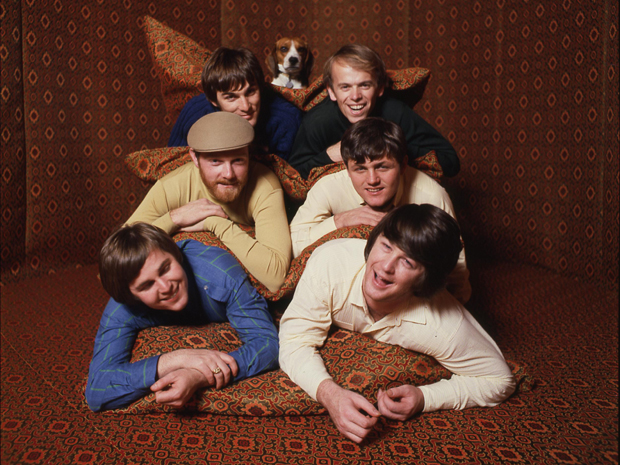
The Beach Boys during Halloween, ca. 1969~70.

The release of 20/20 saw the popularity of the Beach Boys declining towards the 1970s. Even though Smiley Smile and Wild Honey were generally regarded as memorable records, the audience was consistently diminishing and the tours were generally regarded as 'underwhelming' and 'old-fashioned'. 20/20 became their second lowest-selling album at the time, and the group was amidst a lawsuit against Capitol for unpaid royalties.

By 1969, the mental conditions of Brian Wilson, whose reclusiveness and eccentric behavior were getting worse, since he began to use cocaine. Brian's behavior heavily affected his reputation in music industry, and to a lesser extent, the band found the distribution of their albums severely compromised as various labels deemed the band too risky to sign. The band's manager Nick Grillo was trying to negotiate with international labels, as the popularity from the band seemed higher than in the United States.
"I find it kinda bizarre when we are referred as America's Band by Mike. In the late 60's, nobody there wanted to listen to that 'Beach Boys bullcrap', even after Smiley Smile and Wild Honey, but a lot of people preferred us outside the United States, where we mostly went. The thing is, the audience liked all the albums, and expected music from and like both albums, but Mike wanted to stay with the surf stuff, as it was already out-of-fashion. Nobody liked that same surf-cars-girls-thing in the late 60s. Jack [Rieley] really opened my eyes about that."

 -Dennis Wilson, 2003

In late 1969, a deal was signed between The Beach Boys, Brother Records, and Island Records, arranged by manager Grillo. The contract stipulated Brian's proactive involvement with the band in all albums. And a wave of optimism and inspiration reached the band, which recorded a lot of material between November 1969 and January 1970.

In February 1970, the forthcoming album, Add Some Music to Your Day, was submitted to Island Records, and announced in March 1970. The title track was release as the promotional single, which would be well-received by the critics and by the fans of the band. It peaked in number 32 in Billboard Hot 100. The band started a campaign with the same name of the album and title track for the development of music in school.

"We have to thank a lot to Island Records to help to re-establish us in the United States. The thing is that we weren't that bad in music sales at all, the main problem was how tarnished our reputation was by that time. I mean, in one hand we had Brian and his drug problem, in the other hand, and the view that the general public had of the band was that we were stuck in the 1960s, using the same wardrobe, performing songs about love, cars and all that stuff, you know?"

 -Carl Wilson, 1990

The Beach Boys – Add Some Music To Your Day
The Beach Boys - Add Some Music To Your Day (1970)
Genre: Rock, progressive pop
Total: 39:55

Side A - 18:47
1.
"Slip on Through" (Dennis Wilson) - 2:17
2. "Susie Cincinnati" (Al Jardine) - 2:57
3. "Got To Know The Woman" (D. Wilson) - 2:41
4. "It's About Time" (D. Wilson, Bob Burchman, Jardine) - 2:55
5. "This Whole World" (Brian Wilson) - 1:56
6. "Soulful Old Man Sunshine" (B. Wilson, Rick Henn) - 3:27
7. "All I Wanna Do" (B. Wilson, Mike Love) - 2:34

Side B - 21:08
8.
"Take a Load Off Your Feet" (Jardine, B. Wilson, Gary Winfrey) - 3:27
9. "Tears In The Morning" (Bruce Johnston) - 4:07
10. "At My Window" (Jardine, B. Wilson) - 2:30
11. "Add Some Music To Your Day" (B. Wilson, Joe Knott, Love) - 3:34
12. "Deirdre" (Johnson, B. Wilson) - 3:27
13. "Where is She?" (B. Wilson) - 2:21
14. "Forever" (D. Wilson, Gregg Jakobson) - 2:40

Add Some Music To Your Day is the fifteenth studio album by the Beach Boys. The production is credited to the band, and released in 6 April 1970 by the Brother/Island Records, the first one under the label. Recorded and produced during a hard time for the band, the album sold better than 20/20, however, it sold poorly compared to the band's standards. The album had working names such as Reverberation and The Fading Rock Group Revival.

The recording sessions for the album began in January 1969, being completed a year later, in 1970. During this process, the band was struggling to search for a new record contract, signing with Island, and completing the album by January. Along with 20/20 and Landlocked, Add Some Music To Your Day is part of the stage where drummer Dennis Wilson was emerging as a creative force in the group, symbolised by the success of the single Forever.

In contemporaneous reviews, the album received favourable reviews, although it sold poorly compared to their previous albums (except for 20/20). It reached number 15 in Billboard 200 and number 2 in UK Album Charts intermittently for a few weeks. In later years, the album would be re-evaluated by the fans and the general public, and considered a favourite by the fans of the Beach Boy Golden Age.

The singles released by the group were the title track, receiving favourable reviews, Slip On Through, failing to chart either in the US and UK, and the two hits, All I Wanna Do, considered a precursor do chillwave and shoegaze, peaking in number 15 in Billboard Hot 100, number 3 in Billboard Hot Rock Singles, and number 7 in UK Single Charts, and Forever, reaching number 4 in Billboard Hot 100, and topping UK Singles Charts.

Aftermath

With the release of Add Some Music To Your Day, the band was seeking to re-establish themselves as a powerful force in the United States once again. In July 1970, Brian closed his health food store called Radiant Radish, and in the same day, he would met someone that would help the Beach Boys into reinvigorate themselves at the verge of the 1970's.

Bruce Johnston and Jack Rieley.

Jack Rieley was a record producer, songwriter and disc jockey based in North Hollywood, who gave space to the Beach Boys in his show on July 29, 1970. A week later, Rieley would send a six-page memo that explained how to stimulate "increased record sales and popularity". At instigation of Mike Love and Bruce Johnston, the co-manager Fred Vail is replaced by Rieley, beginning a new era for the band.
"It has been quite since... late '68 I've seen the Beach Boys declining at that time, and Brian rambling about the band's problems during that interview only confirmed my suspicions. The band seemed unsatisfied with the charts, the audience dissipating from their shows, and Fred was not helping, according to Mike and Bruce. The band needed to be revitalised."

 -Jack Rieley

Don't put a price on my soul (Greasy Asylum)

Joe Cocker, 1970.

At the time, the Greasy Asylum fulfilled their contract with Apple Records due to problems with Allen Klein, moving to EMI in the United Kingdom, who would distribute Shelter Records in the country and in Europe. The decision was personally and privately supported by Paul McCartney, who was against Allen's administration of the label.

In September 1969, the group began to record their third album at Abbey Road Studios, but some members in the group wanted more space in the albums. "Until Delta Lady, the vocals were just Joe and me, sometimes Marc [Benno], then Henry shared us his songs as he wanted to sing something, and we've agreed. I see Greasy Asylum something more like a collective group, instead of a band, so everybody was open to contribute besides us. I didn't like the spotlight anyway.", Leon Russell.

The group would have the album finished by January 1970, leaving to Denny Cordell and Glyn Johns to mix the album. By March, Leon Russell would recruit a large number of musicians and backing vocalists from his association with Delaney & Bonnie. The tour's name was Mad Dogs & Englishmen, which the live album and the documentary name's were based on. The most remarkable concert was at Filmore East, recorded in the live album.

During the tour, EMI would announce and release the band's third album Hello, Little Friend, seeking capitalise from the tour's success. Feelin' Alright would be released as single reaching number 33 in US charts, backed by the title track. The single would be received with a warm reception by critics and the public, becoming another song performed during Joe Cocker's tours post-Greasy Asylum.
"People saw Russell and Cocker as the masterminds behind Greasy Asylum, but Cocker was the real frontman on the gigs. Leon appeared once or twice because he also sang, but Joe Cocker had an unique performing style onstage, playing air guitar, waving idiosyncratically to the song, and the audience liked him because of that. Greasy Asylum was mostly formed by unique people there."

-Denny Cordell, 1989

Greasy Asylum – Hello, Little Friend
Greasy Asylum - Hello, Little Friend (1970)
Genre: Blues rock, roots rock, folk rock
Total: 44:16

Side A - 22:47
1. "Dear Landlord" (Bob Dylan) - 3:23
2. "My Baby Left Me" (Arthur Crudup) - 3:06
3. "Shoot Out on the Plantation" (Leon Russell) - 3:13
4. "Feelin' Alright" (Dave Mason) - 4:10
5. "Mistake No Doubt" (Henry McCullough) - 4:20
6. "I Shall Be Released" (Dylan) - 4:35

Side B - 21:29
7. "Give Peace a Chance" (Russell, Bonnie Bramlett) - 2:23
8. "Hitchcock Railway" (Don Dunn, Tony McCashen) - 4:41
9. "Roll Away the Stone" (Russell, Greg Dempsey) - 3:10
10. "Prince of Peace" (Russell, Dempsey) - 3:05
11. "Hello, Little Friend" (Russell) - 3:52
12. "To the Lord" (McCullough) - 4:18

Hello, Little Friend is the third studio album by the British-American band Greasy Asylum. The album was produced by Danny Cordell and Glyn Johns, and released on 24 April 1970 by Shelter Records in the United States, and distributed by EMI Records in the United Kingdom. The album features the debut songs and vocals of Henry McCullough, and it is the first one after leaving Apple Records.

Still in Greasy Asylum, Hello, Little Friend would consolidate Joe Cocker as a standards singer rather than a singer-songwriter, and as the lead vocalist of the group. A few songs of the album would be part of the set of Joe Cocker's future tours, such as Hitchcock Railway and the hit single Feelin' Alright. The album would reach number 6 in UK Album Charts and number 22 in Billboard 200. It would be eventually overshadowed in the band's catalogue by the live Mad Dogs & Englishmen, released in August.

Aside from good critics, the album is generally regarded as the lowest-selling album of Greasy Asylum, thanks a combination of the hype for the band slightly diminishing, little to no promotion of the album (the campaign to associate it with the Mad Dogs & Englishmen failed), and few differences to the predecessor, Delta Lady.

Sources:
Bee Gees - Cucumber Castle:
  • Bee Gees - Cucumber Castle
  • Bee Gees - Tales from the Brothers Gibb
  • Robin Gibb - Robin's Reign
The Beach Boys - Add Some Music to Your Day:
  • The Beach Boys - Sunflower
  • The Beach Boys - Surf's Up
  • The Beach Boys - 15 Big Ones
  • The Beach Boys - Endless Harmony Soundtrack
  • The Beach Boys - Hawthorne, CA
  • The Beach Boys - Made in California
Greasy Asylum - Hello, Little Friend:
  • Joe Cocker - Joe Cocker!
  • Leon Russell - Leon Russell (1970)
  • The Grease Band - The Grease Band (1971)

Sunday, June 6, 2021

1969: 20/20 & Isle of Wight

20/20

Brian Wilson at his own Radiant Radish Health Food Store, 1969.

Though the Beach Boys were enjoying their particular success after two successful albums (SMiLE and Wild Honey), things seemed to go sour behind the scenes. Throughout the year of 1968, Brian Wilson conducted the band into a wave of perfectionism, exemplified by the production of Wild Honey. Friend and Three Dog Night singer Danny Hutton recalled that Brian expressed suicidal wishes at the time. Afterward, Brian was admitted to a psychiatric hospital by his own volition, while the band started to record their fourteenth album with his absence.

During the recording sessions, Dennis Wilson befriended the ex-convict Charles Manson, both interested in Charles' musical talent and ambitions, and engaged to sign Manson into the Brother Records. In the same period of the sessions for 20/20, Carl and Dennis Wilson produced some of Charles Manson's tracks, with the tapes remaining unreleased, although producer Phil Kaufmann wanted to release them (instead, releasing previous versions in two albums). The Beach Boys recorded a version of Manson's song "Cease to Exist", as an altered version renamed to "Never Learnt Not to Love". Manson exchanged his writing credit for a sum of cash and a motorcycle.

Some tracks of the album were recorded previously, as Bluebirds over the Mountain is a cover produced in 1967 by Bruce Johnston. Time to Get Alone was written and produced by Brian for the group Redwood between the early sessions of Wild Honey. "Never Learnt Not to Love" was considered to be included in the album, but the idea was protested by Mike Love and Bruce Johnston. The band continued to record in 1969, with the sessions finished in March 1969, after a session for "Break Away".
"I knew from the start that we were going nowhere with that album. For sure it was our lowest point in the 60s, with Brian most of the time going to the hospital. We were afraid that we would step into the 70s behind everybody. And I think that if we had put that burglar's song [referring to Charles Manson and Never Learnt Not to Love], that would've tarnished with our reputation even more."
-Mike Love, 2014
20/20
 The Beach Boys - 20/20 (1969)
Genre: Rock, folk rock, psychedelic pop
Total: 42:10

Side A - 21:07
1. "Break Away" (B. Wilson, Murry Wilson) - 2:57
2. "Do It Again" (Brian Wilson, Mike Love) - 2:25
3. "Loop de Loop (Flip Flop Flyin' in an Aeroplane)" (B. Wilson, C. Wilson, Al Jardine) - 2:56
4. "I Can Hear Music" (Jeff Barry, Ellie Greenwich, Phil Spector) - 2:36
5. "Bluebirds over the Mountain" (Ersel Hickey) - 2:51
6. "We're Together Again" (Ron Wilson) - 1:49
7. "When Girls Get Together" (B. Wilson, Love) - 3:31
8. "All I Want to Do" (D. Wilson, Stephen Kalinich) - 2:02

Side B - 21:03
9. "I Went to Sleep" (B. Wilson, Carl Wilson) - 1:36
10. "Time to Get Alone" (B. Wilson) - 2:40
11. "Celebrate the News" (D. Wilson) - 3:05
12. "The Nearest Faraway Place" (Bruce Johnston) - 2:39
13. "Old Folks at Home/Ol' Man River" (Stephen Foster, Jerome Kern, Oscar Hammerstein II) - 2:52
14. "Be With Me" (Dennis Wilson) - 3:08
15. "Cool, Cool Water" (B. Wilson) - 5:03

20/20 is the fourteenth studio album by The Beach Boys, released on 23 April 1969 by Brother Records and distributed by Capitol. Brian, Carl, Dennis Wilson, Al Jardine, and Bruce Johnston received the credit of producers. The album is noted primarily by the background since it was mostly produced during Brian Wilson's absence and the presence of Charles Manson during the recording sessions.

Part of the songs shows a rapprochement of the band to the surf music, mostly shown in the opening track, "Do It Again" and "All I Want to Do". Many other songs were recycled from previous sessions of Wild Honey, such as "Bluebirds Over the Moutain" and "Time to Get Alone". Other tracks were composed by Brian before his admission to a psychiatric hospital. "Cool, Cool Water" was derived from the sessions of Smiley Smile, most precisely the track "In Blue Hawaii".

In the same sessions, Carl and Dennis Wilson co-produced a few songs by Charles Manson, which remain unreleased. A cover version of "Cease to Exist" was recorded by Dennis Wilson and released as B-side of "Bluebirds Over the Mountain", and was discarded as a song to be included in the album.

The record is generally considered a question mark in the so-called Golden Age, mostly being overshadowed by the successful releases by its side (Pet Sounds, Smile, Wild Honey and Landlocked), and their lowest-selling record in the 60s. 20/20 received mixed reviews and peaked in number 21 on Billboard and number 3 on the UK Album Charts. Break Away, Do It Again and All I Want to Do were released as singles, with Break Away becoming a song played by radio stations of the present.

Isle of Wight

Syd Barrett (right) along with the audience at the Isle of Wight, 1969.

The festival was held a few weeks after Woodstock. The Blackhill artists that performed in the festival were Pink Floyd Sound, David Bowie, Syd Barrett, and Tailboard. Pink Floyd Sound performed the setlist from the upcoming tour, Tailboard performed their Woodstock set, while Syd Barrett, supported by Tailboard, performed his own setlist. Other artists that performed in the festival were the Edgar Broughton Band, The Pretty Things, Greasy Asylum, The Who, the headlining acts Bob Dylan & The Band, and many others.
"I consider the Isle of Wight as the starting point of our tour with Syd and Tailboard. We all performed, in a nice atmosphere, in almost the same way that we did in the rest of the tour. Even Syd preferred to go along with the people instead of the VIP zone, I recall seeing him from the stage when we were performing."
-Roger Waters, 1994
Syd Barrett was the first one in Blackhill Records to perform after the Bonzo Dog Band, on Saturday 30. Pink Floyd Sound would perform later in the night before Blonde on Blonde. David Bowie performed on Sunday 31 after Ritchie Havens, while Tailboard performed after Liverpool Scene. The Greasy Asylum performed before Syd Barrett. Bob Dylan & The Band were the first ones to perform on Sunday.

Syd Barrett performing at the Isle of Wight Festival.

Syd Barrett appeared around 3p.m. on stage supported by Tailboard and keyboardist Dave Stewart. Syd's setlist was divided between three sets, an electric set, consisting of psychedelic-driven songs, including a medley; an acoustic set consisting of an unreleased song, Milky Way, and his most folk-oriented songs, and the pop set with his most popular songs at the time.

Syd's performance received generally positive reviews, pointing an interesting plan by dividing the songs into three acts. Standout moments of Syd's show were the medley, the 10-minute rendition of Arnold Layne, and the singalong The Bike Song when Syd performed the song along with the audience. Fellow music partner Kevin Ayers wrote The Hat Song inspired by the moment.
"When Syd played that last song, I was at the VIP zone, watching how he was a wonderful conducer of the audience. That last song blew up my mind completely, and when I arrived home I immediately wrote The Hat Song, as a way to be more... interactive with the public. That song actually helped me in the early months without Daevid, when I 'assumed the office' of interact with the fans."
-Kevin Ayers, 2007 

Syd Barrett, Live at the Isle of Wight Festival, August 30th, 1969
Setlist
All tracks written by Syd Barrett, except when noted.

Electric set
1. "Medley: Scream Thy Last Scream/Let's Roll Another One/Vegetable Man/Lucifer Sam"
2. "Interstellar Overdrive" (Syd Barrett, Vincent Crane, Rick Wills, Willie Wilson)
3. "Clowns and Jugglers"
4. "Here I Go"
5. "Astronomy Domine"

Acoustic set
6. "Milky Way"
7. "The Gnome"
8. "Silas Lang (Swan Lee)"
9. "Golden Hair/Terrapin" (Barrett, James Joyce/Barrett)
10. "Jugband Blues"

Pop set
11. "Apples and Oranges"
12. "Arnold Layne" (Barrett, David Bowie)
13. "See Emily Play" (Barrett, Bowie)
14. "Late Night"
15. "The Bike Song"

David Bowie also performing at the Isle of Wight Festival.

David Bowie arrived on the early night of Friday 29, with the same band that performed with him in the studios. There, he stayed in a hotel paid by the Blackhill Enterprises, where also were most of the artists of the company. He also met his fellow and former bandmate Syd for the first time after several months with a few or no contact at all.
"Well, I arrived in the evening of Friday, and there wasn't a lot to do besides to talk to everyone there at the hotel. It was a wonderful time, finally I met Syd again and we chatted about our experiences in solo, and we seemed in the same level at the time. Everyone threw a party in that day, I almost missed the ride to the festival. *laughs*
At the same time I see some people speculating that Syd and I would appear together, even Edgar [Broughton] asked me about that. I'm not gonna lie that I wanted to do it, but Syd wasn't very fond of this, so we abandoned the idea."
-David Bowie, 2000
"Actually Bowie and I performed at the party in the hotel, the night before the Festival. Everything was improvised, we weren't that serious. If I recall, we just covered some blues tunes, and played Space Oddity, and that's really everything we played there, it was quite fun."
-Syd Barrett, 1984
Bowie's catalogue was slightly shorter than Syd's, containing a mix of songs from the Rubber Band era, Cygnet Committee, the upcoming album, An Occasional Dream, and a cover rendition of Lou Reed's I'm Waiting For The Man. Afterwards, the performance of David Bowie was generally approved and described as creative and whimsical. Highlights from Bowie's presentation were Space Oddity, the cover version of I'm Waiting For The Man and See Emily Play, which was also performed by Syd one day earlier.

David Bowie, Live at the Isle of Wight Festival, August 31st, 1969
Setlist
All tracks written by David Bowie, except when noted.
1. "Space Oddity"
2. "Love You 'till Tuesday" (Syd Barrett, David Bowie)
3. "Did You Ever Have a Dream"
4. "When I Live My Dream"
5. "Rubber Band's Theme" (Barrett, Bowie)
6. "Sell Me a Coat"
7. "Lover to the Dawn"
8. "Wild Eyed Boy from Freecloud"
9. "In the Heat of the Morning"

Encore
10. "I'm Waiting For the Man" (Lou Reed)
11. "You've Got a Habit of Leaving"
12. "See Emily Play" (Barrett, Bowie)
13. "Memory of a Free Festival"

Author's comment:
And with the festivities of the Isle of Wight, we finally finish the 1960s... again.
As I said previously, there are still some bands that happen to enter in the seventies, and I need to give a bit of the context of what's going to happen before we dig into the '70s. Anyway, I hope you like this return (of what I hope that is a return again indeed, lol).

And, at last, I hope you like it, and see you in the next post! :)

Wednesday, May 26, 2021

1967/1968: Forever and Ever

A magical and mysterous tour...

The Beatles filming Magical Mystery Tour.

Between the Sgt. Peppers the Transcendental Meditation, The Beatles initiated the project Magical Mystery Tour with Paul McCartney. Most of the filming occurred between 11 and 25 September 1967, while the soundtrack was conceived between the Sgt. Peppers sessions and 7 November 1967. The sessions have been characterised by some biographers as aimless and unfocused, with the band members overly indulging in sound experimentation.

The Beatles finished working on Magical Mystery Tour by November of that year, and decided to strenghten the ties with the Maharishi Mahesh Yogi. The band stood in Bangor for ten days, leaving Bangor and directly going to film the movie. Plans to take part on Maharishi's training course in Rishikesh were made to late October, however, at Epstein's urging, they postponed the trip until the new year to work on their Magical Mystery Tour film project.

With the end of the filming sessions, the soundtrack for Magical Mystery Tour was set to be released in 27 November in the United States (as a LP) and 8 December in the United Kingdom (as a double EP). The movie was premiered at BBC1 in 26 December 1967, ultimately becoming The Beatles' first critical failure and commercial flop, albeit the album was generally successful.

The Beatles – Magical Mystery Tour
The Beatles - Magical Mystery Tour (1967)
Genre: Psychedelic rock, art rock
Total: 34:47
All songs written by John Lennon & Paul McCartney, except when noted.
This is the LP version of Magical Mystery Tour, originally released in the United States.

Side A (film soundtrack) - 19:05
1. "Magical Mystery Tour" - 2:48
2. "The Fool on the Hill" - 2:59
3. "Flying" (Harrison, Lennon, McCartney, Richard Starkey) - 2:16
4. "Blue Jay Way" (Harrison) - 3:54
5. "Your Mother Should Know" - 2:33
6. "I Am the Walrus" - 4:35

Side B (singles) - 15:42
7. "Hello, Goodbye" - 3:24
8. "Being for the Benefit of Mr. Kite!" - 2:37
9. "When I'm Sixty-Four" - 2:37
10. "Baby You're a Richman" - 3:07
11. "All You Need Is Love" - 3:57

A premature end

David Bowie and Marc Bolan, a shot of Marc's TV show. An encounter that would only happen in 1977.

After a brief European tour to promote There is a Happy Land, David Bowie, Marc Bolan, Steve Took, and Syd Barrett returned to the studios to record Rubber Band's second album. Teaming up with guitarist Big Jim Sullivan, keyboardist Vincent Crane, and producer Norman Smith, the band already had songs enough to the album. It seemed a perfect scenario if the group simply didn't want to take the band into different directions. While Syd and Took wanted to bring the band in a step to an experimental direction, Bowie preferred to follow a baroque, progressive-esque way, similar to the debut album, and Bolan suggested to go into the psychedelic, folk-y way, resorting in more acoustic and tribal-sounding music, instead of feedbacks and reverberations of Syd and the lushed arrangements of Bowie.
"In the following years I stopped to think about that period, regretting so many things that I said, thinking how would have been different if we shared the same vision, but it was, and still sometimes is, really sad that we didn't follow with Rubber Band. But I'm really grateful for what the guys did with me, and how Rubber Band was a pretty interesting part of our history."
-David Bowie, 2001
"The thing is that, following the sessions, I didn't see neither Bowie, neither Bolan as partners anymore, and I presume that both of them neither. We just became a... group of friends who were desperately seeking for a way to dispatch the Rubber Band quickly. Coincidentally, we improved our relations after we dissolved the band *laughs*. It is kind of ironic though... since the album has experimental and baroque songs of each members, you know?"
-Syd Barrett, 2007
The sessions of The Piper at the Gates of Dawn, otherwise from the debut album, were exhausting for both members. The group ended up co-leading a short tour in the UK with the Crazy World of Arthur Brown, and later entering into an indefinite hiatus, with both members focusing on their solo careers, to an eventual end. The album was released in April, with lead single See Emily Play, a big hit in United Kingdom and France, and Love You 'till Tuesday, a minor hit in Britain, while a big hit in Italy.

In early 1968, Syd Barrett tried to negotiate a return to Pink Floyd Sound, being denied by the band, more because of his deteriorating relationship with Roger Waters. In February, Syd Barrett entered the studios with the same backing band from The Piper at the Gates of Dawn and began to record his debut solo album, provisionally entitled Just a Syd Barrett Album.

"Roger was still angry with Syd, and we already had David replacing him, and it worked fine. Roger then became kind of mad when he saw Syd crawling back to us, and as the leader behind-the-scenes he immediately denied it. Nick and I were quite uncomfortable due to after all that stuff that happened in less than a year before, and David... well, he was there. He didn't talk too much during the early years."

-Richard Wright, 2005
As for David Bowie, he started to record his debut album at the Record Plant Studios, in New York, with overdubs made at the Trident Studios, in London. Tony Visconti, producer who was producing with Tyrannosaurus Rex was recommended by Marc Bolan to help Bowie at the Trident. Tony indicated new people to work with, remaining only drummer Willie Wilson to record the drums for a few songs.

Rubber Band – The Piper at the Gates of Dawn
Rubber Band - The Piper at the Gates of Dawn (1968)
Genre: Psychedelic rock, psychedelic pop
Total: 41:12

Side A - 19:37
1. "Astronomy Domine" (Syd Barrett) - 4:12
2. "Hippy Gumbo" (Bolan) - 2:28
3. "Lucifer Sam" (Barrett) - 3:07
4. "Eastern Spell" (Bolan) - 2:46
5. "Chapter 24" (Barrett) - 3:42
6. "When I Live My Dream" (Bowie) - 3:22

Side B - 21:35
7. "The Perfumed Garden of Gulliver Smith" (Bolan) - 2:45
8. "Silly Boy Blue" (Bowie) - 4:36
9. "See Emily Play" (Barrett) - 2:53
10. "Silly Crazy Child" (Bolan) - 2:27
11. "Sell Me a Coat" (Bowie) - 2:58
12. "The Bike Song" (Barrett) - 3:21
13. "Please Mr. Gravedigger" (Bowie) - 2:35

Produced by Norman Smith, the second and final album of the British band Rubber Band was released on 12 April 1968. Recorded during an unstable period which resulted in the break-up of the group, The Piper at the Gates of Dawn was noted by the fairly better production than the debut album by Norman Smith, by the wide experimentation in some music, and by the pop ventures of the group. The lyrics are noted by the acid humor on some tracks, such as Please Mr. Gravedigger, and the mysticism on Chapter 24.

The album was better received than There is a Happy Land, providing two last performances of the group at John Peel Sessions, where both announced that the break-up was likely. Though, the singles See Emily Play and Sell Me a Coat were successful, with the first peaking in number 15 and the second in number 28 in the United Kingdom. The album reached number 4 in the UK Albums Charts and number 85 on Billboard Top LPs.

Piper at the Gates of Dawn is regarded as one of the most influential records in the UK Underground and in the Neo-psychedelic scene and remains as the most popular album of Rubber Band. The band would reunite for multiple times, such as in 1972, at the end of Ziggy Stardust tour (with noted abscence of Marc Bolan), in 1977 at Marc Bolan's TV show, in 1985 in Live Aid, 1996/98 in a reunion tour, and for the last time in 2012.

Prominent band, ambitious project

The Bee Gees in 1967.
L-R: Barry Gibb, Robin Gibb, Vince Melouney, Maurice Gibb, and Colin Petersen.

Noted by the press by their Beatles-esque sound, the Bee Gees were rising as a prominent 60's band filled with baroque and psychedelic sounds reminiscent of Beatles' Sgt. Pepper's, Beach Boys' Pet Sounds, and vocals influenced by Roy Orbison and Frankie Valli. Enjoying the success of their hit singles such as New York Mining Disaster 1941, To Love Somebody and Massachusetts, the band's frontman, Barry, along with his brother, Maurice, envisioned an ambitious project which was called 'an opera inside an album'. The intended album would be postponed by manager Robert Stigwood, who booked new sessions after the Christmas holiday for another album.

Though part of the members of the band didn't want to start the project too soon (Vince Melouney and Robin Gibb), the group ended up starting to record a big amount of songs besides the ones for the upcoming album. The unceasing disagreements between the members, mainly between Melouney and Barry occasioned on the only Bee Gees' track written by one besides the Gibb brothers, with Vince's Such a Shame, recorded for Marley Purt Drive.
"It was a really hard routine, Robert [Stigwood] was a pain in our back. Record something for Marley Purt Drive, then a tour in the UK, then another in Germany, record new things, then a TV performance back in England, it wasn't healthy, and then Barry comes with that Opera-concept for an album, it was really too much pressure."
 -Vince Melouney, 1973.
"Frequently Robin, Maurice and I met at my house to discuss about the songs that would fit for the album [City on the Black Sea]. Songs that were discarded, were recorded for Marley Purt Drive, so then I believe that the album is a bunch of leftovers from City on the Black Sea, though Robert wanted us to record some of the songs we left for the opera."
-Barry Gibb, 1996.
The last session of Marley Purt Drive is considered 25 June 1968, when the group finalized recording Jumbo and quickly proceeded into recording more tracks for another album, with the working name An American Opera. In between the sessions, the Bee Gees toured in the United Kingdom and West Germany performing the songs from Marley Purt Drive, Horizontal, Bee Gees' 1st, and a set of covers.

Eat up, eat up honey


Beach Boys, 1968 sans Brian.

Once finishing Smile, the band already started to record the follow-up, with the working name Smiley Smile. In a month, the group recorded only four short songs at Brian Wilson's home studio. Some of the tapes recorded were later recalled as The Bedroom Tapes, released in future boxsets. At the same time, the group was recording the sequel, they were worried about the psychological conditions of Brian Wilson in his performance at the studio and/or at the concerts.
"We didn't have done pretty much anything but recorded four short songs at that time, and also we were in a hurry to perform at the Monterrey Pop Festival, and then Hawaii. After those sessions at Wally Heider, we reassured to make a standard studio album, as a normal band, like before 'Pet Sounds' or '[The] Beach Boys' Today!'".
-Mike Love, 1985.
"Technically, Mike and I took the lead role on Wild Honey, that's why the album has a wide R&B influence, a different style compared to Smile, Pet Sounds, and even 20/20. We wanted to step back, because the last album was somewhat too much perfectionism of Brian. But still the work had a massive influence of Brian's arrangements."
-Carl Wilson, 1981.
Moreover, Brian Wilson was becoming tired of produce to the Beach Boys, requesting to Carl and Dennis to help in the process. In a break of the sessions, the Beach Boys also joined the course of Transcendental Meditation of the Maharishi, which influenced the tracks recorded after February. Al Jardine recalls that after Maharishi's course, the behavior of the group, and even Brian Wilson, had a significant improvement. Mike Love returned from his retreat a few days after the band, and the band started to record a few remaining songs.
"Then I noticed that... the label [Brother Records] wasn't going well too. We had a distribution contract with Capitol, but we were accumulating debt, sustaining the label without any notion of business. So we needed to call for help from somebody."
-Carl Wilson, 1981.
The Beach Boys – Wild Honey
The Beach Boys - Wild Honey (1968)²
Genre: Psychedelic pop, blue-eyed soul, R&B, lo-fi, bedroom pop
Total: 63:34

Side A - 15:21
1. "Meant for You" (Brian Wilson, Mike Love) - 1:50
2. "I Was Made to Love Her" (Henry Cosby, Sylvia Moy, Lula Mae Hardaway, Stevie Wonder) - 2:05
3. "You're With Me Tonight" (B. Wilson) - 2:17
4. "Friends" (B. Wilson, Carl Wilson, Dennis Wilson, Al Jardine) - 2:32
5. "Aren't You Glad" (B. Wilson, Love) - 2:16
6. "Rock and Roll Woman" (Stephen Stills) - 2:19
7. "Little Bird" (D. Wilson, Steve Kalinich) - 2:02

Side B - 15:47
8. "Darlin' (Thinkin' 'Bout You Baby)" (B. Wilson, Love) - 2:12³
9. "Transcendental Meditation" (B. Wilson, Love, Jardine) - 1:51
10. "How She Boogalooed It" (Love, Bruce Johnston, Jardine, Wilson) - 1:56
11. "Gettin' Hungry" (B. Wilson, Love) - 2:27
12. "A Thing or Two" (B. Wilson, Love) - 2:40
13. "Be Here in the Mornin'" (B. Wilson, C. Wilson, Love, Jardine) - 2:17
14. "Passing By" (B. Wilson) - 2:24

Side C - 15:54
15. "Wild Honey" (B. Wilson, Love) - 2:37
16. "Here Comes the Night" (B. Wilson, Love) - 2:41
17. "I'd Love Just Once to See You" (B. Wilson, Love) - 1:48
18. "When a Man Needs a Woman" (B. Wilson, D. Wilson, C. Wilson, Jardine, Steve Korthof, Jon Parks) - 2:07
19. "Lonely Days" (B. Wilson, Love) - 1:45
20. "Anna Lee, the Healer" (B. Wilson, Love) - 1:51
21. "Busy Doin' Nothin'" (B. Wilson) - 3:05

Side D - 16:32
22. "Diamond Head" (Al Vescovo, Lyle Ritz, Jim Ackley, B. Wilson) - 3:39
23. "My Little Red Book" (Burt Bacharach, Hal David) - 2:48
24. "Let the Wind Blow" (B. Wilson, Love) - 2:19
25. "Be Still" (D. Wilson, Kalinich) - 1:24
26. "Country Air" (B. Wilson, Love) - 2:20
27. Their Hearts Were Full Of Spring" (Bobby Group) - 2:33
28. "Wake the World" (B. Wilson) - 1:29

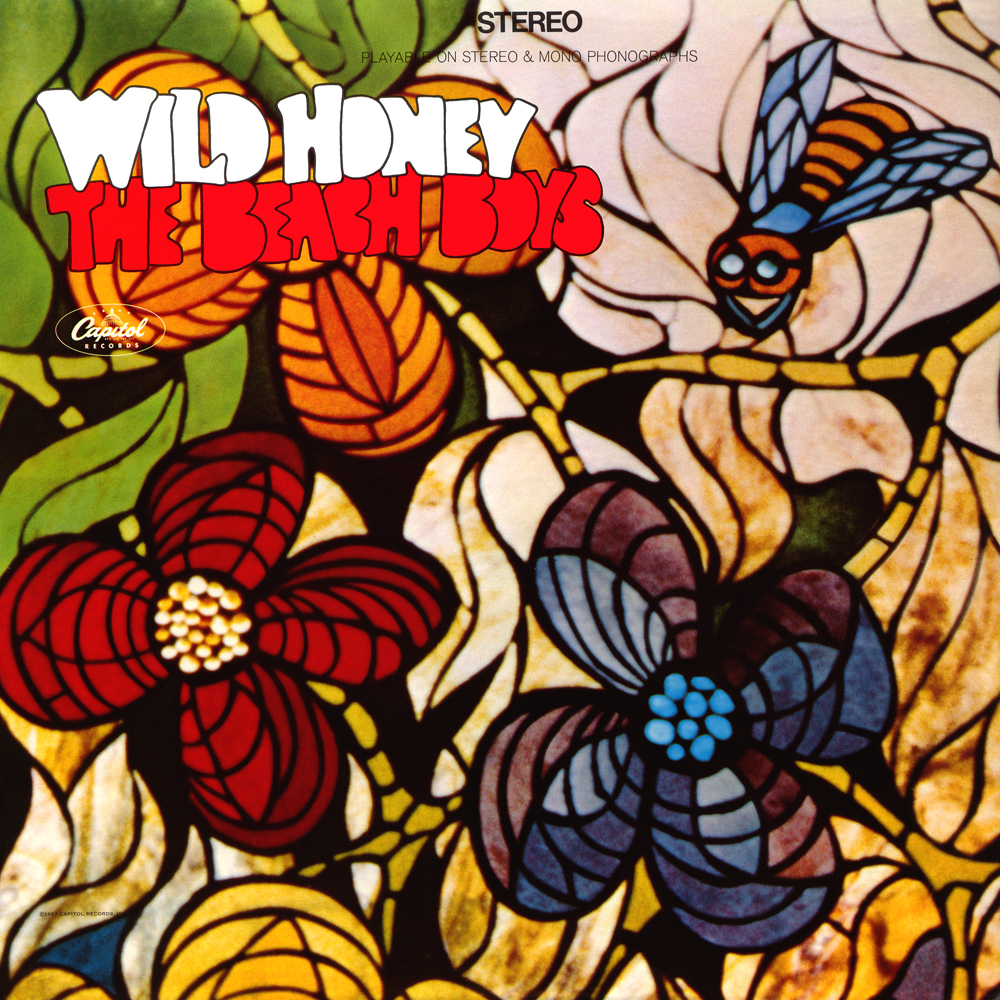
Wild Honey is the thirteenth studio album of The Beach Boys. The album was produced by Brian and Carl Wilson and was the first studio release under the Brother Records label, distributed by Capitol. It was released on 24 June 1968. The album was recorded as an attempt to 'redefine Beach Boys as a democratic band'. Although numerous compositions by Brian Wilson, the album is noted by the significant contribution of the members of the group in the lyrics, and by the Wilson Brothers and Mike Love leadership, since Brian was temporarily away from his functions.

The album was firstly received with mixed to negative reviews by the critics but ended up well-received by the fans and public in general. It was observed a different style since the previous album, by bringing R&B and Soul influences to the album, mixed with general psychedelia similar to the albums which precede Smile and Pet Sounds, named as "exquisite, unorthodox mainstream pop music". The lead single, Darlin', has shown that the popularity of the band was slightly increasing since the stylistic change, hitting number 5 on Billboard Hot 100. Wild Honey topped the UK Album Charts and reached number 7.

Regarded as one of the prettiest Beach Boys albums, Wild Honey is recalled as a step back of Brian Wilson's ambitiousness merging into an oddly satisfying, low-budget record, being sometimes considered even better than Smile. It is considered one of the most influential records on Indie and Lo-fi music.

Notes:
[1] Tracks sourced from Pink Floyd's The Piper at the Gates of Dawn and David Bowie's self-titled debut album.

[2] Tracks sourced from Wild Honey, Smiley Smile, Friends, and Wake the World: The Friends sessions. Meant for You is an alternate mix including the session intro.

[3]  Thinkin' 'Bout You Baby is the original name of Darlin'.

Author's addendum:
Yeah, ladies and gentlemen, the first break-up of a group. Although were friends, Syd and Bowie couldn't reach an agreement to stay as a competent duo, needing to put into an indefinite hiatus.
And here is the first not-so-common band in alternate histories, Bee Gees! It would be an interesting plot to see what if Robin Gibb didn't briefly leave the band, and what if the Bee Gees' Odessa would've fulfilled its proposal. I've done a little plot with Bee Gees in my other timeline, Projection, but this time I want to work further into a new, and prolonged plot.
And for The Beatles and Beach Boys, I wanted to give roles reversed in a way... with Beach Boys releasing a double album in 1968 instead of Wild Honey and Friends, and set The Beatles to release two albums instead of the White Album.

Tuesday, May 25, 2021

1967: Psychedelic Boom II

Contractual Obligations

Robert Wyatt performing with Soft Machine, 1967.

"So, Peter came to us and basically he wanted a record to be released until the end of the year. As I said once, we didn't like to have any obligations, and record anything under pressure was horrible. Then I came to Hugh to see if he could help us to record our extended play, since we didn't want to make an album already."
-Robert Wyatt, 1995 
Soft Machine already had released their debut single, Love Makes Sweet Music, showing that a potential band was emerging. The contract signed with EMI required that the group needed to release a record that year. Forcibly agreeing with the label, Soft Machine reunited with close friends, Hugh Hopper and his brother, Brian Hopper and hired Kim Fowley (who produced the B-side Feelin' Reelin' Squeelin') to produce their EP.

The group spent a week to record a set of five songs, which were included in an extended play along with Love Makes Sweet Music and Feelin' Reelin' Squeelin', except for Clarence in Wonderland, which the master tape was initially presumed lost, but it was found in 1981 by an EMI employee. The early version of Clarence in Wonderland appeared as a bonus track on the re-release of Shooting at the Moon and Hope for Happiness.

Soft Machine – Shooting at the Moon EP
Soft Machine - Shooting at the Moon EP (1967)
Genre: Psychedelic rock, Canterbury scene, beat
Total: 23:29

Side A - 12:44
1. "I Should've Known" (Kevin Ayers, Mike Ratledge, Robert Wyatt, Daevid Allen, Hugh Hopper) - 7:27
2. "Love Makes Sweet Music" (Ayers) - 2:27
3. "Feelin' Reelin' Squeelin' (Ayers) - 2:50

Side B - 10:45
4. "That's How Much I Need You Now" (Wyatt) - 2:25
5. "Memories" (Hopper) - 2:56
6. "Jet-Propelled Photograph" (Ayers) - 2:30
7. "Fred the Fish" (Allen) - 2:55

One of the first and essential records to understand the initial development of the Canterbury scene, the Soft Machine released Shooting at the Moon on 21 August 1967 by EMI, produced by Kim Fowley. Including singles, Love Makes Sweet Music and Feelin' Reelin' Squeelin', the album mixed Jazz music, psychedelic rock and beat influences. Songs were mostly written by member Kevin Ayers, one song credited to Robert Wyatt, and two songs credited by close friend Hugh Hopper. The lyrical themes reflect, mostly, unrequited love.

The band is integrated by Kevin Ayers on bass guitar, Robert Wyatt on drums and percussion, Daevid Allen on the lead guitar, and Mike Ratledge on keyboards, and featured the participation of Brian and Hugh Hopper, friends since the Wilde Flowers times, in some tracks. Memories was released as the lead single of the extended play, making it a strong success in the United Kingdom by peaking in number 3. In Billboard Hot 100, the song reached number 99.

Although the album was received with reasonably good reviews by the critics of the time, in later years the members of Soft Machine avoided to talk about the album, except for Daevid Allen. The record peaked in number 20 in UK Album Charts and failed to chart in Billboard 200.

Heroes and Villains

Promotional photo for Beach Boys' SMiLE, 1967.

Still recording SMiLE, Beach Boys were being pressured by Capitol to finish the album quickly. Brian Wilson and the band themselves were becoming stressed out with the label. At the same time, Carl Wilson and Mike Love were searching a way to establish Beach Boys' own label, called Brother Records. In March 1967, the band went to the United Kingdom and performed a set of songs including the then-unreleased Heroes and Villains and Surf's Up with Brian Wilson in BBC.

"Well, the band was going... really bad. Brian was becoming stressed, using an aggressive amount of drugs, and that almost fucked up the album. And Capitol was really wanting to release something new. Brian and them wanted Heroes and Villains, Mike wanted Wind Chimes, while the rest of us insisted on Cabin Essence, and we succeeded to release Cabin as single."
-Carl Wilson, 1988 
The release of Cabin Essence, backed by Heroes and Villains was warmly received to the public and with mixed-to-positive reviews. Some reviewers liked the concept linked between the single and the previous, Good Vibrations, and linked the band to an approach in-between baroque pop and avant-garde music. It was less successful than the previous single. Pleasured with the warm success of the single, Capitol eased and postponed the release, expected between June and September. But still, The Beach Boys weren't confident with the company's behavior. The song reached number 9 in Billboard Hot 100.
"Last month of recordings I talked to Brian to appease his work with drugs. Carl and I warned the rest of the members to stop using so we could complete it without any side-effects. I mean, during the sessions of The Elements, he was saying that the studios were on fire and somehow it was his fault because of Fire, the song, y'know."
-Mike Love, 2000
Amidst the problems, Paul McCartney resolved to visit Los Angeles, and subsequently the band, during the sessions of both Smile and Sgt. Pepper's. He eventually was invited to chew a celery for the track Vegetables. Impressed with the different-but-similar work between both bands, Paul praised for Wind Chimes

By March, the production of the album entered into a hiatus. Caused by Brian's erratic behavior, corporate pressures, internal power struggle, and Van Dyke Parks' departure, the album was almost ditched by Brian and the band themselves. Specially after the departure of Parks, which affected on Brian's view on the album's assemble.

In a day in early May of 1967, Carl Wilson and Mike Love, considered two of the most powerful members of The Beach Boys along and after Brian at the time gathered and talked about the future of the project. Both didn't want to ditch the record, but they needed to put Brian down for a time. With the idea in mind, the band hired The Mamas & The Papas producer Lou Adler.
"So there was Carl and me at my house, talking about Smile. He asked me if I wanted to drop the work and I said 'Hell, no!', and the entire band was in the same point. I wanted to take the most cohesive stuff there to make the album, maybe hire someone to help us, and repel Brian for some time. I thought most of the stuff there was nonsensical, but Carl insisted on keep most of that in the album."

-Mike Love, 2006

"Lou [Adler] was quite known in the region, and as he contributed to the California sound we wanted a help to finish that stuff and move on as quick as possible. When Brian heard the news that Lou was doing the rest of the album he was quite bugged about that, as well as dad, a few days later. It was his masterpiece, and ditch him like that was not a good thing."

 -Carl Wilson, 1988

"It was quite an insane project, no doubts that it was one of the hardest things to produce, even when I got the hang of it. The amounts of tapes that Brian and the band did was something that I could not stand alone if not with the help and guidance of the rest of the band that helped me."

-Lou Adler, 1994

In a band's reunion, the band decided to move Brian away from production, focusing on composing more... down-to-earth stuff, as Mike wanted. On May 14, the band conducted a press conference with the Dutch music press, claiming that the Smile project was changed to Smiley Smile, and it was expected to be released by two months. With Lou Adler, the band recorded three more new tracks: Whistle In, Little Pad, and the rerecorded Can't Wait Too Long.

With over 50 hours of tape, the band and managed to finish recording Smile in late May. The last record being released by Capitol, Smile's release date was finally announced to June 30th, 1967. Produced by Brian Wilson and Lou Adler, the band started to tour again, while Brian Wilson was left to psychiatric treatment and compose new songs in his new acquired Bel-Air mansion. After the release, the band reached an agreement with Capitol Records and was finally free to establish their new record label, Brother Records.

The Beach Boys – Smiley Smile
The Beach Boys - Smiley Smile (1967)¹
Genre: Art rock, progressive pop, avant-pop
Total: 40:58

Side A - 20:13
1. "Whistle In" - 1:04
2. "Heroes and Villains" (Brian Wilson, Van Dyke Parks) - 3:41
3. "Vegetables" (B. Wilson, Parks) - 3:49
4. "Roll Plymouth Rock" (B. Wilson, Parks) - 4:00
5. "Can't Wait Too Long" (B. Wilson) - 3:25
6. "In Blue Hawaii" (B. Wilson) - 1:34
7. "Little Pad" (B. Wilson) - 2:30

Side B - 20:45
8. "Wonderful" (B. Wilson, Parks) - 2:02
9. "Child is the Father of the Man" (B. Wilson, Parks) - 3:02
10. "Good Vibrations" (B. Wilson, Mike Love) - 4:15
11. "Cabin Essence" (B. Wilson, Parks) - 3:34
12. "Wind Chimes" (B. Wilson) - 2:33
13. "Surf's Up" (B. Wilson, Parks) - 4:11
14. "You're Welcome" (B. Wilson) - 1:08

Smiley Smile was released on 15 July 1967 by Capitol Records with production credited to Lou Adler and the Beach Boys. Following a controversial recording session period with the presence of poet and songwriter Van Dyke Parks, the drug abuse by the band members during the recording of Smiley Smile was very active. Most of the songs were credited to the partnership between Parks and Brian Wilson, with themes ranging between Western satires, physical fitness, philosophy and etc.

The album has been met with wide appraise to mixed reviews by music critics at the time, and with universal acclaim among the people. In the same week, Surf's Up was released as the lead and last single of the album, making into a hit in the US, peaking in number 7 in Billboard Hot 100, and number 6 in UK Single Charts. The album performed better than Pet Sounds, reaching number 8, and it topped in the United Kingdom as well. It remains as a cult favorite by fans, along with Landlocked., Holland and Pet Sounds.

The band, particularly Brian Wilson dubbed it as a belated answer to The Beatles' Revolver, and now to Sgt. Peppers, reaching number 3 in Billboard, and number 2 in Britain, both losing to The Beatles' Sgt. Peppers. The acclaim from the album came from several factors: the emergence of the Flower Power movement, the beginning of the Summer of Love, and Sgt. Peppers. Smiley Smile is considered the album that established The Beach Boys as a rising force, engaging in a 'friendly feud' with The Beatles.

The record was regarded as highly influential in later scenes like Shoegaze, Avant-rock and noise music scenes, and some people consider the record as the beginning of Beach Boys' golden age (although most consider Pet Sounds or The Beach Boys Today), and often considered one of the leading albums of the Summer of Love. Two months later, Beach Boys would release Lei'd in Hawaii, the first record released under their label, Brother Records. Differences aside, Bruce Johnston considered Smile a turning point for the band.

Something... Big was Coming

Beatles during the photo sessions for the cover of Sgt. Peppers.

Thanks to the promotional single Cabin Essence and the eventual release of Smile, the Beach Boys' new hit ended up confining The Beatles at the studios to focusing in next album, as EMI did pressure to the band and their producer George Martin now for something near for what Beach Boys did with Smile, and a quick release. Brian Epstein was trying to negotiate a half term with the label to help the band in it.

"Yeah, we were almost in the end of Sgt. Pepper's, but ended up that Beach Boys did some really good stuff and the executives came to us and listened to our project and wanted to do even more songs like 'oooh, it's good but it can be better'. So we can consider that they wanted something big to take Beach Boys off the spot."
-Paul McCartney, 2014
"I remember that one day George and I were talking about how EMI pressured us for Sgt. Peppers and how we were so fucking pissed about that. And basically that was how the idea of Apple Records was born. Paul told us about the Beach Boys' idea, and George and so did want to establish a new label as they were almost doing."
-John Lennon, 1987
According to engineer Geoff Emerick, present in the sessions of the album, the band spent 700 hours to record Sgt. Peppers. After the sessions, The Beatles attended a meeting of Maharishi Mahesh Yogi, who would lead them into traveling to Rishikesh to take part in a Transcendental Meditation. Although unsure about it, manager Brian Epstein allowed the band to take the course. They were accompanied by singer-songwriter Donovan.

The Beatles – Sgt. Pepper's Lonely Hearts Club Band
The Beatles - Sgt. Pepper's Lonely Hearts Club Band (1967)²
Genre: Psychedelic rock, art rock
Total: 41:39
All songs written by John Lennon & Paul McCartney, except when noted.

Side A - 20:39
1. "Sgt. Pepper's Lonely Hearts Club Band" - 2:00
2. "With a Little Help from My Friends" - 2:42
3. "Strawberry Fields Forever" - 4:05
4. "Getting Better" - 2:48
5. "Penny Lane" - 3:00
6. "Fixing a Hole" - 2:36
7. "Lucy in the Sky with Diamonds" - 3:28

Side B - 21:00
8. "Within You Without You" (George Harrison) - 5:05
9. "Good Morning Good Morning" - 2:42
10. "Lovely Rita" - 2:42
11. "She's Leaving Home" - 3:35
12. "Sgt. Pepper's Lonely Hearts Club Band (Reprise)" - 1:18
13. "A Day in the Life" - 5:38

Sgt. Pepper's Lonely Hearts Club Band, produced by George Martin, and the eighth studio album by The Beatles, was considered a revolution in music at the time. Reviews varied to the harshed 'pretentious music' to predominantly favorable views as being The Beatles' magnum opus. Initially, with an ease time in the recording sessions, and following the release of Beach Boys' Cabin Essence, EMI Records started to push the band for new material.

In July, the band released another single, All You Need is Love, topping the UK Singles Chart for three weeks, and Billboard Hot 100 for a week only. A ground-breaking hit, Sgt. Pepper's was played in various American radio stations in a non-stop cycle, and topped Billboard Top LPs for fifteen weeks and UK Album Charts for 23 weeks. As soon as possible, the album exceeded Smile's sales. Although rumors, The Beatles' declined the invitation of the Monterey International Pop Festival, while the Beach Boys headlined.

Musicologists regard Sgt. Pepper's as an early example of conceptual album by The Beatles playing the role of their alter egos in the title band. Ranging in various genres, such as Baroque pop, Circus music, Indian classical music, and many others, the album was influential in musical scenes around the world, such as in Art rock, progressive rock, and psychedelic scene cycles. The album is ranked as number one in Rolling Stone's 500 Greatest Albums of All Time.

With the release of Sgt. Peppers and Smiley Smile, two of the numerous records to headline the emergence of the Summer of Love, people started to embrace the flower power movement. Sgt. Peppers would be followed by Magical Mystery Tour, a film soundtrack for the film of the same name done by The Beatles. After both albums, Brian Epstein and The Beatles would seek to establish Apple Records in association with EMI.

The Establishment of a Brand New Label

The first and only one logo of Blackhill Records.

But changes were about to come. In a reunion with the EMI's board, Peter Jenner and Andrew King could establish a subsidiary company named Blackhill Records. The sudden establishment of the label remained controversial due to problems with other labels which had contract with other bands inside the Blackhill Enterprises. Reaching an agreement, the artists that were in process of recording their albums would release under the current label, then move to Blackhill, while the bands that hadn't recorded anything would already move to the new label.

The first album released under Blackhill's label was Rubber Band's The Piper at the Gates of Dawn, with catalog number of BLHILL1, while the first single was Pink Floyd Sound's Paintbox/A Spanish Piece. Following Rubber Band's second album, there was Pink Floyd Sound's Keep Smiling People and Tomorrow's eponymous debut album.

Author's addendum:
Here they are, the two pieces which are often considered as a fight for the soundtrack of Summer of Love. The Beach Boys insist on finishing Smile, one way or another, and the Beatles release a... quite different version for Sgt. Pepper. On the other hand, it turns out that the Blackhill Records will have a similar role to Harvest Records (though Harvest would still exist in promoting a new line of bands turned into Hard rock and heavy metal music).

Notes:
[1] Most of the tracks are sourced from The Smile Sessions. Whistle In, Heroes and Villains, and Little Pad were sourced from Smiley Smile. In Blue Hawaii is actually Love to Say Da Da (sourced from Good Vibrations: Thirty Years of The Beach Boys), don't confuse with the BWPS version. Can't Wait Too Long is the Alternative Mix - Tag from 1967 – Sunshine Tomorrow.

[2] The tracks are sourced from Sgt. Pepper's Lonely Hearts Club Band and Magical Mystery Tour.