Showing posts with label David Bowie. Show all posts

Thursday, August 19, 2021

1970/1971: From my country to the world!

Don't put your wires in my brain

Roger Waters and David Gilmour during the sessions of Atom Heart Mother, 1970.

In the turn of the decade, Pink Floyd started to record their fifth album. After the failed sessions for the Zabriskie Point movie, which ended up only with a new version of Careful With That Axe, Eugene, while the band headed back to London with a few unreleased jams recorded during the sessions. Back in London, the group recorded a number of instrumentals that would be assembled into a large piece first performed in 17 January 1970, labeled "Theme from an Imaginary Western" according to David Gilmour.

By the meantime, the band was involved in other parallel projects too, producing Tailboard's debut album while Roger Waters partnered with Ron Geesin, bringing him to develop the track while also recording a soundtrack album for the documentary The Body. The rest of the band wasn't involved, instead focusing in their next album, producing a lot of instrumentals in-between tours.

Even though the idea initially was to each member contribute with a fair share to the album, as the sessions progressed, it seemed that the idea was being discarded, with the inclusion of Zabriskie Point demos, the country-influenced Crumbling Land (then-titled Country Song) and the rock-themed Red Queen (then-titled Unknown Song), both written by Roger Waters and mostly sung by David Gilmour.

Roger also included a folk piece originally recorded for The Body called Chain of Life. Nick Mason recorded the instrumental Heart Beat, Pig Meat, while Richard Wright included the instrumental Rise and Shine along with his track Summer '68. Fat Old Sun became Gilmour's second songwriting effort aside from his instrumental compositions such as Sunny Side Up.

However, the group wasn't satisfied with the epic on its large form. The experimental parts seemed to appeal to the space rock imagery associated with Pink Floyd, which the band wasn't particularly very fond of. The epic was dismantled in the album between to parts revolving the main theme, while the epic on its own remained unreleased until its unofficial appearance on bootlegs and its official release on Atom Heart Mother's 40th anniversary in 2010. Still, the group performed the epic, now named Atom Heart Mother, on its entirety on their shows.
"I believe that we were in a process that we didn't like the result of the suite of Atom Heart Mother as a cohesive project. It was a mishmash of ideas that sounded better when they were apart, so we preferred to dismantle the track all the way to the remaining ones that made it into the album."

-Roger Waters 

Quite unsatisfied with the final product, Blackhill Records announced Pink Floyd's fifth record entitled Atom Heart Mother. Red Queen was released as the promotional single, surprisingly reaching number 4 in the United Kingdom, number 13 in Billboard Hot Rock Singles, and number 35 in Billboard Hot 100, becoming one of the band's most played songs in the radio during the 1970s.

"Pretty weird to think that Atom Heart Mother was our breakthrough album in the United Kingdom. I'll be honest that I don't like that album, and I simply don't want to play stuff that I don't enjoy apart from maybe Red Queen and Fat Old Sun."

-David Gilmour 

Pink Floyd – Atom Heart Mother
Pink Floyd - Atom Heart Mother (1970)
Genre: Progressive rock, experimental, folk rock
Total: 46:10

Side A - 22:36
1. "Heart Beat, Pig Meat" (Nick Mason) - 3:12
2. "Atom Heart Mother" (Roger Waters, Richard Wright, David Gilmour, Mason, Ron Geesin) - 5:23
3. "Chain of Life" (Waters) - 3:59
4. "Sunny Side Up" (Gilmour) - 3:19
5. "Crumbling Land" (Waters, Wright, Gilmour) - 4:16
6. "Atom Heart Mother (Remergence)" (Waters, Wright, Gilmour, Mason, Geesin) - 5:48

Side B - 23:34
7. "Rise and Shine" (Wright) - 2:31
8. "If" (Waters) - 4:31
9. "Summer '68" (Wright) - 5:29
10. "Fat Old Sun" (Gilmour) - 5:22
11. "Red Queen" (Waters, Gilmour) - 4:37
12. "Morning Glory" (Waters, Wright, Gilmour, Mason) - 4:41

Atom Heart Mother is the fifth studio album by the British band Pink Floyd. The album was produced by the band, and the last credited to Norman Smith as a producer. It was released on 2 October 1970 in the United Kingdom and Europe by Blackhill Records, and 10 October in the United States and the rest of the world by Columbia. The album was recorded as Pink Floyd was trying to avoid the space rock association with less experimentation and more pastoral themes.

The sessions of the album began, in fact, in early 1970, where the band started assembling instrumentals done in rehearsals with the ones recorded previously in the failed sessions of the movie Zabriskie Point. Originally, the idea was to create an epic, conceived by the band and songwriting partner Ron Geesin. After all, the band decided to split the epic between two parts of the title track.

Ironically, after the sessions, the band remained unsatisfied with the final result, but Atom Heart Mother ended up becoming Pink Floyd's breakthrough in the United Kingdom topping the charts after dethroning the fellow Soft Machine's Magick Brother. In the United States, the album reached number 55, a new record for the band in the other side of the ocean.

The band released three singles for Atom Heart Mother: the first one, Red Queen, was released as a promotional single, becoming the most successful between the three. The second one is the country-influenced Crumbling Land, more successful in the United States reaching number 25, and the third one, Summer '68, popular in France and West Germany, reaching number 10 in the UK charts.

Face to face with the man who sold the world

David Bowie in 1970.

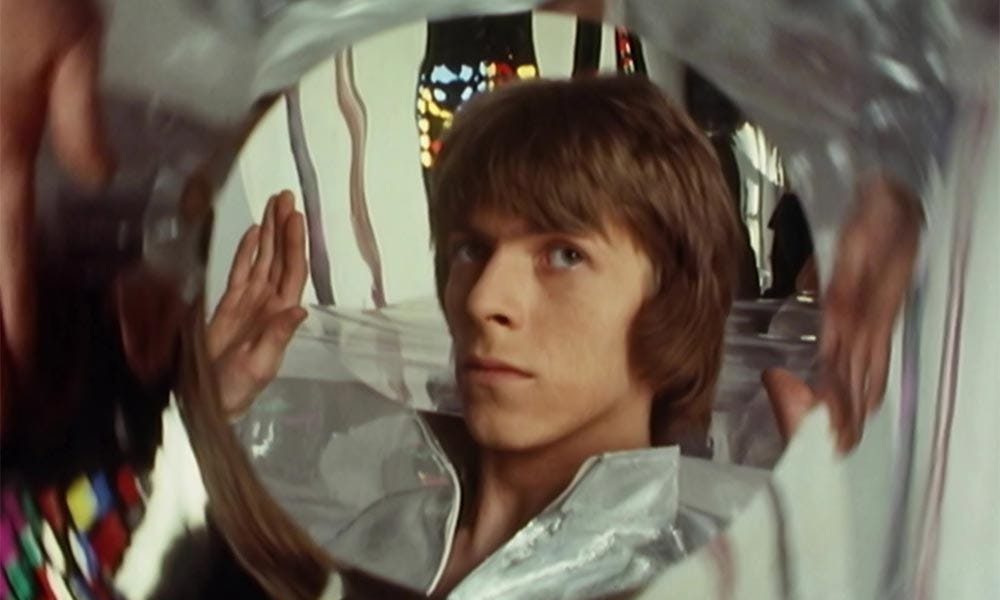
Following the successful release of An Occasional Dream, which included Bowie's yet-biggest single Space Oddity, David Bowie went to form his backing band called Hype, formed by Tony Visconti on bass guitar and drummer John Cambridge. Meeting guitarist Mick Ronson, Hype was complete, with Cambridge being replaced by Mick Woodmansey by the end of March, suggested by Ronson. 

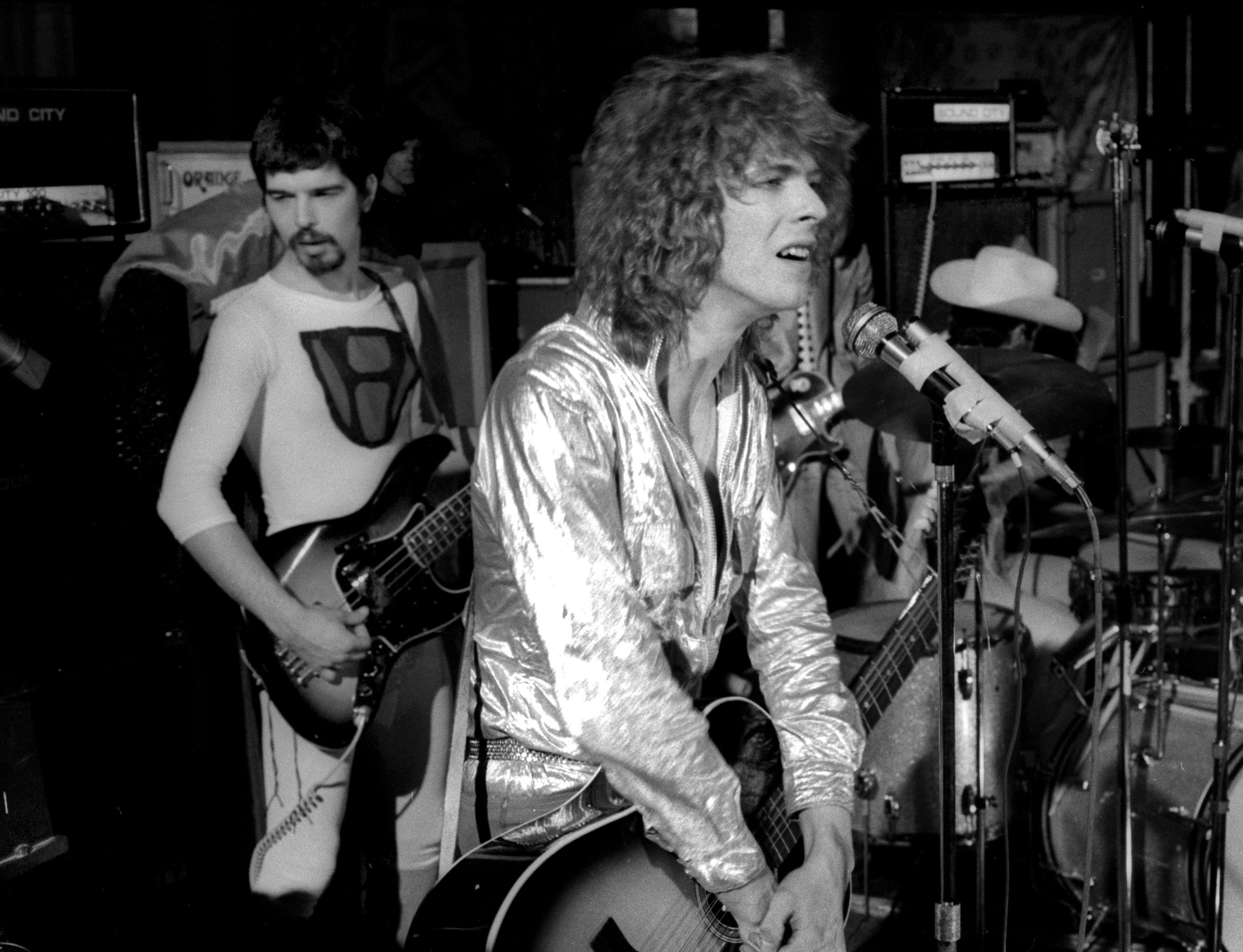
In the meantime, the group presented themselves as David Bowie & Hype, performing in superhero costumes designed by Bowie's now wife Angela Burnett. Once, Visconti's clothes were stolen, where he had to return home as the Hypeman. The group rented an Edwardian mansion in Beckenham. Ronson and Visconti built a small makeshift studio there, where Bowie generally recorded most of the early 1970s demos.

The recording sessions for Bowie's next album started in April 1970 at the Advision Studios in London, then moving to the Trident Studios. During the same time, most of personal and managerial life of Bowie were in a hurry, leaving the arrangements to Ronson and Visconti, while Bowie focused more on lyrics. Bowie terminated the contract with Ken Pitt and hired Tony Defries without the consultation of Blackhill Enterprises, and while Ken remained on Blackhill, Defries' admission was more complicated.

Bowie wanted to make an album as a spin-off of The Supermen track from An Occasional Dream, hence strengthening the ties between previous albums, yet wanting something more cohesive like Cygnet Committee and 'not so loose' like the previous album. At the time, Bowie's relations with Blackhill's board were getting more and more strained, besides the issues with Ken Pitt and Tony Defries, Bowie wanted less control of the company in his career, wanting more artistic freedom to work, similarly to Syd's situation a few months prior.
"When I saw that Bowie was in the same point as myself, I immediately went to that big house that he was living and we talked so much about that. And he was right, actually, he wanted to change his own manager, and what's so revolting about this? If he wanted to cut ties with Blackhill, that was his decision, and I supported him until the end."

- Syd Barrett

Reaching an agreement with Blackhill, Metrobolist would be Bowie's last album under Blackhill Records, becoming the first major artist and founder from the label to depart. In late 1970, Bowie signed with RCA Records, as suggested by Defries. Bowie's departure would mark another point of the downfall of Blackhill.

As of Syd, his stay in Blackhill was far more complicated than Bowie, as he was still seen as the 'underground symbol', even though Bowie and Bolan scored a few more hits than him. In an agreement with the high-ranking of the label, Syd swapped managers from Peter Jenner to Andrew King, but still, Jenner would complain with Syd's absence in 1970, as he was getting engaged with Gayla Pinion.

Metrobolist was announced by Blackhill Records as the newest Bowie's release, under David Bowie & Hype, nearly a year after An Occasional Dream. No singles were released as Bowie's contract expired, but some songs were re-recorded under RCA and released as B-sides. The album received a little promotion from Blackhill and a bit more from Bowie's new label, RCA.

David Bowie & Hype – Metrobolist
David Bowie & Hype - Metrobolist (1970)
Genre: Hard rock, blues rock
Total: 40:24
All tracks are written by David Bowie.

Side A - 21:27
1. "The Width of a Circle" - 8:05
2. "All the Madmen" - 5:38
3. "Black Country Rock" - 3:32
4. "After All" - 3:52

Side B - 18:57
5. "Running Gun Blues" - 3:11
6. "Saviour Machine" - 4:25
7. "She Shook Me Cold" - 4:13
8. "The Man Who Sold the World" - 3:55
9. "Holy Holy" - 3:13

Metrobolist is the third studio album from British singer-songwriter David Bowie, produced by Tony Visconti. The album was released on 4 November 1970 by Blackhill Records, ultimately becoming Bowie's last album under the label before moving into RCA Records. The album's style is considered a sudden shift from David toward hard and blues rock music. It was the only record of David Bowie backed by his band, Hype.

As said before, music critics noticed Bowie's sudden shift from progressive, psychedelic and folk influences to a more straight-sounding hard and blues rock, quite similar to The Supermen track. Progressive elements were incorporated on the eight-minute epic The Width of a Circle, and the more hard elements are widely based on Cream.

As a result of Bowie's dismissal from Blackhill Records, no singles were released, and the album received a little promotion, in contrast with An Occasional Dream. The album was better critically received in the United States than in the UK, although selling less than its predecessor. Metrobolist reached number 6 in UK Album Charts and number 122 in the Billboard 200.

Despite initially being a commercial failure, the 1972 reissue after the breakthrough with Ziggy Stardust was revaluated by the critics, and ultimately became a fan-favorite and a cult classic with tracks such as The Man Who Sold the World and All the Madmen. The album is cited as an influence to goth rock and later glam rock.

Keeping the heat with memories


Os Mutantes somewhere in the early 1970s.

Os Mutantes would fulfill their dreams on being international rockstars with an international tour around Europe. At the time, the group was supporting The Moody Blues, which seemed to shape the sound of the group in later works. Still, the American Dream of the band seemed out of touch for a while, even with the interest around the band back in the Old World. The group was promoting Tecnicolor and their most recent release back in Brazil, A Divina Comédia ou Ando Meio Desligado.
"[...] I mean, do you think that the audience cares about the lyrics? We were having fun a lot with The Moody Blues at the time, but that proved a little that our music was certainly cheerful to the audience, I've even seen some people dancing in some shows there."

- Rita Lee 

Despite the transition between psychedelic rock to a progressive sound at the time, Polygram was interested into invest in the potential success of the group outside their home country, and Tecnicolor would be the presentation of another side of Brazil, besides the breezy bossa nova/lounge, to a more chaotic and playful rock music developed outside the American and mostly British hotspots.

The tropicália movement was going to reach international audiences... quite belated. Back in Brazil, the authoritarian military regime persecuting artists in music forced some of them to go to exile, such as Caetano Veloso and Gilberto Gil. The tropical themes of circus, carnival and party would be replaced by more somber themes of saudade and resistance against the regime of the time. A term coined by specialists defines this as the 'post-Tropicália era'. Os Mutantes wouldn't be affected again by the persecution... for a while.
"It was an appearance on a TV show [Samedi et Compagnie] in France when Albert [Raisner] asked about how life in Brazil was when Rita suddenly reaffirmed what Elis [Regina] said, that Brazil was 'a country ruled by troglodytes', and we [Sérgio Dias and Arnaldo Baptista] agreed with her, quite nervous about that, haha!"

- Sérgio Dias

The event passed quite unnoticed in Brazil at the time thanks to the efforts of the regime to prevent the same reactions as Elis did before. For the band themselves, they suffered some reprisals after returning to Brazil. The contract with Polygram was almost terminated, Rita herself was temporarily jailed, being freed under the same conditions imposed for Elis Regina, and Os Mutantes, now officially adding the bass player Liminha and drummer Dinho Leme to the group, went to a self-imposed exile, first in France, later in the United States.

"I remember that our last words before going to France was something like: 'from my country, to the world!'. We wanted to return as soon as possible, like we did a few years later."

- Arnaldo Baptista 

Os Mutantes – Tecnicolor
Os Mutantes - Tecnicolor (1971)
Genre: Tropicália, psychedelic rock, experimental rock
Total: 38:25
All tracks are written by Arnaldo Baptista, Rita Lee and Sérgio Dias, except where noted.

Side A - 19:33
1. "Panis et Circenses" (Caetano Veloso, Gilberto Gil) - 3:36
2. "Bat Macumba" (Veloso, Gil) - 3:16
3. "Virginia" - 3:23
4. "She's My Shoo Shoo" (Jorge Ben) - 2:52
5. "I Feel a Little Spaced Out" - 2:51
6. "Baby" (Veloso) - 3:36

Side B - 18:52
7. "Tecnicolor" - 3:54
8. "El Justiciero" - 3:52
9. "I'm Sorry Baby" (Arnaldo Baptista, Rita Lee) - 2:42
10. "Adeus, Maria Fulô" (Sivuca, Humberto Teixeira) - 2:39
11. "Le Premier Bonheur du Jour" (Jean Renard, Frank Gerald) - 2:46
12. "Saravah" - 2:59

Tecnicolor is the fourth studio album from Brazilian band Os Mutantes, and their first international release under Polygram. The album was released in 27 February 1971, being produced by Carl Holmes. The album was quite successful in most European countries such as France, West Germany and the Netherlands, bringing some new fresh music from Brazil, while it passed quite unnoticed in the United Kingdom, despite promotion in the Brazilian communities of the country.

The title track, Tecnicolor, and Virginia were released as singles, with the latter being a minor hit in France. The album reached number 21 in the French Album Charts, which was celebrated by the band. In later years, the album would receive a large cult following, including John's son Sean Lennon and Nirvana's frontman Kurt Cobain. Originally, the album wasn't released in Brazil, being reissued in 1979, a while after the disbandment of the group.

Polygram saw the release as a good sign that the band could build their international careers while exiled from Brazil. A new contract was signed, and the clause that required only one album per year was revoked, leaving the group with far more artistic freedom and ideas, yet under the schedule of delivering an album per year.

Author's comments:

Hey there! Long time no see. There were a few problems about moving from college and stuff, so it took longer than expected to me, sorry about that, we'll resume normally from now on.

Also there are a few things here and there. This will be probably David Bowie's last alternate release and we will focus a bit less on him. He will, however, appear more often later during Syd's plot, but unfortunately I don't see no things to be changed on his discography. Sorry, folks!

And now, we have the first release of Os Mutantes, which is actually the little modified version of OTL Tecnicolor, but instead, it was released as it was originally intended to an international audience. Hope you like it!

Sources:
  • Pink Floyd - Atom Heart Mother
    • Pink Floyd - Atom Heart Mother
    • Roger Waters & Ron Geesin - Music from The Body
    • Various Artists - Zabriskie Point soundtrack
  • David Bowie - Metrobolist
    • David Bowie - The Man Who Sold the World
    • David Bowie - Holy Holy / Black Country Rock
  • Os Mutantes - Tecnicolor
    • Os Mutantes - Tecnicolor (2000)

Saturday, June 5, 2021

1969: Studio, Sunshine, Space!

A return to their roots

Paul during the 1969 sessions.

Though the production of A Doll's House and the release of the experimental "Back in Your Safely Beds" were well-received and regarded as interesting recordings at the time, there was a feeling among the band that the last two years were filled with very different material, ranging from the lush sounds of Sgt. Pepper's to the raw, low-quality tracks of Umbrella, the Beatle' standard, A Doll's House, and the experimental "Back in Your Safely Beds". According to Geoff Emmerick, Paul was the first one to express the idea of the return to their roots in the next project.

The project conceived by Paul McCartney was widely discussed with Brian Epstein and The Beatles after the release of "Back in Your Safely Beds", in which was included a documentary film, a special broadcasted live performance, and an album (which would become the eventual, full-length soundtrack, Get Back). An eventual tour was even considered, however, the idea was quickly disregarded.

In 1969, Allen Klein contacted Brian Epstein after reading a comment to fill a position as head manager of Apple Records. Both reached an agreement, and Allen assumed the office. Paul's recommendation, Lee and John Eastman, respectively father and brother of his wife Linda, was considered but ended up being appointed as the attorneys for the band and the company. Allen's position in Apple would determine the future of The Beatles as a band.
"At the time, the hiring of Allen Klein was the worst possible thing to think, but after all, it just ended up keeping us together even more. After 1970 when John, George, Ringo and Brian discovered that Allen wasn't someone to trust in, we've just talked, like that sort of out of the blue thing, and became trustful to each other again. I'm really glad that everything worked out fine, at least to all of us."
-Paul McCartney, 2011 
In March of that year, the Beatles would first gather along with Brian Epstein and the film crew at the Twickenham Film Studios to rehearsal. Most of the documentary was filmed there, along with takes at the Apple Recording Studios, EMI Studios, and the Apple Corps, consisting of the recording sessions of Get Back. Most of the tapes were recorded during March and April when most of Get Back was recorded. The filming would also take place some days in June and July when the band finished the sessions for Get Back and was finishing Abbey Road.

In May and June, John was mostly absent. On May 31, 1969, Yoko Ono gave birth to the couple's first child, a girl named Charlotte Narumi Ono Lennon. The marriage between Lennon and Ono happened in a private ceremony in Gibraltar on July 28, almost two months after the birth of Charlotte, with the presence of The Beatles, friends, and family. Charlotte's arrival ended up messing with John's schedule in peace activism, mainly against the Vietnam War, which he would restart late that year with the Bed-Ins for Peace, recording the single Give Peace a Chance.

During the sessions, the tensions between The Beatles started to rise again, reaching the climax when George threatened to quit the band. Brian Epstein negotiated on behalf of George and decided to do a short radio session instead, scheduling a presentation at the Peel sessions on July 17th. The last recording session with the presence of all the Beatles in 1969 was on August 20th, to overdubs for It's All Too Much!.

Abbey Road was announced as another compilation of tracks that wouldn't take part in the official soundtrack. Most of the songs of Lennon-McCartney were primarily written in Rishikesh, as the same happened in the last two albums (three, if you count "Back in Your Safely Beds"). Moreover, The Beatles did a little promotion for the album, as the members seemed to distance one from each other. Most of the legacy of Abbey Road can be spotted on the iconic cover, to George Harrison's Something becoming a hit and the second most covered song of The Beatles after Yesterday, the longest track of the band [I Want You (She's So Heavy)], and being considered a hit-driven album.
"Sure, Abbey Road was a strange point in our career. We've released the album with no pretensions at all, and then we see Something, the best track of the entire record by the way, becoming a big hit, Dear Prudence, [Oh!] Darling, and a few other tracks becoming rememorable Beatles' songs, that was weird at the time, of course."
-John Lennon, 1996
The Beatles – Abbey Road
 The Beatles - Abbey Road (1969)
Genre: Rock, psychedelic rock, blues rock
Total: 46:11

Side A - 22:01
1. "Blackbird" (Lennon-McCartney) - 2:18
2. "Something" (George Harrison) - 3:03
3. "Happiness is a Warm Gun" (Lennon-McCartney) - 2:43
4. "All Together Now" (Lennon-McCartney) - 2:10
5. "Dear Prudence" (Lennon-McCartney) - 3:56
6. "I Want You (She's So Heavy)" (Lennon-McCartney) - 7:47

Side B - 24:10
7. "Hey Bulldog" (Lennon-McCartney) - 3:14
8. "That Would Be Something" (Lennon-McCartney) - 2:43
9. "Here Comes the Sun" (Harrison) - 3:05
10. "Cry Baby Cry" (Lennon-McCartney) - 2:32
11. "Oh! Darling" (Lennon-McCartney) - 3:26
12. "Because" (Lennon-McCartney) - 2:45
13. "It's All Too Much!" (Harrison) - 6:25

Abbey Road is the eleventh studio album (twelfth, counting "Back in Your Safely Beds") by the British rock band, The Beatles. The record was released on 26 September 1969 by Apple Records and produced by George Martin. Abbey Road is marked as the return of The Beatles to the EMI Studios, after recording A Doll's House entirely at the A.R.S. Contrasting with its predecessor, Abbey Road contains 6 out of 13 songs primarily written by John Lennon, who was mostly absent from the sessions of the previous album. The lead single, Something/The Inner Light, was released in October, becoming one of the biggest hits from The Beatles.

Portion of the tracks were worked along with the tracks included in the upcoming album and soundtrack, Get Back, which was recorded around the same time as Abbey Road. I Want You (She's So Heavy), It's All Too Much!, Hey Bulldog and Blackbird appeared in the documentary under production. Initially, the record was received with mixed reviews by music critics, comparing the album to something in-between Umbrella and A Doll's House, but ultimately it was met with universal acclaim by the fans, becoming one of their greatest albums.

The album topped UK Album Charts for two weeks and topped Billboard for a week. The album sold two million copies, partly due to the tracks included in the album which ended up being played in radio stations and becoming classic tracks from The Beatles. The remarkable cover was parodied several times, becoming a cultural symbol and making the zebra crossing a tourist attraction. In the next years, it was theorized that the album was one of the first signs of the conflicts behind the scenes.

A very good and interesting little exercise

Nick Mason with his charming hat, 1969.
"[...] I thought it was a very good and interesting little exercise, the whole business of everyone doing a bit. But I still feel really that that's quite a good example of the sum being greater than the parts...
-Nick Mason, 1984
To pay the costs of the tour, Pink Floyd assembled again at the Pye Studios. The initial plan was to each of the four group members had half an LP side each to create a solo work without involvement from the others. The idea was carried through the first week when Roger and David decided to convince the rest of the band to collaborate and elaborate a standard album. The material recorded during the first week was Sysyphus, a musical piece by Richard Wright which was released as a solo single.

In the next two weeks, most of the music was worked out. A large part of the songs have resulted from jamming sessions from the band, and the material was put together along with the previously recorded during the sessions of Are Going Insane!. "Actually the sessions for Basking in the Sunshine were pretty simple, in three weeks we've just recorded enough material to a double album. Peter and Steve [O'Rourke] wanted something similar to the other album, so we gave them Basking in the Sunshine of a Bygone Afternoon.", Richard Wright.

The album was produced by Nick Mason and assisted by Brian Humphries, and credited to Pink Floyd. The Blackhill announced the album as a follow-up to what've been Are Going Insane!, with the release of Cymbaline as a promotional single. The song was a minor hit, with a reasonable success, being performed in the tours until 1973.

After the release of Basking in the Sunshine of a Bygone Afternoon, Pink Floyd would enter into a hiatus for four months, until the band decides to gather again in the new decade to go... into a new direction, perhaps. Not flirting with the avant-garde scene like this new record, but engaging in a new, growing scene, that would take the first half of the seventies.
"Honestly I can say to you that Basking in the Sunshine of a Bygone Afternoon isn't a good record. I wasn't seeing direction coming from our band at that time, that record was just a bunch of junk thrown into a LP and sold for a couple bucks. But it certainly it has some good tunes, but surely done in the worst way possible."
-Roger Waters, 2003
Pink Floyd  Basking in the Sunshine of a Bygone Afternoon
(L-R): UK version; US version
Pink Floyd - Basking in the Sunshine of a Bygone Afternoon (1969)
Genre: Progressive rock, space rock, experimental, psychedelic rock, field recordings, avant-garde
Total: 66:15

Disc One - 31:40
Side A - 15:15
1. "Cirrus Minor" (Roger Waters, David Gilmour) - 5:18
2. "The Ummagumma" (Gilmour) - 2:31¹
3. "Another Blues Number" (Gilmour) - 7:26²

Side B - 16:25
4. "Rain in the Country" (Waters, Richard Wright, Gilmour, Nick Mason) - 6:01³
5. "Grantchester Meadows" (Waters) - 7:26
6. "Green is the Colour" (Waters, Gilmour) - 2:58

Disc Two - 34:35
Side C - 19:32
7. "Quicksilver" (Waters, Wright, Gilmour, Mason) - 7:13
8. "Oenone" (Waters, Wright, Gilmour, Mason) - 6:21
9. "The Narrow Way" (Gilmour) - 5:58

Side D - 15:03
10. "Baby Blue Shuffle" (Gilmour) - 3:284
11. "Rick's Piano Piece" (Wright) - 6:455
12. "Cymbaline" (Waters, Gilmour) - 4:50

Basking in the Sunshine of a Bygone Afternoon is the fourth studio album by the English rock band Pink Floyd. The album was released on November 7th, 1969 by Blackhill Records in the United Kingdom and by Capitol Records in the United States, with two different covers to each version. The album was produced by the band and engineered by Brian Humphries. It is considered by many as Pink Floyd's most experimental record to date.

Differently to the predecessor, the record was recorded in three weeks, while the first week was stage of recording tape effects and Rick Wright's piece Sysyphus, later released as a solo single. The first single of the album was Cymbaline, backed with Oenone, and after the release, Cirrus Minor was released as the second single. While Cymbaline was a minor hit in Britain, Cirrus Minor failed to chart in both countries.

The album performed slightly worse than Are Going Insane, though it was praised by the press at the time. Basking in the Sunshine of a Bygone Afternoon reached the number 4 in the UK Album Charts and number 81 on Billboard. According to Roger Waters, the work would be the main reason to Pink Floyd to distance of the Avant-garde scene, exploring other forms of experimental music, such as the symphonic rock of Atom Heart Mother, the next album.
"...Yeah, that album is... just sad. We had no direction from what we would do after 'Are Going Insane', and we would go like this for the next two years until Obscured by Clouds."
-David Gilmour, 2005 

Ground control to Major Tom

David Bowie as Major Tom in the first version of Space Oddity, 1969.

Ah 1969, the year that space themes were predominantly mainstream. David Bowie already recorded one previous version of Space Oddity, for his promotional film, Love You till Tuesday, but according to him, he was not very fond of that version to be included in his next album. "As I said, I recorded one song so far. But I really didn't like the finished song. Probably I'll record it again, but, like I said, there are a few more songs to record.", David Bowie - Press Conference - April 8th, 1969.

Since Tony Visconti seemed uninterested in re-record it again, delegating the producing process to Gus Dudgeon. The second version of Space Oddity was recorded on June 20th, 1969 at the Trident Studios, with the line-up consisting of keyboardist Rick Wakeman (then-session player), Mick Wayne, Herbie Flowers, and Terry Cox. The single was not played by the BBC until after the Apollo 11 crew had safely returned.

UK sleeve.

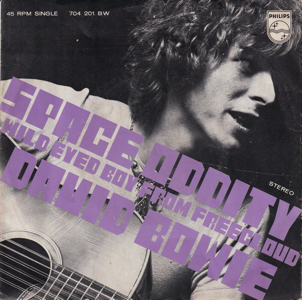
The single was released on 11 July 1969, backed by the Buddhist-influenced Wild Eyed Boy from Freecloud. After a slow start, Space Oddity became known as Bowie's solo breakthrough in the United Kingdom, topping in Britain, but being a minor hit in the United States at the time, reaching number 99. The song would be reissued a few more times until it reached number 15 in Billboard Hot 100 in 1972. The success rendered into Bowie's performance at the Tops of the Pops in October.

In the following times, in December 1969, Bowie recorded an Italian version of the song named Ragazzo solo, Ragazza sola, written by Mogol. Ten years later, Bowie would revisit Space Oddity in a stripped-down version released as single again. The song would renew its popularity after Canadian astronaut Chris Hadfield performed the song (with slightly revised lyrics) while aboard the International Space Station, therefore becoming the first music video shot in space.

David Bowie performing with The Hype, at the Roundhouse, 1969.

Bowie started to record his second solo album around the same time as he recorded Space Oddity. Backed by a notable list of collaborators such as keyboard player Rick Wakeman and producer Tony Visconti, David opted to record at the Trident Studios instead of going to the United States this time. Regarding his status as a major growing artist from the underground scene, the deadline given by the heads of the Blackhill was until October, when David actually finished on time.
"It happened that in... August of that year, I believe, there was a reunion with the board [of directors], talking about the future stuff that we were doing and etc., but then Peter [Jenner] and my previous manager established a deadline to me to finish the sessions, without my consent. Obviously I was a bit angry with them, I didn't want to do something very rushed, but I played a little game with them, and I just finished exactly on October 31st."

 -David Bowie, 2001

The two first songs that were recorded to the album were Space Oddity, and the backing single, Wild Eyed Boy from Freecloud. Following both songs, the title track An Occasional Dream and Conversation Piece were subsequently recorded throughout August and September, since some of these pieces were written in-between late 1968 and early 1969. With brief interruptions, such as the Isle of Wight, and meetings within the people of the Blackhill, Bowie managed to safely finish the recording sessions in late October.

The last songs to be recorded were The Prettiest Star, a song that Bowie wrote to his newly-found partner Angela Barnett, featuring former Rubber Band bandmate and fellow friend Marc Bolan on electric guitar, The Supermen, a song that Bowie wrote inspired by the works of Friedrich Nietzsche and H. P. Lovecraft, which was added at the last minute, and Memory of a Free Festival because three versions of the song were recorded, two versions being included on the album as Part 1 and Part 2, and an alternate version which was then released as the backing single of The Prettiest Star.

With great anticipation, Blackhill Records announced David Bowie's second solo album, entitled An Occasional Dream. While in the United States the announcement almost went unnoticed, in Europe and the United Kingdom, the announcement of the album was received with a certain amount of hype towards Bowie's newest record. The Prettiest Star was released as the promotional single, backed by Memory of a Free Festival, becoming a hit and reaching the top 10 mostly due to the Space Oddity effect.

David Bowie – An Occasional Dream
David Bowie - An Occasional Dream (1969)
Genre: Progressive folk, psychedelic rock
Total: 44:33
All tracks are written by David Bowie.

Side A - 22:09
1. "Memory of a Free Festival (Part I)" - 2:43
2. "Space Oddity" - 5:16
3. "Unwashed and Somewhat Slightly Dazed" - 6:15
4. "Letter to Hermione" - 2:33
5. "God Knows I'm Good" - 3:21
6. "An Occasional Dream" - 3:01

Side B - 22:24
7. "Wild Eyed Boy from Freecloud" - 4:53
8. "Conversation Piece" - 3:05
9. "Janine" - 3:25
10. "The Prettiest Star" - 3:12
11. "The Supermen (Don't Sit Down)" - 4:18¹
12. "Memory of a Free Festival (Part II)" - 3:31

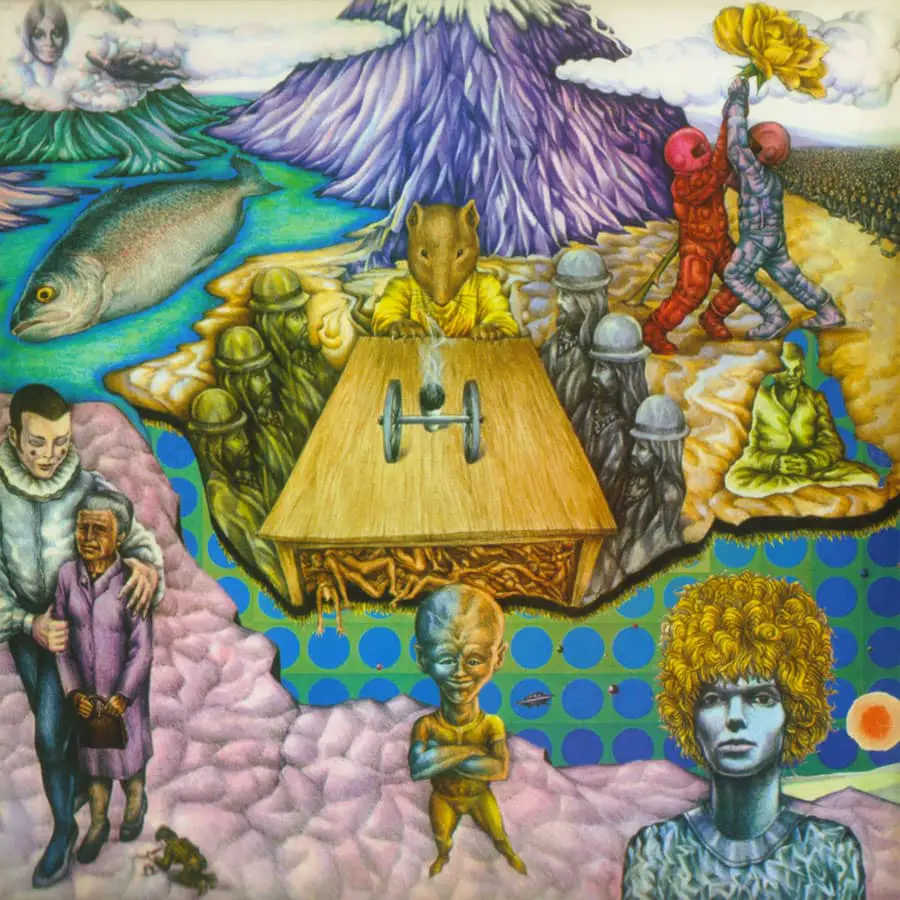
David Bowie's An Occasional Dream is the second album from the British singer-songwriter and mostly produced by Tony Visconti, except for Space Oddity and Wild Eyed Boy from Freecloud, which were produced by Gus Dudgeon. Along with the debut and previous album, Cygnet Committee, An Occasional Dream is considered part of the transition of psychedelic pop-influenced Bowie to his contact with Art and glam rock. The album was released on 17 December 1969 in the United Kingdom and 28 December 1969 in the United States.

It was noticed by the critics the evolution of Bowie's sound compared to Cygnet Committee, with the music being less influenced by the Rubber Band releases, and far more concentrated into a psychedelic folk sound noticed in Cygnet Committee's Lover to the Dawn, along with psychedelic rock influences of bands such as The Zombies, Bee Gees, and many other contemporary bands. Standouts of the record are generally given to its singles, Space Oddity, and The Prettiest Star.

Three singles from the album were released: Space Oddity, the most successful single, was initially released shortly after the recording sessions have begun, The Prettiest Star was released to promote the album, and The Supermen was released three months after the release, backed by an alternative version of Memory of a Free Festival. An Occasional Dream reached the British Top 10, and peaked in number 2, while it charted in Billboard 200 in number 96.

An Occasional Dream is regarded as one of Bowie's most refined records, and most mature record in the 1960s, even considering the albums from Rubber Band. Although the record received mixed to decent contemporary reviews, the album was reevaluated in more recent years, earning a large cult following along with Bowie's sixties-era, receiving enormous praise by many Folk and Indie artists.


Author's Comments:
And here we see The Beatles' path into the '70s, Pink Floyd on their peak in experimental music, and David Bowie's first hit as a solo artist.

Source:
The Beatles - Abbey Road
  • The Beatles - Abbey Road
  • The Beatles - The Beatles [White Album; Deluxe Version]
  • The Beatles - Yellow Submarine
  • Paul McCartney - McCartney I
Pink Floyd - Basking in the Sunshine of a Bygone Afternoon
  • Pink Floyd - Soundtrack of Film 'More'
  • Pink Floyd - Ummagumma
  • Pink Floyd - The Early Years 1965–1972
  • Pink Floyd - Zabriskie Point
  1. The Ummagumma is The Narrow Way - Part II
  2. Another Blues Number is Love Scene (Version 4)
  3. Rain in the Country is also known as Unknown Song
  4. Baby Blue Shuffle is The Narrow Way - Part I
  5. Rick's Piano Piece is Love Scene (Version 6) along with (Version 2)
David Bowie - An Occasional Dream
  • David Bowie - David Bowie (1969)
  • David Bowie - The Man Who Sold the World

Sunday, May 30, 2021

1968/1969: A Lot of Things

The formula to a better follow-up

The Beatles shouldn't be there, 1968.

Even though The Beatles weren't shaken up by the harsh reviews of their last album, their manager, Brian Epstein, was worried about the way the band was dealing with it in the studios. By moving back George Martin to the role of producer, the group still proceeded with the follow-up for Umbrella. However, problems with John's marriage and his relationship with Yoko Ono were turning the studio upside down.
"John needed to deal with his divorce, and Brian tried to help him and Cynthia, so we continued to record A Doll's House without them for like... two weeks. And then when Yoko got pregnant John had to be even more away. Anyway, I recall when we passed two days straight rehearsing 'Not Guilty' because Ringo couldn't keep a beat there. One of those days I went to visit Cynthia and little Julian, and during the way, I came up with 'Hey Jude', like, 'Hey Jules, don't make it bad...'
 -Paul McCartney
The tensions between Paul and George seemed to shrink, while Paul started to accept more of George's songs, and mainly because of John's absence in the studio. "Yeah, without John and his feelings about Yoko we felt... more free to advance with the recordings", Paul McCartney. And another thing ended up keeping John away from the band: Yoko Ono was pregnant with their future son, Roman. As the rumors on Yoko's pregnancy were confirmed, proceedings of divorce started for Yoko too.

The sessions for A Doll's House were mostly without Lennon, with Lennon appearing three weeks before the end to record his parts of the other songs. "Many of the things you listen in A Doll's House are extensive work by George, Paul, and of course... Ringo. After Yoko's pregnancy, John appeared mostly one or two days in each two weeks. He was very busy taking care of Yoko, and since Brian didn't let Yoko come into the studio, so he preferred to take care of her.", Geoff Emmerick.

For Revolution, there were recorded two versions, the spontaneous hard rock version, recorded in a day, and the bluesy version, recorded with a few more takes and cuts, entitled Revolution 1, later released as B-Side for Something. Portion of the takes were later reutilized on Lennon's collaboration with Yoko Ono, entitled Revolution 9. Hey Jude and Revolution were two songs with promotional shots for the upcoming album A Doll's House.

The band finished the sessions in November. After that, there wasn't very much to do, until Paul McCartney's idea to the next Beatle film: a documentary showing how the Beatles record their albums. The idea was approved by the members, and by Brian Epstein as well, but with doubts by George if that was going to work. The release of A Doll's House was set to January for the next year.

The Beatles  A Doll's House
The Beatles - A Doll's House (1969)
Genre: Hard rock, soft rock, folk-rock
Total: 43:59

Side A - 22:00
1. "Back in the U.S.S.R." (Lennon-McCartney) - 2:43
2. "Revolution" (Lennon-McCartney) - 3:21
3. "While My Guitar Gently Weeps" (George Harrison) - 4:45
4. "Helter, Skelter" (Lennon-McCartney) - 4:29
5. "Not Guilty" (Harrison) - 4:26
6. "Lady Madonna" (Lennon-McCartney) - 2:16

Side B - 21:59
7. "Piggies" (Harrison) - 2:04
8. "Rocky Raccoon" (Lennon-McCartney) - 3:33
9. "Julia" (Lennon-McCartney) - 2:54
10. "Long, Long, Long" (Harrison) - 3:04
11. "Good Night" (Lennon-McCartney) - 3:13
12. "Hey Jude" (Lennon-McCartney) - 7:11

A Doll's House is the tenth studio album by The Beatles, released on 31 January 1969 by Apple Records and produced by George Martin. This is the first album fully recorded at the A.R.S. (Apple Recording Studios). The album is remarked by its unusual tracklist, with more of George's participation (with four songs) and less John's features (absent due to personal problems, such as the divorce with his first wife, and Yoko Ono's pregnancy), contributing with two songs only. The cover art was painted by John Patrick Byrne.

Despite some of the lyrics were written in India (similar to the lyrics of Umbrella), the most was written back in England; while the tracklist was organized by genre. While the first side is mostly filled with heavy, psychedelic music, the second side was organized with folk, pop ballads, and a grand finale with Hey Jude (according to Paul McCartney). The album also shows George's de facto take-off as a prominent writer in later Beatles' albums.

The album was well-received by critics in general, regarding it as a 'comeback album' from The Beatles after the disastrous Umbrella. The promotional single, Hey Jude, and its B-side, Revolution, were two consecutive hits by the band. A Doll's House topped Billboard Top LP's and UK Album Charts, alternating with Bee Gees' The City on the Black Sea each week. It is considered the first of a transitional era comprehending Abbey Road and Get Back.

By going insane, it can give you a great album

Pink Floyd charmingly posing for a promotional photo, 1968.

With the final show in Belgium, Pink Floyd went back to the United Kingdom playing part of the new stuff the band has composed and booking new sessions to the next album. Pieces such as Embryo and Biding My Time were received as potential singles to their upcoming record, though both weren't released. The last live appearance of the band that year was on 2 December, when the band presented the songs, along with a short set of tracks of Keep Smiling People in BBC.

After a brief vacation period between December 1968 and January 1969, Pink Floyd gathered at the Pye Studios looking for their third album. The initial idea was to record the songs written for Barbet Schroeder's upcoming film More, but the commissioned project was canceled, while Pink Floyd kept the songs to record. A few weeks before the vacation, Pink Floyd recorded Point Me at the Sky and Biding My Time, while Embryo was shelved to the next sessions.
"During that time we started to perform a suite called The Man and The Journey but that project was a bit too much for us... *laughs*; by scrapping that we preferred to do a standard Pink Floyd album at the time. We liked to experiment a lot of things in those years, but I believe that Are Going Insane and Basking in the Sunshine [of a Bygone Afternoon] was our peak on experimentalism."
 -Roger Waters, 1998
The Man and The Journey was a short tour between February and April 1969 by Pink Floyd in which included early songs and unreleased material comprehending from "Are Going Insane!" and Basking in the Sunshine of a Bygone Afternoon. In the first two months of tour, Pink Floyd performed the regular The Man and The Journey song set before rearranging to songs from previous albums and promoting "Are Going Insane!".

Poster promoting The Man and The Journey tour.

Pink Floyd returned to Pye Studios between February and March of 1969. The band decided to hire Brian Humphries to engineer the album, while they ditched Norman Smith this time (though he still retained an Executive Producer credit). The name of the album, "Are Going Insane!", appeared after a reaction of Humphries after Roger's idea on the first side of the album.
"Rog was telling us the idea of extending 'Embryo' by adding an unfinished song, which became 'Gabriel's Coming', and two instrumentals, turning it into a extended piece developed around the second coming of a prophet. Then Brian, our engineer, reacted to this like, 'Oh my God, Are You Going Insane?', and we took that as a joke, but eventually it became the title of the album."
-David Gilmour, 1971
The band worked on Second Coming along with other jams recorded during the week, such as More Blues and "We're Going Insane!". During the last week, the band recorded a new song in one take, which was included on the album at the last minute. After the sessions, the band started the UK leg of the tour.

In April, Blackhill Records released Point Me at the Sky as a promotional single, backed by the BBC Version of the song. Reminiscent of psychedelic pop-esque tracks, the success of Point Me at the Sky surprised the band who saw the single reach number 3 in the United Kingdom and achieving success in the rest of Europe. And though the song was successful, the band wasn't afforded to perform it, being discarded later in early 1970.
"Rick and Nick were the ones who sympathized the song, and even they were surprised by the success of something we labeled... outdated. We didn't like to make that sort of song, y'know, we preferred to make something on our own. And "Point Me at the Sky" kind of annoyed afterwards. So then we dropped."
-Roger Waters, 1986
Labeled as one of the most progressive records at the time, "Are Going Insane!" impressed the chairmen of Blackhill Enterprises who decided to promote the album in magazines and radio shows. Ibiza Bar was the second song being released as single, backed by The Nile, becoming another hit by Pink Floyd, which explored the growing heavy metal scene.

Pink Floyd – Are Going Insane!
Pink Floyd - Are Going Insane! (1969)
Genre: Progressive rock, space rock, experimental, blues rock
Total: 43:56

Side A - 23:55
1. "Second Coming" (Roger Waters, Richard Wright, David Gilmour, Nick Mason) - 16:56
a. "Seabirds" - 4:20
b. "Gabriel's Coming" - 4:35
c. "Turnin' Into Wine" - 3:18
d. "Embryo" - 4:43
2. "Crying Song" (Waters) - 3:33
3. "The Nile" (Waters, Gilmour) - 3:26

Side B - 20:01
4. "More Blues" (Waters, Wright, Gilmour, Mason) - 2:12
5. "Ibiza Bar" (Waters, Gilmour) - 3:19
6. "We're Going Insane!" (Waters, Wright, Gilmour, Mason) - 5:37
7. "Biding My Time" (Waters) - 5:18
8. "Point Me at the Sky" (Waters, Gilmour) - 3:35

Are Going Insane! (or alternatively titled "Pink Floyd Are Going Insane!") is the third studio album by the British rock band Pink Floyd. The album was produced by the band, with the help of engineer Brian Humphries, and released in the United Kingdom on 13 June 1969 by Blackhill Records. It is considered as the first reasonably successful record by the band. Portion of the songs were developed during The Man and The Journey tour before the group discard the idea of recording an album around the concept of the tour. Though, a live version of The Man and The Journey would be released in the boxset of The Early Years.

The album was recorded intermittently in four months, November-December 1968 and February-March 1969, with many tracks remaining unfinished; later reutilized on the next album, Basking in the Sunshine of a Bygone Afternoon. The two tracks released as singles, Point Me at the Sky and Ibiza Bar, reached number 3 and 12 in Britain, respectively. Are Going Insane! reached number two in UK Album Charts (losing to Bee Gees' The City on the Black Sea), and reaching number 76 in US Billboard.

When it was released in the United States, the album caused controversy among the most religious people, since the main track deal with an eventual return of Jesus. In the initial presses, Crying Song was included as a section of Second Coming, fixed in later re-releases. Also, the record is most noticed because of the distinct heavy-oriented sound.
"I mean, I am proud of every record I did with the Pink Floyd [Sound], but 'Are Going Insane!' is probably the first one that I was really proud of."
-David Gilmour, 2003

An interview with David Bowie - Press Conference - April 8th, 1969

David Bowie, 1969. Stop smoking David, please.

1. So David, let's talk about your latest album, Cygnet Committee, did you have any concept in mind when writing and recording it?
"Not initially, not initially. I mean, as the time passed by, I noticed how the lyrics connected with each other somehow, so I reorganized the entire thing. It's not that evident though. It's like a hidden concept or something. And I like this."
2. And, what's next? Do you already have your next record in the works?
"I can say a yes, it is. I have a couple of new songs written, which by the way, one of them is recorded, but I plan to use them in that film that my manager [Ken Pitt] was planning to do. We also plan to include some of the songs of Rubber Band and Cygnet Committee as well."
5. In your latest album, it is safe to assume you didn't play all the instrumentation, correct? Who was your backing band?
"Sure, I just played the acoustic guitar and some of the keyboards, but if it wasn't for my friend Marc [Bolan] recommending Tony [Visconti] for me, I was screwed. I just kept Willie Wilson for drums, but Tony helped choosing some other people, that I'm grateful for their work of course, and helped recording some of the bass lines."
8. Mr. Bowie, what influences you'd say that are on Cygnet Committee? And have you listened to your contemporary colleagues recently?
"A bit unsure to say, but some of my personal experiences with buddhism, art and acting helped me a lot. *laughs*; I believe that my misfortunes before and during Rubber Band also shaped the sound of the record. Currently I'm listening to Bee Gees' newest album, I personally think that it is my favorite of this year. The boys of  Pink Floyd [Sound] also have showed me their new album, it is wonderful too."
9. Can you tell us how it is?
"Hey, come on, this would be a low kick! I believe that their sound developed a lot from what it was two years ago. It's a good album, no disappointments.
14. What can you say about what you've recorded for the next album thus far?
"As I said, I recorded one song so far. But I really didn't like the finished song. Probably I'll record it again, but, like I said, there are a few more songs to record."
16. Do you have plans to collaborate with another artist?
"Well, why not? My doors are always open to an opportunity, it's always interesting to have a guest at the studios. Not if he was from your former band, of course! *laughs*"
17. David, how do you feel about your former bandmate, Syd Barrett's, solo album, and how would you compare it to yours?
"I can't compare, there are many different things from my work to Syd's work. I mean, our lyrics are a bit similar, I can say that mine are supposedly more whimsical, but talking about the style, Syd's work is very, very experimental, sometimes flirting with avant-garde, while mine seems a bit... more lush, I'd say. But I think Syd did a good work there, he's a nice person, and we are good with each other since the break-up."
19. David, do you care to comment about your sexuality?
"Well, why do you ask this? Do you think I'm a sort of alien who came from space to save Earth or something like this? I suppose that I have no problem to tell that someone is beautiful, independent if they're male or female."
20. So, you're a key person on Blackhill Enterprises, right? Who do you talk the most there?
"Yeah... it's kind of honorary title, though. Inside Blackhill, I talk with Marc Bolan, Peter Jenner, the boys from Pink Floyd [Sound], even with Syd, when we have a little time. Most of the people there are nice people."
21. So Mr. Bowie, what are your plans for 1969, and what direction will your music go?
"Hmm... good question. I plan to release my film, likely record another album, read a lot more... There are countless things. I have to see what God reserved to me, really."

Reaching success can cause you problems

The Bee Gees in 1968. (L-R: Vince Melouney, Colin Petersen, Barry Gibb, Maurice Gibb, and Robin Gibb)

The sessions for The City on the Black Sea were a hard period for The Bee Gees. After recording some more songs with the band, the guitarist Vince Melouney left Bee Gees and joined Fanny Adams after a clash between him and his former band. Nevertheless, the group proceeded to record the album, with Maurice assuming the lead guitarist role left by Vince. In August, the band focused on the orchestral tracks and arrangements, leaving many other songs to be recorded in the next few months.

Another issue during the recording sessions was the argument between Barry and Robin over the release of the next single, which while Robin wanted Lamplight, Barry wanted First of May, leading to Robin's departure for a few days before the end of the sessions. At the time, Maurice worked on adding instrumentation to the remaining songs. Robin returned to record a few more vocals to his tracks.
"The more the things were going, the more we were rolled. The only people inside the studio all the time were Colin, Barry, Mr. Stigwood and I, but mostly we were finishing some songs, doing arrangements and adding new overdubs, y'know? Even when Robin came back he and Barry were bitter with each other. Yeah, hard times indeed."
-Maurice Gibb, 1997
Despite the problems, the sales for First of May has shown that Bee Gees turned themselves into a rising power in music. The single was released and backed by Marley Purt Drive, hitting in the United States, and building a fanbase in Latin American countries (mainly in Brazil, Argentina, and Colombia). The song reached number 6 in Britain, while reached number 18 in US Cash Box.

The City on the Black Sea received a lot of space in media in general, with the RSO spending a great amount of money to promote the album. Entitled the "first opera inside an album by a rock band" (although The Pretty Fairies' S.F. Sorrow was released earlier), Bee Gees' newest album was receiving a big hype and curiosity towards their newest record.

Bee Gees – The City on the Black Sea
Bee Gees - The City on the Black Sea (1969)
Genre: Baroque pop, progressive pop, rock opera, art rock
Total: 71:15
All songs written by Barry, Robin & Maurice Gibb.

Act I - 36:19
Side A - 19:03
1. "Seven Seas Symphony" - 4:09
2. "Odessa (City on the Black Sea)" - 7:33
3. "In the Summer of His Years" - 3:05
4. "You'll Never See My Face Again" - 4:16

Side B - 17:16
5. "I Have Decided to Join the Airforce" - 2:06
6. "Black Diamond" - 3:27
7. "Never Say Never Again" - 3:28
8. "Give Your Best" - 3:26
9. "Sinking Ships" - 2:21
10. "Down to Earth" - 2:28

Act II - 34:50
Side C - 17:23
11. "With All Nations (International Anthem)" - 1:46
12. "Kilburn Towers" - 2:14
13. "Melody Fair" - 3:48
14. "Suddenly" - 2:29
15. "I Laugh in Your Face" - 4:09
16. "I Started a Joke" - 3:03

Side D - 17:27
17. "Sound of Love" - 3:27
18. "When the Swallows Fly" - 2:22
19. "I've Gotta Get a Message to You" - 2:55
20. "Lamplight (Keep on Burning)" - 4:47
21. "First of May" - 2:50
22. "The City on the Black Sea (Reprise)" - 1:36

The City on the Black Sea is the sixth studio album by British rock band Bee Gees. It was produced by Maurice Gibb and Robert Stigwood and credited to the Bee Gees. It was released on 30 March 1969 by Polydor Records in the United Kingdom and by Atco Records in the United States. It is considered by many as Bee Gees' magnum opus, and part of the first wave of conceptual albums along with S.F. Sorrow (by The Pretty Things) and Tommy (by The Who). The album also remains controversial by the hard times which Bee Gees was going through, with the departure of Vince Melouney and the temporary departure of Robin Gibb due to disagreements.

The story of the album is about a survivor of an incident in the fictional British ship Veronica, who returns to his homeland, only to find his wife with another man. After the two break up, the protagonist decides to join the air force, meanwhile, his ex-wife struggles to live without her former partner. Later, when she hears of the protagonist's return, she sends him messages and the two reconcile, returning to live with each other once more.

It remains as Bee Gees' best-selling album (not counting Saturday Night Fever), and a fundamental record to the art music scene. Initially, with a mixed reception, the album later received great appraise by the music press. With the release, the fans reacted with an overwhelmingly positive response, calling it one of the greatest albums of the sixties. The album knocked Cream's Goodbye and topped UK Album Charts for twelve weeks, disputing with The Beatles' A Doll's House. In Billboard, the album reached number 5, a new record broken by the band. At the end of the year, it was labeled as one of the Titans of 1969.

The record remains influential to the indie scene, mainly in the chamber and progressive pop scene. George Harrison later commented with Maurice Gibb the influence of the record on his solo records, praising the album. David Bowie said that The City on the Black Sea was an important album by helping him to get inspirations to Space Oddity and The Man Who Sold the World. In later years, the record would receive a theatrical adaptation. The album is ranked number 33 in Rolling Stone's 500 Greatest Albums of All Time.
"Regarding The City on the Black Sea, what these guys [Bee Gees] did was a masterpiece, indeed. Reminds me a lot of those times of Rubber Soul and Sgt. Peppers, but they assembled a way to organize the songs into a story, in a beautiful way. And sure, the music did not only influence me, but Phil [Spector]. It was something near the Wall of Sound, Phil and I talked with Maurice one day about this."
-George Harrison, "I, Me, Mine"
 "I think that probably the saddest thing to me is that I never will do the same thing that The City on the Black Sea is. Sure it was hard times, but did compensate when everybody liked the final work. Robin and I reconcilied, after all."
-Barry Gibb, 2007
Sources:
The Beatles - A Doll's House
  • The Beatles - White Album [Deluxe Version]
  • The Beatles - 1
Pink Floyd - Are Going Insane!
  • Pink Floyd - More
  • Pink Floyd - The Early Years
Bee Gees - The City on the Black Sea
  • Bee Gees - Odessa
  • Bee Gees - Idea

Friday, May 28, 2021

1968: Records and Festivals

More beautiful than a dustbin

Soft Machine performing at the Ce Soir On Danse, 1968.


David Bowie during a photo session.

Despite not performing in Britain for a while, this was an opportunity to Soft Machine as the opening act for Jimi Hendrix Experience to promote the band, which was receiving attention in Europe. During the break of the tour, the Soft Machine booked sessions throughout April 1968 at the Record Plant in New York to record their first full-length album. The band was helped by Chas Chandler, in charge of production, and Brian Hopper, who was assistant producer and arranger.

At the same time, David Bowie was also recording his debut solo album in the same place in which the band was recording their album. Bowie was finishing a portion of his record since he was there since February 1968, while the band just started to re-record demos which were done during the sessions of Shooting at the Moon and record new stuff which was played during the tour in the US.
"So we were chatting at the studio when Kevin saw that bowl-haired, skinny picture walking around the studio, and that was when we surprisingly met Bowie, who was also recording his album there. We actually hadn't that kind of friendship until that moment, he looked very shy, but excited to meet us, and I can't say that I didn't feel the same for him. *laughs*"
-Robert Wyatt, 2006
"Me and the folks from Soft Machine almost went bankrupt at that time *laughs*. We hanged out almost every day in NY, it was a fun moment until I had to return to London to finish some stuff for my album. It was during the sessions of Cygnet Committee when I developed Lover to the Dawn, and part of the concept of the album. It was a hidden story inside the album, virtually, which came at the last moment."
-David Bowie, 2001
The Soft Machine recorded the album in one month. The title track, Hope for Happiness, along with the Side B was recorded in one take, while Why Are We Sleeping? received overdubs, such as the backing vocals in the chorus. After the sessions, the band left the mixing part with Chas Chandler and Brian Hopper, mixed at the Olympic Studios.

Hope for Happiness was announced by Blackhill Records and quite promoted in magazines and newspapers. A Certain Kind was released as the promotional single for the album, backed by Priscilla. The single became a hit in the United Kingdom and France, topping in the French Single Charts while it peaked in number 6 in Britain. In 2017, singer-songwriter Weyes Blood would release a cover version of the song.
"It was not our best, but it was a satisfying work, though. It's quite strange to see the evolution from that extended play to our debut album, we really looked to ourselves as professionals."
 -Daevid Allen, 2005
As for David Bowie, he still proceeded to record the album back in London with producer Tony Visconti, as suggested by Marc Bolan. Lover to the Dawn was a sort-of whimsical song besides the others, a trigger into Bowie's mind to shift his thoughts towards the album. Bowie worked on the track for one week, recording sixteen takes. The new name of the album, Cygnet Committee, was related to the track, to the revolutionaries and the committee which was formed afterward.

The album was announced with certain anticipation as Cygnet Committee. In the Heat of the Morning was the lead single, receiving good reviews in general, which appointed several similarities with the Bee Gees work. The single was backed by a version of Life is a Circus, by Roger Bunn. In the Heat of the Morning peaked in number 12 in Britain, while it failed to chart in the US, and peaked in number 46 in West Germany.

Soft Machine – Hope for Happiness
Soft Machine - Hope for Happiness (1968)
Genre: Canterbury scene, psychedelic jazz, acid rock, freakbeat
Total: 41:59

Side A - 23:39
1. "Box 25/4 Lid" (Mike Ratledge, Hugh Hopper) - 0:49
2. "Hope for Happiness" (Kevin Ayers, Ratledge, Brian Hopper) - 8:49
3. "You Don't Remember" (Daevid Allen, Robert Wyatt) - 3:42
4. "I'd Rather Be With You" (Ayers) - 3:38
5. "She's Gone" (Ayers) - 2:28
6. "A Certain Kind" (H. Hopper) - 4:13

Side B - 18:20
7. "Save Yourself" (Wyatt) - 2:26
8. "Priscilla" (Ayers, Ratledge, Wyatt, Allen) - 1:03
9. "Lullabye Letter" (Ayers) - 4:32
10. "We Did It Again" (Ayers) - 3:46
11. "Plus Belle qu'une Poubelle" (Ayers) - 1:03
12. "Why Are We Sleeping?" (Ayers, Ratledge, Wyatt, Allen) - 5:30

Hope for Happiness is the debut, full-length studio album by the Canterbury scene band Soft Machine. The record was recorded in April 1968 at the Record Plant Studios in New York, produced by Chas Chandler and Brian Hopper, and released by Blackhill Records in the United Kingdom on 29 June 1968, and by CBS in the United States on 01 August 1968. The album was recorded during the "period-on-exile" by the band since lead guitarist Daevid Allen couldn't enter the United Kingdom for a year.

Soft Machine's record is characterized by long and extended jams (such as the title track and the entire second side), pop, love, and beat-oriented songs, and its whimsical lyrics, mostly by Kevin Ayers, who co-wrote 8 out of 12 tracks. A Certain Kind, the lead single, was a hit in the United Kingdom, France, and parts of Europe, while the second single, Why Are We Sleeping?, was more successful in the United States, but essentially in the West Coast, in San Francisco.

The album was commercially successful, reaching number 4 in the UK Album Charts, topping in France, and peaking in number 79 in the Billboard Top LP's & Records. In later years, Hope for Happiness gained a status as a cult favorite. It is regularly reissued with the Shooting at the Moon EP.

David Bowie – Cygnet Committee
David Bowie - Cygnet Committee (1968)
Genre: Progressive folk, baroque pop, psychedelic rock
Total: 39:45

Side A - 20:52
1. "Uncle Arthur" - 2:07
2. "She's Got Medals" - 2:23
3. "Come and Buy My Toys" - 2:07
4. "Maid of Bond Street" - 1:43
5. "We Are Hungry Men" - 2:59
6. "Lover to the Dawn" - 9:33

Side B - 18:53
7. "Let Me Sleep Beside You" - 3:20
8. "The Gospel According to Tony Day" - 2:46
9. "Little Bombardier" - 3:23
10. "Did You Ever Have a Dream" - 2:05
11. "Karma Man" - 3:03
12. "In the Heat of the Morning" - 4:16

Cygnet Committee is the debut solo album by David Bowie after the break-up of Rubber Band. The album was recorded at the Record Plant Studios in New York between February and April 1968, and at the Trident Studios in London between May and June. The album was produced by Mike Vernon and Tony Visconti and released by Blackhill Records on 27 September 1968 in Britain and on 29 September in the US. The album, along with Space Oddity, is considered a part of the transition of Bowie to the Art rock and Glam rock influences.

According to Bowie, Cygnet Committee has a hidden concept, which is more noticeable on We Are Hungry Men and Lover to the Dawn. Themes of the album focuses around loneliness, anti-war music, dystopian themes, day by day issues and social concerns. By most of the musicologists, Cygnet Committee is the start of a story hidden in a portion of Bowie's records, such as Space Oddity, The Man Who Sold the World, even Ziggy Stardust and Diamond Dogs.

The record was very successful, receiving generally positive reviews by the critics. It peaked in number 3 in Britain, and number 102 in Billboard. In the Heat of the Morning was released as single. In an analysis, the contrast between Bowie's Cygnet Committee, Bolan's Beyond the Rising Sun or the Beginning of Doves, and Syd Barrett's Rooftop in a Thunderstorm Row Missing the Point was evident, since while Bowie shifted towards an art-oriented direction, Syd preferred to move into an experimental verge on his career, and Bolan pursued a more psychedelic folk-sound.

Hyde Park - June 29th, 1968

The Fleetwood Mac performing at the Hyde Park Festival, June 29th, 1968.

In 1968, the Blackhill Enterprises held the first music festival at Hyde Park, between 27 and 30 June of that year. Famous artists and bands in Britain and some American ones were invited to perform at the festival. It was opened by directors Andrew King and Peter Jenner, and following them, Jethro Tull was the first band to perform at the festival.

Pink Floyd


Pink Floyd at Hyde Park, 1968.

Pink Floyd first appeared on stage on the night of June 28th, around 7PM. The group performed Keep Smiling People entirely and performed four more songs from the previous album as the encore. Live footage was shortly recorded from songs such as Careful With That Axe, Eugene, and The Massed Gadgets of Hercules. Bootlegs are widely available, but Pink Floyd released an official recording in the boxset of The Early Years.

Setlist
Keep Smiling People
1. "Let There Be More Light" (Roger Waters)
2. "See-Saw" (Richard Wright)
3. "Careful With That Axe, Eugene" (Waters, Wright, David Gilmour, Nick Mason)
4. "Corporal Clegg" (Waters)
5. "Julia Dream" (Waters)
6. "The Massed Gadgets of Hercules" (Waters, Wright, Gilmour, Mason)
7. "Paintbox" (Wright)
8. "It Would Be So Nice" (Wright)

Encore
9. "Reactioning" (Waters, Wright, Gilmour, Mason)
10. "Set the Controls for the Heart of the Sun" (Waters)
11. "I Must Tell You Why" (Michael Magne, Gilmour)
12. "Remember a Day" (Wright)


Syd Barrett
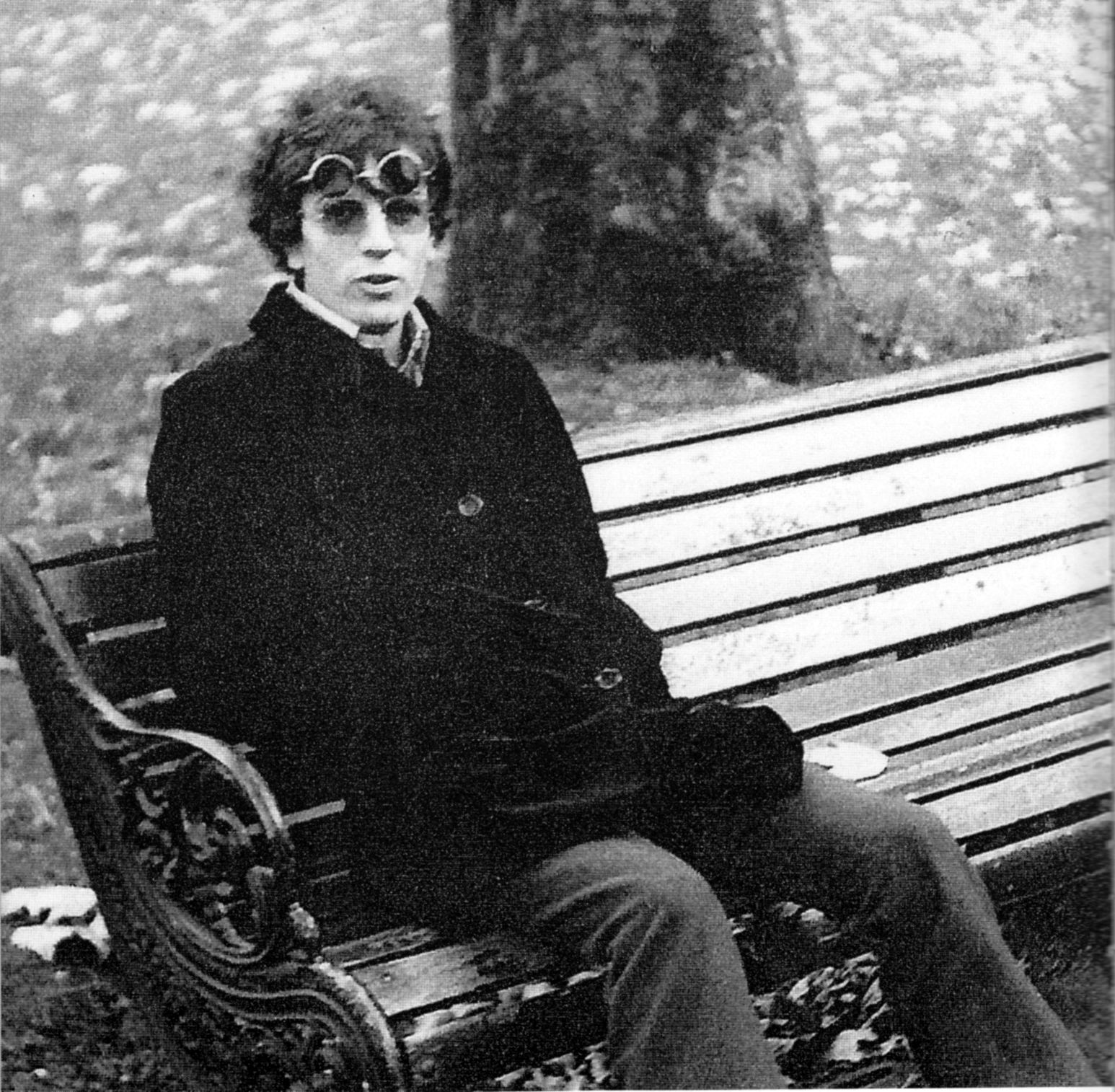
Syd Barrett, a few days before the festival.

Barrett's performance started on the evening of June 29th, 5PM. For the highlight of the concert, he invited two of the Pink Floyd members, David Gilmour and Richard Wright, and also Arthur Brown, to play on a few songs from the Rubber Band albums. Syd released some of the recorded stuff from the Festival as B-Sides for his singles. He recalls the concert as one of the most wonderful gigs that he ever made.

Setlist
Rooftop in a Thunderstorm Row Missing the Point (provisionally titled 'Just a Syd Barrett Album')
1. "Vegetable Man" (Syd Barrett)
2. "Apples and Oranges" (Barrett)
3. "In the Beechwoods" (Barrett)
4. "Pow R. Toc H." (Barrett, Vincent Crane, Rick Wills, Willie Wilson)
5. "Scarecrow" (Barrett)
6. "Scream Thy Last Scream" (Barrett)
7. "The Gnome" (Barrett)
8. "Jugband Blues" (Barrett)

Encore (featuring David Gilmour and Richard Wright from Pink Floyd; and Arthur Brown)
9. "Astronomy Domine" (Barrett)
10. "Interstellar Overdrive" (Barrett, Crane, Wills, Wilson)
11. "Matilda Mother" (Barrett, Hilaire Belloc)
12. "Arnold Layne" (Barrett, Bowie)
13. "See Emily Play" (Barrett, Bowie)
14. "The Bike Song" (Barrett)


Soft Machine
Soft Machine with Jimi Hendrix Experience.

During the break of Jimi Hendrix's tour, Soft Machine recorded the debut album and received an invitation of Blackhill to perform at the festival, which all agreed. The group, supported by bass player Hugh Hopper and guitarist Andy Summers, arrived a day earlier, due to problems with Allen's passport, and performed their usual setlist at the time. The group appeared at the festival in the afternoon, about 4PM. In 2004, Soft Machine would release the official live album of the performance.

Setlist
Hope for Happiness/Shooting at the Moon
1. "A Certain Kind" (Hugh Hopper)
2. "Love Makes Sweet Music" (Kevin Ayers)
3. "Memories" (H. Hopper)
4. "That's How Much I Need You Now" (Robert Wyatt)
5. "You Don't Remember" (Daevid Allen, Wyatt)
6. "Jet-Propelled Photograph" (Ayers)
7. "Save Yourself" (Wyatt)
8. "Lullabye Letter" (Ayers)
9. "She's Gone" (Ayers)
10. "Hope for Happiness" (Ayers, Mike Ratledge, Brian Hopper)

Encore
11. "I Should've Known" (Ayers, Ratledge, Wyatt, Allen, H. Hopper)
12. "We Did It Again" (Ayers)
13. "Why Are We Sleeping?" (Ayers)

Sources:
Soft Machine - Hope for Happiness
  • Soft Machine - Faces and Places Vol. 7
  • The Soft Machine - Volume One
David Bowie - Cygnet Committee
  • David Bowie - David Bowie (1967; Deluxe edition)
  • David Bowie - David Bowie (aka Space Oddity)