Showing posts with label 1960's. Show all posts

Sunday, June 6, 2021

1969: 20/20 & Isle of Wight

20/20

Brian Wilson at his own Radiant Radish Health Food Store, 1969.

Though the Beach Boys were enjoying their particular success after two successful albums (SMiLE and Wild Honey), things seemed to go sour behind the scenes. Throughout the year of 1968, Brian Wilson conducted the band into a wave of perfectionism, exemplified by the production of Wild Honey. Friend and Three Dog Night singer Danny Hutton recalled that Brian expressed suicidal wishes at the time. Afterward, Brian was admitted to a psychiatric hospital by his own volition, while the band started to record their fourteenth album with his absence.

During the recording sessions, Dennis Wilson befriended the ex-convict Charles Manson, both interested in Charles' musical talent and ambitions, and engaged to sign Manson into the Brother Records. In the same period of the sessions for 20/20, Carl and Dennis Wilson produced some of Charles Manson's tracks, with the tapes remaining unreleased, although producer Phil Kaufmann wanted to release them (instead, releasing previous versions in two albums). The Beach Boys recorded a version of Manson's song "Cease to Exist", as an altered version renamed to "Never Learnt Not to Love". Manson exchanged his writing credit for a sum of cash and a motorcycle.

Some tracks of the album were recorded previously, as Bluebirds over the Mountain is a cover produced in 1967 by Bruce Johnston. Time to Get Alone was written and produced by Brian for the group Redwood between the early sessions of Wild Honey. "Never Learnt Not to Love" was considered to be included in the album, but the idea was protested by Mike Love and Bruce Johnston. The band continued to record in 1969, with the sessions finished in March 1969, after a session for "Break Away".
"I knew from the start that we were going nowhere with that album. For sure it was our lowest point in the 60s, with Brian most of the time going to the hospital. We were afraid that we would step into the 70s behind everybody. And I think that if we had put that burglar's song [referring to Charles Manson and Never Learnt Not to Love], that would've tarnished with our reputation even more."
-Mike Love, 2014
20/20
 The Beach Boys - 20/20 (1969)
Genre: Rock, folk rock, psychedelic pop
Total: 42:10

Side A - 21:07
1. "Break Away" (B. Wilson, Murry Wilson) - 2:57
2. "Do It Again" (Brian Wilson, Mike Love) - 2:25
3. "Loop de Loop (Flip Flop Flyin' in an Aeroplane)" (B. Wilson, C. Wilson, Al Jardine) - 2:56
4. "I Can Hear Music" (Jeff Barry, Ellie Greenwich, Phil Spector) - 2:36
5. "Bluebirds over the Mountain" (Ersel Hickey) - 2:51
6. "We're Together Again" (Ron Wilson) - 1:49
7. "When Girls Get Together" (B. Wilson, Love) - 3:31
8. "All I Want to Do" (D. Wilson, Stephen Kalinich) - 2:02

Side B - 21:03
9. "I Went to Sleep" (B. Wilson, Carl Wilson) - 1:36
10. "Time to Get Alone" (B. Wilson) - 2:40
11. "Celebrate the News" (D. Wilson) - 3:05
12. "The Nearest Faraway Place" (Bruce Johnston) - 2:39
13. "Old Folks at Home/Ol' Man River" (Stephen Foster, Jerome Kern, Oscar Hammerstein II) - 2:52
14. "Be With Me" (Dennis Wilson) - 3:08
15. "Cool, Cool Water" (B. Wilson) - 5:03

20/20 is the fourteenth studio album by The Beach Boys, released on 23 April 1969 by Brother Records and distributed by Capitol. Brian, Carl, Dennis Wilson, Al Jardine, and Bruce Johnston received the credit of producers. The album is noted primarily by the background since it was mostly produced during Brian Wilson's absence and the presence of Charles Manson during the recording sessions.

Part of the songs shows a rapprochement of the band to the surf music, mostly shown in the opening track, "Do It Again" and "All I Want to Do". Many other songs were recycled from previous sessions of Wild Honey, such as "Bluebirds Over the Moutain" and "Time to Get Alone". Other tracks were composed by Brian before his admission to a psychiatric hospital. "Cool, Cool Water" was derived from the sessions of Smiley Smile, most precisely the track "In Blue Hawaii".

In the same sessions, Carl and Dennis Wilson co-produced a few songs by Charles Manson, which remain unreleased. A cover version of "Cease to Exist" was recorded by Dennis Wilson and released as B-side of "Bluebirds Over the Mountain", and was discarded as a song to be included in the album.

The record is generally considered a question mark in the so-called Golden Age, mostly being overshadowed by the successful releases by its side (Pet Sounds, Smile, Wild Honey and Landlocked), and their lowest-selling record in the 60s. 20/20 received mixed reviews and peaked in number 21 on Billboard and number 3 on the UK Album Charts. Break Away, Do It Again and All I Want to Do were released as singles, with Break Away becoming a song played by radio stations of the present.

Isle of Wight

Syd Barrett (right) along with the audience at the Isle of Wight, 1969.

The festival was held a few weeks after Woodstock. The Blackhill artists that performed in the festival were Pink Floyd Sound, David Bowie, Syd Barrett, and Tailboard. Pink Floyd Sound performed the setlist from the upcoming tour, Tailboard performed their Woodstock set, while Syd Barrett, supported by Tailboard, performed his own setlist. Other artists that performed in the festival were the Edgar Broughton Band, The Pretty Things, Greasy Asylum, The Who, the headlining acts Bob Dylan & The Band, and many others.
"I consider the Isle of Wight as the starting point of our tour with Syd and Tailboard. We all performed, in a nice atmosphere, in almost the same way that we did in the rest of the tour. Even Syd preferred to go along with the people instead of the VIP zone, I recall seeing him from the stage when we were performing."
-Roger Waters, 1994
Syd Barrett was the first one in Blackhill Records to perform after the Bonzo Dog Band, on Saturday 30. Pink Floyd Sound would perform later in the night before Blonde on Blonde. David Bowie performed on Sunday 31 after Ritchie Havens, while Tailboard performed after Liverpool Scene. The Greasy Asylum performed before Syd Barrett. Bob Dylan & The Band were the first ones to perform on Sunday.

Syd Barrett performing at the Isle of Wight Festival.

Syd Barrett appeared around 3p.m. on stage supported by Tailboard and keyboardist Dave Stewart. Syd's setlist was divided between three sets, an electric set, consisting of psychedelic-driven songs, including a medley; an acoustic set consisting of an unreleased song, Milky Way, and his most folk-oriented songs, and the pop set with his most popular songs at the time.

Syd's performance received generally positive reviews, pointing an interesting plan by dividing the songs into three acts. Standout moments of Syd's show were the medley, the 10-minute rendition of Arnold Layne, and the singalong The Bike Song when Syd performed the song along with the audience. Fellow music partner Kevin Ayers wrote The Hat Song inspired by the moment.
"When Syd played that last song, I was at the VIP zone, watching how he was a wonderful conducer of the audience. That last song blew up my mind completely, and when I arrived home I immediately wrote The Hat Song, as a way to be more... interactive with the public. That song actually helped me in the early months without Daevid, when I 'assumed the office' of interact with the fans."
-Kevin Ayers, 2007 

Syd Barrett, Live at the Isle of Wight Festival, August 30th, 1969
Setlist
All tracks written by Syd Barrett, except when noted.

Electric set
1. "Medley: Scream Thy Last Scream/Let's Roll Another One/Vegetable Man/Lucifer Sam"
2. "Interstellar Overdrive" (Syd Barrett, Vincent Crane, Rick Wills, Willie Wilson)
3. "Clowns and Jugglers"
4. "Here I Go"
5. "Astronomy Domine"

Acoustic set
6. "Milky Way"
7. "The Gnome"
8. "Silas Lang (Swan Lee)"
9. "Golden Hair/Terrapin" (Barrett, James Joyce/Barrett)
10. "Jugband Blues"

Pop set
11. "Apples and Oranges"
12. "Arnold Layne" (Barrett, David Bowie)
13. "See Emily Play" (Barrett, Bowie)
14. "Late Night"
15. "The Bike Song"

David Bowie also performing at the Isle of Wight Festival.

David Bowie arrived on the early night of Friday 29, with the same band that performed with him in the studios. There, he stayed in a hotel paid by the Blackhill Enterprises, where also were most of the artists of the company. He also met his fellow and former bandmate Syd for the first time after several months with a few or no contact at all.
"Well, I arrived in the evening of Friday, and there wasn't a lot to do besides to talk to everyone there at the hotel. It was a wonderful time, finally I met Syd again and we chatted about our experiences in solo, and we seemed in the same level at the time. Everyone threw a party in that day, I almost missed the ride to the festival. *laughs*
At the same time I see some people speculating that Syd and I would appear together, even Edgar [Broughton] asked me about that. I'm not gonna lie that I wanted to do it, but Syd wasn't very fond of this, so we abandoned the idea."
-David Bowie, 2000
"Actually Bowie and I performed at the party in the hotel, the night before the Festival. Everything was improvised, we weren't that serious. If I recall, we just covered some blues tunes, and played Space Oddity, and that's really everything we played there, it was quite fun."
-Syd Barrett, 1984
Bowie's catalogue was slightly shorter than Syd's, containing a mix of songs from the Rubber Band era, Cygnet Committee, the upcoming album, An Occasional Dream, and a cover rendition of Lou Reed's I'm Waiting For The Man. Afterwards, the performance of David Bowie was generally approved and described as creative and whimsical. Highlights from Bowie's presentation were Space Oddity, the cover version of I'm Waiting For The Man and See Emily Play, which was also performed by Syd one day earlier.

David Bowie, Live at the Isle of Wight Festival, August 31st, 1969
Setlist
All tracks written by David Bowie, except when noted.
1. "Space Oddity"
2. "Love You 'till Tuesday" (Syd Barrett, David Bowie)
3. "Did You Ever Have a Dream"
4. "When I Live My Dream"
5. "Rubber Band's Theme" (Barrett, Bowie)
6. "Sell Me a Coat"
7. "Lover to the Dawn"
8. "Wild Eyed Boy from Freecloud"
9. "In the Heat of the Morning"

Encore
10. "I'm Waiting For the Man" (Lou Reed)
11. "You've Got a Habit of Leaving"
12. "See Emily Play" (Barrett, Bowie)
13. "Memory of a Free Festival"

Author's comment:
And with the festivities of the Isle of Wight, we finally finish the 1960s... again.
As I said previously, there are still some bands that happen to enter in the seventies, and I need to give a bit of the context of what's going to happen before we dig into the '70s. Anyway, I hope you like this return (of what I hope that is a return again indeed, lol).

And, at last, I hope you like it, and see you in the next post! :)

Saturday, June 5, 2021

1969: Studio, Sunshine, Space!

A return to their roots

Paul during the 1969 sessions.

Though the production of A Doll's House and the release of the experimental "Back in Your Safely Beds" were well-received and regarded as interesting recordings at the time, there was a feeling among the band that the last two years were filled with very different material, ranging from the lush sounds of Sgt. Pepper's to the raw, low-quality tracks of Umbrella, the Beatle' standard, A Doll's House, and the experimental "Back in Your Safely Beds". According to Geoff Emmerick, Paul was the first one to express the idea of the return to their roots in the next project.

The project conceived by Paul McCartney was widely discussed with Brian Epstein and The Beatles after the release of "Back in Your Safely Beds", in which was included a documentary film, a special broadcasted live performance, and an album (which would become the eventual, full-length soundtrack, Get Back). An eventual tour was even considered, however, the idea was quickly disregarded.

In 1969, Allen Klein contacted Brian Epstein after reading a comment to fill a position as head manager of Apple Records. Both reached an agreement, and Allen assumed the office. Paul's recommendation, Lee and John Eastman, respectively father and brother of his wife Linda, was considered but ended up being appointed as the attorneys for the band and the company. Allen's position in Apple would determine the future of The Beatles as a band.
"At the time, the hiring of Allen Klein was the worst possible thing to think, but after all, it just ended up keeping us together even more. After 1970 when John, George, Ringo and Brian discovered that Allen wasn't someone to trust in, we've just talked, like that sort of out of the blue thing, and became trustful to each other again. I'm really glad that everything worked out fine, at least to all of us."
-Paul McCartney, 2011 
In March of that year, the Beatles would first gather along with Brian Epstein and the film crew at the Twickenham Film Studios to rehearsal. Most of the documentary was filmed there, along with takes at the Apple Recording Studios, EMI Studios, and the Apple Corps, consisting of the recording sessions of Get Back. Most of the tapes were recorded during March and April when most of Get Back was recorded. The filming would also take place some days in June and July when the band finished the sessions for Get Back and was finishing Abbey Road.

In May and June, John was mostly absent. On May 31, 1969, Yoko Ono gave birth to the couple's first child, a girl named Charlotte Narumi Ono Lennon. The marriage between Lennon and Ono happened in a private ceremony in Gibraltar on July 28, almost two months after the birth of Charlotte, with the presence of The Beatles, friends, and family. Charlotte's arrival ended up messing with John's schedule in peace activism, mainly against the Vietnam War, which he would restart late that year with the Bed-Ins for Peace, recording the single Give Peace a Chance.

During the sessions, the tensions between The Beatles started to rise again, reaching the climax when George threatened to quit the band. Brian Epstein negotiated on behalf of George and decided to do a short radio session instead, scheduling a presentation at the Peel sessions on July 17th. The last recording session with the presence of all the Beatles in 1969 was on August 20th, to overdubs for It's All Too Much!.

Abbey Road was announced as another compilation of tracks that wouldn't take part in the official soundtrack. Most of the songs of Lennon-McCartney were primarily written in Rishikesh, as the same happened in the last two albums (three, if you count "Back in Your Safely Beds"). Moreover, The Beatles did a little promotion for the album, as the members seemed to distance one from each other. Most of the legacy of Abbey Road can be spotted on the iconic cover, to George Harrison's Something becoming a hit and the second most covered song of The Beatles after Yesterday, the longest track of the band [I Want You (She's So Heavy)], and being considered a hit-driven album.
"Sure, Abbey Road was a strange point in our career. We've released the album with no pretensions at all, and then we see Something, the best track of the entire record by the way, becoming a big hit, Dear Prudence, [Oh!] Darling, and a few other tracks becoming rememorable Beatles' songs, that was weird at the time, of course."
-John Lennon, 1996
The Beatles – Abbey Road
 The Beatles - Abbey Road (1969)
Genre: Rock, psychedelic rock, blues rock
Total: 46:11

Side A - 22:01
1. "Blackbird" (Lennon-McCartney) - 2:18
2. "Something" (George Harrison) - 3:03
3. "Happiness is a Warm Gun" (Lennon-McCartney) - 2:43
4. "All Together Now" (Lennon-McCartney) - 2:10
5. "Dear Prudence" (Lennon-McCartney) - 3:56
6. "I Want You (She's So Heavy)" (Lennon-McCartney) - 7:47

Side B - 24:10
7. "Hey Bulldog" (Lennon-McCartney) - 3:14
8. "That Would Be Something" (Lennon-McCartney) - 2:43
9. "Here Comes the Sun" (Harrison) - 3:05
10. "Cry Baby Cry" (Lennon-McCartney) - 2:32
11. "Oh! Darling" (Lennon-McCartney) - 3:26
12. "Because" (Lennon-McCartney) - 2:45
13. "It's All Too Much!" (Harrison) - 6:25

Abbey Road is the eleventh studio album (twelfth, counting "Back in Your Safely Beds") by the British rock band, The Beatles. The record was released on 26 September 1969 by Apple Records and produced by George Martin. Abbey Road is marked as the return of The Beatles to the EMI Studios, after recording A Doll's House entirely at the A.R.S. Contrasting with its predecessor, Abbey Road contains 6 out of 13 songs primarily written by John Lennon, who was mostly absent from the sessions of the previous album. The lead single, Something/The Inner Light, was released in October, becoming one of the biggest hits from The Beatles.

Portion of the tracks were worked along with the tracks included in the upcoming album and soundtrack, Get Back, which was recorded around the same time as Abbey Road. I Want You (She's So Heavy), It's All Too Much!, Hey Bulldog and Blackbird appeared in the documentary under production. Initially, the record was received with mixed reviews by music critics, comparing the album to something in-between Umbrella and A Doll's House, but ultimately it was met with universal acclaim by the fans, becoming one of their greatest albums.

The album topped UK Album Charts for two weeks and topped Billboard for a week. The album sold two million copies, partly due to the tracks included in the album which ended up being played in radio stations and becoming classic tracks from The Beatles. The remarkable cover was parodied several times, becoming a cultural symbol and making the zebra crossing a tourist attraction. In the next years, it was theorized that the album was one of the first signs of the conflicts behind the scenes.

A very good and interesting little exercise

Nick Mason with his charming hat, 1969.
"[...] I thought it was a very good and interesting little exercise, the whole business of everyone doing a bit. But I still feel really that that's quite a good example of the sum being greater than the parts..." 
-Nick Mason, 1984
To pay the costs of the tour, Pink Floyd assembled again at the Pye Studios. The initial plan was to each of the four group members had half an LP side each to create a solo work without involvement from the others. The idea was carried through the first week when Roger and David decided to convince the rest of the band to collaborate and elaborate a standard album. The material recorded during the first week was Sysyphus, a musical piece by Richard Wright which was released as a solo single.

In the next two weeks, most of the music was worked out. A large part of the songs have resulted from jamming sessions from the band, and the material was put together along with the previously recorded during the sessions of Are Going Insane!. "Actually the sessions for Basking in the Sunshine were pretty simple, in three weeks we've just recorded enough material to a double album. Peter and Steve [O'Rourke] wanted something similar to the other album, so we gave them Basking in the Sunshine of a Bygone Afternoon.", Richard Wright.

The album was produced by Nick Mason and assisted by Brian Humphries, and credited to Pink Floyd. The Blackhill announced the album as a follow-up to what've been Are Going Insane!, with the release of Cymbaline as a promotional single. The song was a minor hit, with a reasonable success, being performed in the tours until 1973.

After the release of Basking in the Sunshine of a Bygone Afternoon, Pink Floyd would enter into a hiatus for four months, until the band decides to gather again in the new decade to go... into a new direction, perhaps. Not flirting with the avant-garde scene like this new record, but engaging in a new, growing scene, that would take the first half of the seventies.
"Honestly I can say to you that Basking in the Sunshine of a Bygone Afternoon isn't a good record. I wasn't seeing direction coming from our band at that time, that record was just a bunch of junk thrown into a LP and sold for a couple bucks. But it certainly it has some good tunes, but surely done in the worst way possible."
-Roger Waters, 2003
Pink Floyd – Basking in the Sunshine of a Bygone Afternoon
(L-R): UK version; US version
Pink Floyd - Basking in the Sunshine of a Bygone Afternoon (1969)
Genre: Progressive rock, space rock, experimental, psychedelic rock, field recordings, avant-garde
Total: 66:15

Disc One - 31:40
Side A - 15:15
1. "Cirrus Minor" (Roger Waters, David Gilmour) - 5:18
2. "The Ummagumma" (Gilmour) - 2:31¹
3. "Another Blues Number" (Gilmour) - 7:26²

Side B - 16:25
4. "Rain in the Country" (Waters, Richard Wright, Gilmour, Nick Mason) - 6:01³
5. "Grantchester Meadows" (Waters) - 7:26
6. "Green is the Colour" (Waters, Gilmour) - 2:58

Disc Two - 34:35
Side C - 19:32
7. "Quicksilver" (Waters, Wright, Gilmour, Mason) - 7:13
8. "Oenone" (Waters, Wright, Gilmour, Mason) - 6:21
9. "The Narrow Way" (Gilmour) - 5:58

Side D - 15:03
10. "Baby Blue Shuffle" (Gilmour) - 3:284
11. "Rick's Piano Piece" (Wright) - 6:455
12. "Cymbaline" (Waters, Gilmour) - 4:50

Basking in the Sunshine of a Bygone Afternoon is the fourth studio album by the English rock band Pink Floyd. The album was released on November 7th, 1969 by Blackhill Records in the United Kingdom and by Capitol Records in the United States, with two different covers to each version. The album was produced by the band and engineered by Brian Humphries. It is considered by many as Pink Floyd's most experimental record to date.

Differently to the predecessor, the record was recorded in three weeks, while the first week was stage of recording tape effects and Rick Wright's piece Sysyphus, later released as a solo single. The first single of the album was Cymbaline, backed with Oenone, and after the release, Cirrus Minor was released as the second single. While Cymbaline was a minor hit in Britain, Cirrus Minor failed to chart in both countries.

The album performed slightly worse than Are Going Insane, though it was praised by the press at the time. Basking in the Sunshine of a Bygone Afternoon reached the number 4 in the UK Album Charts and number 81 on Billboard. According to Roger Waters, the work would be the main reason to Pink Floyd to distance of the Avant-garde scene, exploring other forms of experimental music, such as the symphonic rock of Atom Heart Mother, the next album.
"...Yeah, that album is... just sad. We had no direction from what we would do after 'Are Going Insane', and we would go like this for the next two years until Obscured by Clouds."
-David Gilmour, 2005 

Ground control to Major Tom

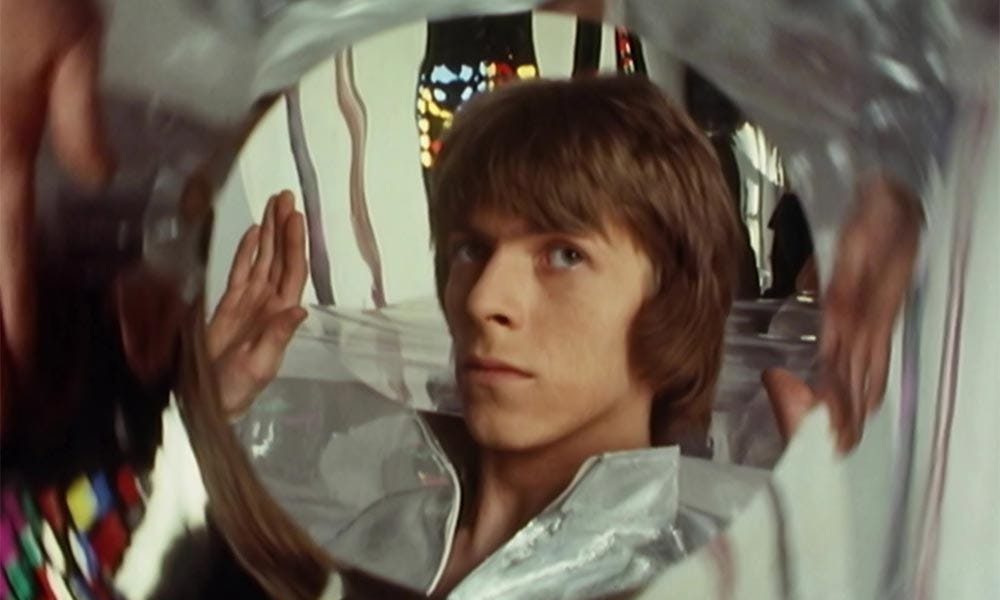
David Bowie as Major Tom in the first version of Space Oddity, 1969.

Ah 1969, the year that space themes were predominantly mainstream. David Bowie already recorded one previous version of Space Oddity, for his promotional film, Love You till Tuesday, but according to him, he was not very fond of that version to be included in his next album. "As I said, I recorded one song so far. But I really didn't like the finished song. Probably I'll record it again, but, like I said, there are a few more songs to record.", David Bowie - Press Conference - April 8th, 1969.

Since Tony Visconti seemed uninterested in re-record it again, delegating the producing process to Gus Dudgeon. The second version of Space Oddity was recorded on June 20th, 1969 at the Trident Studios, with the line-up consisting of keyboardist Rick Wakeman (then-session player), Mick Wayne, Herbie Flowers, and Terry Cox. The single was not played by the BBC until after the Apollo 11 crew had safely returned.

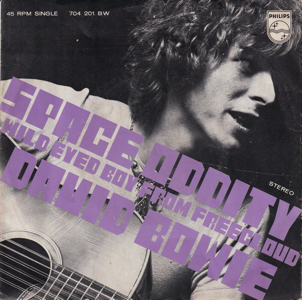
UK sleeve.

The single was released on 11 July 1969, backed by the Buddhist-influenced Wild Eyed Boy from Freecloud. After a slow start, Space Oddity became known as Bowie's solo breakthrough in the United Kingdom, topping in Britain, but being a minor hit in the United States at the time, reaching number 99. The song would be reissued a few more times until it reached number 15 in Billboard Hot 100 in 1972. The success rendered into Bowie's performance at the Tops of the Pops in October.

In the following times, in December 1969, Bowie recorded an Italian version of the song named Ragazzo solo, Ragazza sola, written by Mogol. Ten years later, Bowie would revisit Space Oddity in a stripped-down version released as single again. The song would renew its popularity after Canadian astronaut Chris Hadfield performed the song (with slightly revised lyrics) while aboard the International Space Station, therefore becoming the first music video shot in space.

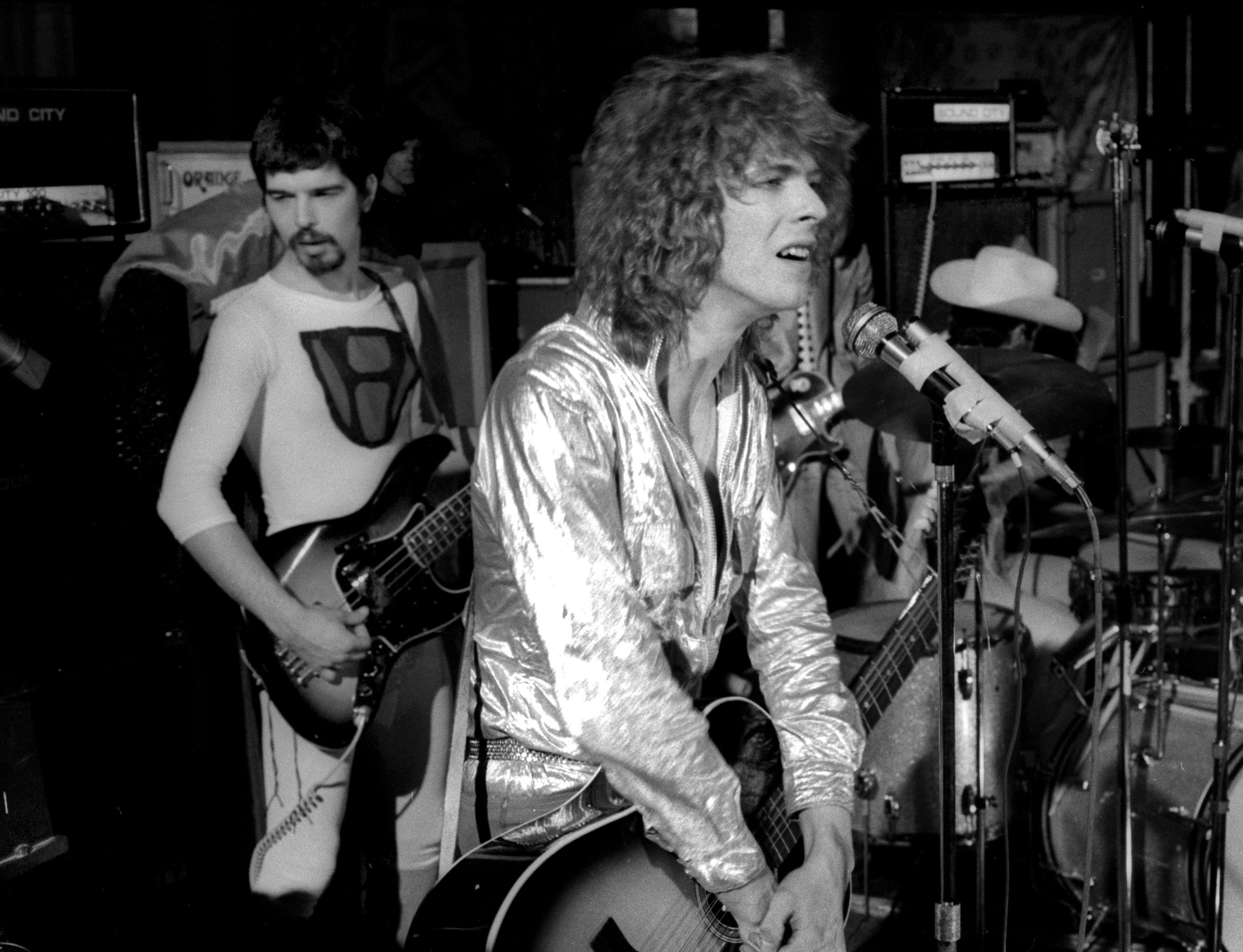
David Bowie performing with The Hype, at the Roundhouse, 1969.

Bowie started to record his second solo album around the same time as he recorded Space Oddity. Backed by a notable list of collaborators such as keyboard player Rick Wakeman and producer Tony Visconti, David opted to record at the Trident Studios instead of going to the United States this time. Regarding his status as a major growing artist from the underground scene, the deadline given by the heads of the Blackhill was until October, when David actually finished on time.
"It happened that in... August of that year, I believe, there was a reunion with the board [of directors], talking about the future stuff that we were doing and etc., but then Peter [Jenner] and my previous manager established a deadline to me to finish the sessions, without my consent. Obviously I was a bit angry with them, I didn't want to do something very rushed, but I played a little game with them, and I just finished exactly on October 31st."

 -David Bowie, 2001

The two first songs that were recorded to the album were Space Oddity, and the backing single, Wild Eyed Boy from Freecloud. Following both songs, the title track An Occasional Dream and Conversation Piece were subsequently recorded throughout August and September, since some of these pieces were written in-between late 1968 and early 1969. With brief interruptions, such as the Isle of Wight, and meetings within the people of the Blackhill, Bowie managed to safely finish the recording sessions in late October.

The last songs to be recorded were The Prettiest Star, a song that Bowie wrote to his newly-found partner Angela Barnett, featuring former Rubber Band bandmate and fellow friend Marc Bolan on electric guitar, The Supermen, a song that Bowie wrote inspired by the works of Friedrich Nietzsche and H. P. Lovecraft, which was added at the last minute, and Memory of a Free Festival because three versions of the song were recorded, two versions being included on the album as Part 1 and Part 2, and an alternate version which was then released as the backing single of The Prettiest Star.

With great anticipation, Blackhill Records announced David Bowie's second solo album, entitled An Occasional Dream. While in the United States the announcement almost went unnoticed, in Europe and the United Kingdom, the announcement of the album was received with a certain amount of hype towards Bowie's newest record. The Prettiest Star was released as the promotional single, backed by Memory of a Free Festival, becoming a hit and reaching the top 10 mostly due to the Space Oddity effect.

David Bowie – An Occasional Dream
David Bowie - An Occasional Dream (1969)
Genre: Progressive folk, psychedelic rock
Total: 44:33
All tracks are written by David Bowie.

Side A - 22:09
1. "Memory of a Free Festival (Part I)" - 2:43
2. "Space Oddity" - 5:16
3. "Unwashed and Somewhat Slightly Dazed" - 6:15
4. "Letter to Hermione" - 2:33
5. "God Knows I'm Good" - 3:21
6. "An Occasional Dream" - 3:01

Side B - 22:24
7. "Wild Eyed Boy from Freecloud" - 4:53
8. "Conversation Piece" - 3:05
9. "Janine" - 3:25
10. "The Prettiest Star" - 3:12
11. "The Supermen (Don't Sit Down)" - 4:18¹
12. "Memory of a Free Festival (Part II)" - 3:31

David Bowie's An Occasional Dream is the second album from the British singer-songwriter and mostly produced by Tony Visconti, except for Space Oddity and Wild Eyed Boy from Freecloud, which were produced by Gus Dudgeon. Along with the debut and previous album, Cygnet Committee, An Occasional Dream is considered part of the transition of psychedelic pop-influenced Bowie to his contact with Art and glam rock. The album was released on 17 December 1969 in the United Kingdom and 28 December 1969 in the United States.

It was noticed by the critics the evolution of Bowie's sound compared to Cygnet Committee, with the music being less influenced by the Rubber Band releases, and far more concentrated into a psychedelic folk sound noticed in Cygnet Committee's Lover to the Dawn, along with psychedelic rock influences of bands such as The Zombies, Bee Gees, and many other contemporary bands. Standouts of the record are generally given to its singles, Space Oddity, and The Prettiest Star.

Three singles from the album were released: Space Oddity, the most successful single, was initially released shortly after the recording sessions have begun, The Prettiest Star was released to promote the album, and The Supermen was released three months after the release, backed by an alternative version of Memory of a Free Festival. An Occasional Dream reached the British Top 10, and peaked in number 2, while it charted in Billboard 200 in number 96.

An Occasional Dream is regarded as one of Bowie's most refined records, and most mature record in the 1960s, even considering the albums from Rubber Band. Although the record received mixed to decent contemporary reviews, the album was reevaluated in more recent years, earning a large cult following along with Bowie's sixties-era, receiving enormous praise by many Folk and Indie artists.


Author's Comments:
And here we see The Beatles' path into the '70s, Pink Floyd on their peak in experimental music, and David Bowie's first hit as a solo artist.

Source:
The Beatles - Abbey Road
  • The Beatles - Abbey Road
  • The Beatles - The Beatles [White Album; Deluxe Version]
  • The Beatles - Yellow Submarine
  • Paul McCartney - McCartney I
Pink Floyd - Basking in the Sunshine of a Bygone Afternoon
  • Pink Floyd - Soundtrack of Film 'More'
  • Pink Floyd - Ummagumma
  • Pink Floyd - The Early Years 1965–1972
  • Pink Floyd - Zabriskie Point
  1. The Ummagumma is The Narrow Way - Part II
  2. Another Blues Number is Love Scene (Version 4)
  3. Rain in the Country is also known as Unknown Song
  4. Baby Blue Shuffle is The Narrow Way - Part I
  5. Rick's Piano Piece is Love Scene (Version 6) along with (Version 2)
David Bowie - An Occasional Dream
  • David Bowie - David Bowie (1969)
  • David Bowie - The Man Who Sold the World

Friday, June 4, 2021

1969: Woodstock

Regarding Woodstock...

Yes, Woodstock is here too! 1969.

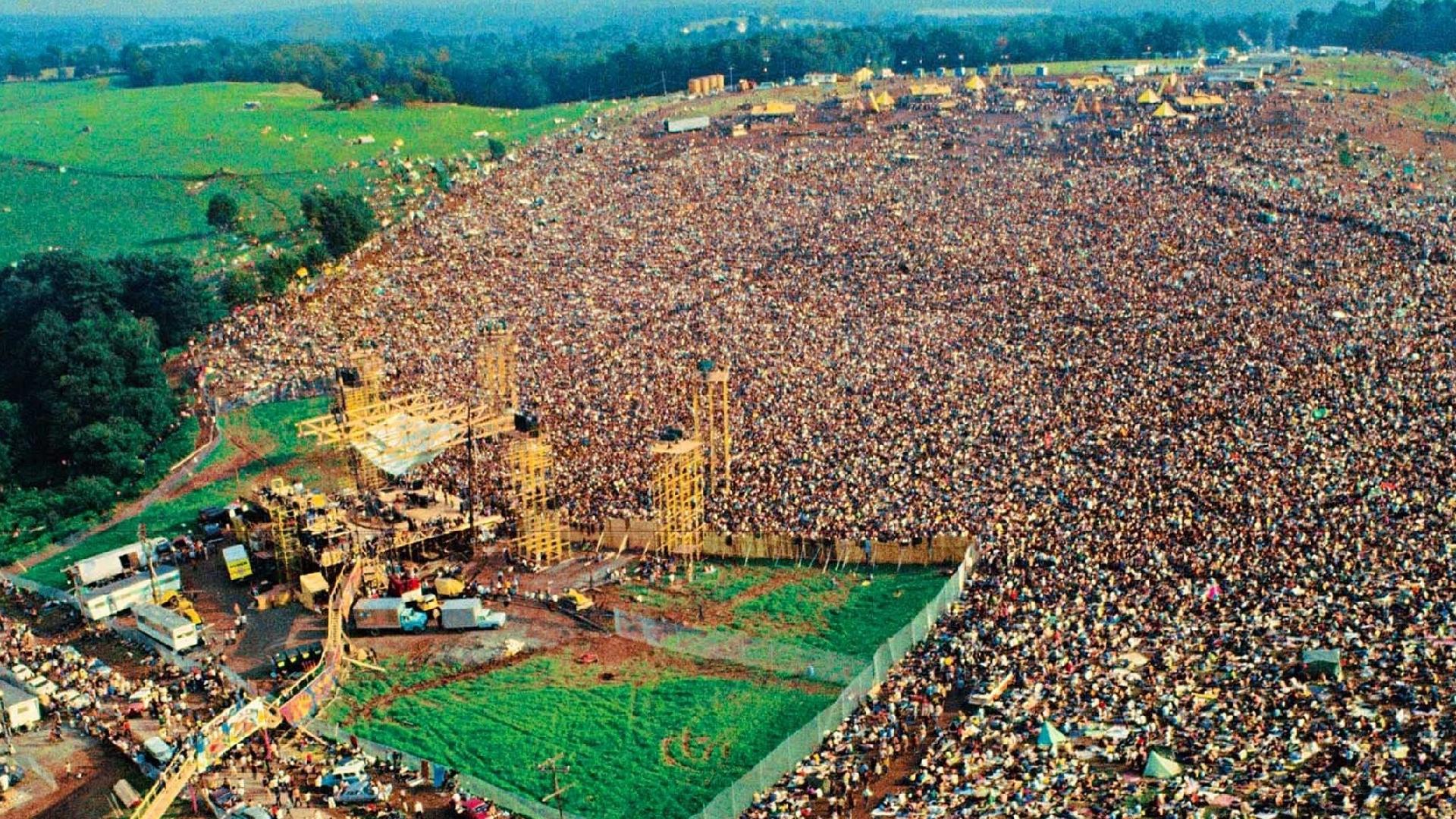
For Blackhill, August of 1969 was certainly a month of defining events. From the tour including Pink Floyd Sound, Syd Barrett, and Tailboard, which carried to the eventual crisis in the company during the 70s, to the Woodstock and Isle of Wight Festivals for promoting the artists, certainly, August 1969 was the month that transformed the company into a gateway between the underground and the mainstream.

Right before the Pink Floyd Sound/Syd Barrett/Tailboard tour begun, Blackhill negotiated some of their artists to perform in the Woodstock Festival, as did with the Isle of Wight. "The negotiations with... the Foulk Brothers were far more organized than the Woodstock one. I really can barely say if there was any negotiation with the Woodstock organizers since everything seemed so improvised.", Keith Noble.

In the end, Soft Machine, Edgar Broughton Band, Tailboard, and initially, Syd Barrett agreed to perform (declining to perform one day before the concert). David Bowie declined the idea since he was working on his upcoming album as did Pink Floyd Sound (although both performed later on the Isle of Wight Festival).
"Well, I was up to perform in the Isle of Wight, and I was preparing myself for the tour with the Floyd, and then, two weeks before, Drew [Andrew King] asked if I was going to perform in the Woodstock Festival and I agreed with that. I was scheduled for Sunday, so I had a good ammount of time to think about that decision, even if I was in NY at the time *laughs*. And honestly, until today I feel pity for Kevin and Robert, they didn't like large audiences and had to deal with a shit-ton of people. Actually, they influenced me to decline to perform. Tailboard seemed chilled about that, though."
 -Syd Barrett, 1984
Robert Wyatt leaving the stage in Woodstock.

Soft Machine was billed for the Saturday, right after Santana. When the band first arrived on stage, it was noticed a massive amount of people cheering the newcomers, shocking Kevin Ayers. "So, I didn't know about the audience until we went to the festival... When we were backstage, Robert just said to me to not see the outside, otherwise, I was going to panic. He was quite right, I panicked. But Daevid [Allen] handled the entire thing, so I chilled out a little bit.", said Ayers.

The performance of Soft Machine ended up being shorter, rearranging the setlist right on stage. The band decided to focus on Daevid's songs and instrumentals, including songs that weren't released at the time, such as Esther's Nose Job and Lunatics Lament. After the performance, Soft Machine attended a meeting with Jimi Hendrix back in New York, and then returned to England.

Tailboard's Woodstock was... different. The group was recently formed, and Woodstock was their first relevant performance, although, the band was billed to perform right after Crosby, Stills, Nash & Young. The group performed their entire (then unreleased) album, plus A Summer Song. According to the frontman Keith Noble, the crowd was very receptive to the band, even though it was 5 a.m. when they arrived on stage. In backstage, the band talked with CSN&Y, and the jazz group, Blood, Sweat & Tears. Tailboard would return to England on Wednesday.

Joe Cocker playing his well-known "air guitar" on stage.

Greasy Asylum was billed as the first band to perform on the daytime Sunday, arriving on stage 2:00 p.m. and performing throughout one and a half hours a big set consisting of tracks from Look Inside the Greasy Asylum and Delta Lady, two medleys and cover renditions of Joe Cocker and Leon Russell. The performance of Greasy Asylum is considered by many as one of the highlights of the festival, along with Jimi Hendrix, Creedence Clearwater Revival, and many others.

A few days ago, Delta Lady was released as the second Greasy Asylum's studio album by Shelter Records and distributed by Blue Thumb Records in the United States, as a way intended to promote the band with the Woodstock Festival. The strategy was effective since Delta Lady managed to be ranging between positions 43 and 45 for three months on Billboard. "It was Blue Thumb's idea, not ours. We've just agreed since we had a contract.", Leon Russell.

The Woodstock Festival served as a stair to bands such as the Greasy Asylum, becoming one of their most remarkable shows. Even though members expressed bitter feelings towards the audience, it was a consensus that the performance was pretty enjoyable to everyone, despite Cocker's reluctance to venture again after that year. "As I said, 1968 and '69 were pretty intense, but Woodstock was like an eclipse ... it was a very special day.", Joe Cocker.

Soft Machine, Live in Woodstock, August 15th, 1969
Setlist
1. "Memories" (Hugh Hopper)
2. "Hope for Happiness" (Kevin Ayers, Ratledge, Brian Hopper)
3. "You Don't Remember" (Daevid Allen, Robert Wyatt)
4. "I Should've Known" (Ayers, Ratledge, Wyatt, Allen, H. Hopper)
5. "5 and 20 Schoolgirls" (Allen)
6. "A Certain Kind" (H. Hopper) [sung by Daevid Allen]
7. "We Did It Again" (Ayers)
8. "Gong Song" (Allen)
9. "Esther's Nose Job" (Ratledge, Wyatt, H. Hopper)
10. "Lunatics Lament" (Ayers, Allen)
11. "Rational Anthem" (Allen)
12. "Magick Brother" (Allen)
13. "Why Are We Sleeping/Once I Awakened" (Ayers) [sung by Kevin Ayers and Daevid Allen]
14. "Singing a Song in the Morning" (Ayers)

Greasy Asylum, Live in Woodstock, August 17th, 1969
Setlist
1. "Dear Landlord" (Bob Dylan) [JC]
2. "Something's Coming On" (Joe Cocker, Chris Stainton) [JC]
3. "Delta Lady" (Leon Russell) [JC/LR]
4. "Feelin' Alright" (Dave Mason) [JC]
5. "Crystal Closet Queen" (Russell) [LR]
6. "Let's Go Get Stoned" (Nickolas Ashford, Valerie Simpson) [JC]
7. "Dixie Lullaby" (Russell, Stainton) [LR]
8. "Medley: Jumpin' Jack Flash/Young Blood" (Mick Jagger, Keith Richards, Jerry Leiber, Mike Stoller, Doc Pomus) [JC/LR]
9. "Hitchcock Railway" (Don Dunn, Tony McCashen) [JC]
10. "Something to Say" (Cocker, Peter Nichols) [JC]
11. "Medley: Of Thee I Sing/Yes I Am" (Don Preston, Russell) [LR]
12. "With a Little Help from My Friends" (John Lennon, Paul McCartney) [JC]
[JC] = Joe Cocker
[LR] = Leon Russell 

Tailboard, Live in Woodstock, August 18th, 1969
Setlist
All tracks composed and performed by Keith Noble, except when noted.
1. "Mr. Compromise"
2. "Narcissus"
3. "Secretary Jane"
4. "Red-Current Tide"
5. "Up and Down Way (of It All)"
6. "Only When I Laugh"
7. "Dandelions Have Their Day"
8. "Weather"
9. "King of the Icemen"
10. "Ashes and Silver"
11. "A Summer Song" (Keith Noble, David Stuart)

Thursday, June 3, 2021

1969: Such a Crazy World

Most unfortunate

Syd and Iggy the Eskimo, 1969.

After a return from the North American leg of the tour, Syd returned to the studios in April 1969 under the supervision of Peter Jenner. Syd continued with Willie Wilson, but since Vincent Crane continued with Arthur Brown and Rick Wills started to work as a session musician for Jackie Lomax, he was with no options but to ask for his old friends to help him to record the successor of Rooftop in a Thunderstorm.
"I knew that the folks of  Pink Floyd did an amazing album [Are Going Insane!], and I looked for some help besides of Jenner who... couldn't do anything but produce. So technically I was kind of inclined to ask for help to the people I dismissed a few years earlier. Yeah, I was seeing the roles being reversed in that moment."
-Syd Barrett, 1984
As Pink Floyd was touring and performing throughout the United Kingdom, it was easy for Syd to approach the band in one of their gigs. "At first my reaction was something like 'Why did you travel from London to Birmingham just to ask us to help you in your album?' But, yeah, he was Syd, he could do whatever he wanted.", David Gilmour. In the same meeting between the band and the artist, Roger and Syd retreated and apologized to each other. In the end, the members agreed to help Syd on his record.

Back at the studios, Syd decided to dismiss Jenner while the band took control of the production. In most of the week, Syd recorded acoustic tracks such as Terrapin, (She's a) Dolly Rocker, Wouldn't You Miss Me? and Golden Hair under the supervision of Gilmour, who played the bass guitar along with Willie Wilson. Although the situation seemed comfortable to the crew, Peter Jenner and Andrew King established a deadline for three weeks.
"Yeah, that was one of the fucking problems that made me quit the music industry a few years later. Peter [Jenner] was becoming an asshole up to me, Andrew [King] was sometimes nice, but never changed his opinions, and Steve [O'Rourke] was virtually the only one in the management who understood me."
-Syd Barrett, 1986
In the next studios, Soft Machine [at the time, Robert Wyatt, Hugh Hopper (who provisionally replaced Kevin Ayers), and Mike Ratledge] were recording their second album, Exiled from Canterbury. Since both bands (including Syd) were friends since the UFO Club times, they would often visit each studio to see what both bands were doing. During a visit, Syd decided to invite Soft Machine to play along some of the songs that remained unrecorded.

On the same day, Soft Machine and Syd rehearsed and jammed, recording four songs in sequence, No Man's Land, No Good Trying, Clowns and Jugglers I, and Love You. "Syd's idea to bring Soft Machine and record some tracks with them was amazing, it spared us a lot of time.", Nick Mason. Most of the songs recorded with Soft Machine received little or no overdubs, except for "Love You" which included a piano performed by Richard Wright.

With a similar idea, Pink Floyd also rehearsed and performed the remaining tracks of Syd, including another version of Clowns and Jugglers that would become Clowns and Jugglers II and the single version. "To be honest, I think that Soft Machine's take on Clowns and Jugglers was bloody awful. Sometimes noisy, sometimes irregular, but Syd liked after all, even if I was saying to keep it out of the album.", Roger Waters.

Syd managed to finish his album, sparing two weeks until the deadline, leaving the album to his former bandmates to mix. "Hmm, yeah, most of the mixing portion was under my supervision, since I liked to do this more than the guys. Syd also liked the result of the final product, so everyone reached an agreement.", Nick Mason.

The album was entitled Clowns and Jugglers, after the two versions recorded for the album. Clowns and Jugglers II was released as single as Octopus, backed by Double O Bo. The single was quite successful in Britain and France but failed to reach the charts in the US. Syd decided to also release Silas Lang, Here I Go and Late Night as singles, with the last two being successful in Britain and throughout Europe. In the United States, Late Night received certain attention in the West Coast.

Syd Barrett – Clowns and Jugglers
Syd Barrett - Clowns and Jugglers (1969)
Genre: Psychedelic folk, acid rock
Total: 43:54
All tracks written by Syd Barrett, except when noted.

Side A - 21:34
1. "Butterfly" - 3:00
2. "Silas Lang (Swan Lee)" - 3:13
3. "No Man's Land" - 3:03
4. "No Good Trying" - 3:26
5. "Clowns and Jugglers I (The Madcap Laughs)" - 3:27
6. "Double 'O Bo" - 2:57
7. "Love You" - 2:30

Side B - 22:20
8. "Clowns and Jugglers II (Octopus)" - 3:47
9. "Here I Go" - 3:11
10. "Terrapin" - 5:04
11. "(She's a) Dolly Rocker" - 3:02
12. "Wouldn't You Miss Me?" - 2:02
13. "Golden Hair" (Syd Barrett, James Joyce) - 1:59
14. "Late Night" - 3:10

Clowns and Jugglers is the second studio album from English singer-songwriter Syd Barrett. The album was released on 16 September 1969 in the United Kingdom by Blackhill Records and on 24 September 1969, being distributed by Capitol Records in the United States. The album was produced by Pink Floyd under the pseudonym of Arnold Layne and is the last one featuring Willie Wilson.

In later years, Peter Jenner would sue Syd, earning the role as producer along with the Pink Floyd. The album was recorded in two weeks, most compromising of Syd's acoustic songs in a week, and another week with sessions featuring Pink Floyd and Soft Machine. The lyrical themes of Clowns and Jugglers include surrealism, personal feelings, and romantic songs in general.

The album is characterized by less experimentalism from the previous album (seen mostly in the first track) and more folk and rock-oriented tracks. The suggestion was given by Andrew King, who looked for songs similar to the ones found in Rubber Band records. At the time, the record became more popular than the predecessor, as the youth identified with some of Syd's lyrics.

After the release, the press reacted negatively first, but then the album received mixed-to-positive reviews in general. Syd released four songs as singles, Clowns and Jugglers II (released as Octopus), Silas Lang, Here I Go and Late Night. The public reaction was positive after all, with the album reaching number 5 in Britain while it reached number 99 in Billboard Top LPs. After Clowns and Jugglers, Syd wouldn't release an album until 1971, focusing on touring and the start of his career on acting.

A little swap

Marc Bolan and Mickey Finn, members of T. Rex, 1969.

After Beyond the Rising Sun or the Beginning of Doves, Marc Bolan and T. Rex would record and release three more albums in a year span: the folk-oriented My People Were Fair and Had Sky in Their Hair... But Now They're Content to Wear Stars on Their Brows (July 1968); Prophets, Seers & Sages: The Angels of the Ages (October 1968), and the more rock-oriented Unicorn (May 1969).

 
The second, third, and fourth albums by Tyrannosaurus Rex.

However, as time passed by, it was more than a fact that Marc Bolan was the frontman and the mind behind Tyrannosaurus Rex, while Rick Wills and Willie Wilson were becoming rather... side members. This being said, Bolan recruited Mickey Finn to be a part of the band, playing percussion instruments, except for the drums, still played by Willie, even though that line-up wouldn't stay for more than a few days, given the fact that Willie Wilson would leave the band for Tailboard.

As for Rick Wills, the bass player would still stay in Tyrannosaurus Rex until 1971, being replaced by Steve Currie. After his departure, Wills would move to Peter Frampton's backing band, then the Small Faces, before finally settling in Foreigner for 14 years. And with that, Tyrannosaurus Rex, now known as T. Rex, would follow the same path as OTL for a few years until we jump back into it.

But all of it's going to burn

Arthur Brown during a performance.

The Crazy World of Arthur Brown, led by no other than the God of Hellfire himself, Arthur Brown, was another rising band under the Blackhill Records, and the first one outside the Rubber Band-Pink Floyd faction to make a hit song with Fire, ironically, becoming Blackhill's best-selling single for a while, reaching number 2 on Billboard Hot 100 and topping the UK Singles Charts.

However, his band often associated with singer-songwriter Syd Barrett due to Vincent Crane, the keyboardist for both, sometimes even performing or touring together. Drummer Drachen Theaker was replaced by Carl Palmer due to his aviophobia. Following the successful eponymous debut record, the band recorded their second album, Strangelands.

Crazy World of Arthur Brown's Strangelands. Certainly an album that no one will forget.

Arthur Brown's second album Strangelands was panned by critics at the time. In an article titled "Strangelands or How To Not Ruin Your Band's Rising Career", music critic XX harshly describes the album as 'dissonant', 'nonsensical', 'painfully experimental', and outside from everything that people expected from their last album. Strangelands was released only in 1971 and didn't chart in the United States, while in Britain the album reached number 19, before falling.

Personally, the band entered into a risky situation with the label that even the God of Hellfire himself was surprised, after temporarily retiring to a commune. The band itself avoided to talk about the record, and behind the scenes, requested to Brown more participation in the band's business and records, and the label wanted a change from style.
"Well, the high management wanted us to change our style. The thing is that we were already searching for a specific new style, even though things went wrong with Strangelands. I didn't want to stick with the same style we've used on The Crazy World [of Arthur Brown]."

 -Arthur Brown, 1973.

For Blackhill, Strangelands became their first failure, ironically, coming from the ones who gave them their best-selling hit. With the expensive Pink Floyd/Syd Barrett/Tailboard tour in September, the management started to be more cautious in a lot of ways, by avoiding 'too much experimental/nonsense' records and simply not doing such an ambitious tour.

For the Crazy World of Arthur Brown, a few things were reformed. The band itself, was dissolved, becoming Atomic Rooster. Arthur Brown, Vincent Crane, and Carl Palmer stayed in the group, being joined by guitarist Andy Dalby and bass player Desmond Fisher. From then, the band would take a progressive turn, sometimes flirting with the experimental and hard rock scenes.

As years passed, critics would reevaluate the record, being more moderate, and even considering it innovative in several aspects, developing a cult following around the album. Groups such as Animal Collective drawn a few inspirations from aspects of the album's ambiency.

Come on and enjoy us

Willy Prairie and Joe Prairie... perhaps; 1969.

As the band released the successful A Doll's House, John Lennon, influenced by his wife, wanted the group to release a full experimental record with the outtakes and tracks of the sessions, similarly to the then-unreleased Revolution 9.
"Well, John was deeply into Yoko's influence, and persuaded us to make something... similar to Revolution 9. Actually we wanted to do something different, and we had those jams recorded in 1968, but we didn't want to go under that avant-garde rubbishness, so we moved to do a 'novelty record'. And thus, teaming up with Billy Preston, The Prairie Wallflowers were born!"
-Paul McCartney, 2013 
"Well, Paul had his idea to that documentary about 'how does Beatles produce their albums', and I hooked with them to help to record it. And one day John came to me wondering if I would like to join them to record a few more stuff to an 'untitled alternate project' to Get Back, and then told me to choose a new name."
-Billy Preston, 1995
The idea for Joe Prairie & The Prairie Wallflowers popped up after a reunion of the Beatles in George's Kinfauns, after a listening of the unreleased tapes of the 1968 sessions. The name for the group came from the song Los Paranoias. The concept of a Beatles' record under an alias seemed interesting and was approved by the manager Brian Epstein, who booked sessions for them in secrecy at the Trident Studios.

Paul picked the frontman's name, Joe Prairie, while John named himself as Stu Prairie as a tribute to his late friend and early member of The Beatles, Stuart Sutcliffe, Billy Preston chose Willy, George used Nelson and Ringo chose Leon.

The album was recorded over three days, then mixed by George Martin, packed to release with a shot of The Beatles' rooftop concert. Joe Prairie's name was first mentioned in an interview with Paul McCartney and John Lennon on BBC, announcing the new, non-Beatle album, with the premiere release of the single 'Come and Get It' two days later. Next, Brian clarified that the album was made with recordings dating since the sessions of 1968.

Joe Prairie & The Prairie Wallflowers – Back in Your Safely Beds
Joe Prairie & The Prairie Wallflowers - Back in Your Safely Beds (1969)
Genre: Jam band, rock and roll, psychedelic folk, experimental
Total: 41:32

Side A - 20:51
1. "Can You Take Me Back? (There You Are, Eddie)" (Joe Prairie) - 4:05
2. "Dig It" (Joe Prairie, Stu Prairie, Tom Prairie, Nelson Prairie, Leon Prairie) - 0:50
3. "Suzy Parker" (J. Prairie, S. Prairie, T. Prairie, N. Prairie, L. Prairie) - 2:00
4. "Wild Honey Pie" (J. Prairie) - 0:54
5. "What's The New Mary Jane" (S. Prairie) - 6:12
6. "(You're So Square) Baby I Don’t Care" (Jerry Leiber, Mike Stoller) - 0:42
7. "Maggie Mae" (traditional, arr. The Prairie Wallflowers) - 0:40
8. "St. Louis Blues/Heart of the Black Country" (J. Prairie/W. C. Handy) - 1:10
9. "You Know My Name (Look Up The Number)" (S. Prairie) - 4:21

Side B - 20:41
10. "Blue Moon/I Will" (Richard Rodgers, Lorenz Hart/J. Prairie) - 2:57
11. "Come and Get It" (J. Prairie) - 2:30
12. "Apple Jam" (J. Prairie, S. Prairie, T. Prairie, N. Prairie, L. Prairie) - 2:20
13. "Medley: Rip It Up/Shake, Rattle And Roll/Blue Suede Shoes" (Robert Blackwell, John Marascalco/Charles Calhoun/Carl Perkins) - 3:18
14. "Step Inside Love" (J. Prairie) - 1:34
15. "Los Paranoias" (J. Prairie) - 3:58
16. "Ain't She Sweet" (Jack Yellen, Milton Ager) - 2:08
17. "Mailman, Bring Me No More Blues" (Bill Katz, Ruth Roberts, Stanley Clayton) - 1:56

Back in Your Safely Beds is a studio album, parallel to the Get Back project, released by The Beatles plus Billy Preston under the pseudonym of Joe Prairie & The Prairie Wallflowers. The album is filled with studio jams and remaining content spanning from the sessions back from Umbrella, A Doll's House, and the upcoming Abbey Road and Get Back albums. The album was recorded by the band in secrecy, then mixed and produced by George Martin.

The album is comprised of several cover versions of rock and roll numbers, studio jams, and experimental compositions of the group. The album was revealed when Paul McCartney and John Lennon were interviewed, while a few days later, Apple/NEMS issued Come and Get It as the lead single for the album. Back in Your Safely Beds was received with a big interest and generally positive reviews by music critics, citing it as an impressive way to reuse discarded songs into a new work. The album peaked in number 3 in UK Albums Charts and reached number 7 in Billboard Top LP's.

Musicologist and author Ian MacDonald said that the pseudonym strategy to release more experimental music was very helpful, since if the band released the album under their own name it was going to be a critical failure similar to Magical Mystery Tour.

Beach Boy Carl Wilson mentioned Back in Your Safely Beds as a heavy influence on Beach Boys' Carl and the Passions. The same concept was revived on George Harrison's supergroup, The Traveling Wilburys, with Bob Dylan, Roy Orbison, Tom Petty, and Jeff Lynne. Forgotten for a while, the record was later re-evaluated by the fans and received a cult following status. John Lennon later referred to the album as one of his favorite records during The Beatles. The band would later revive the concept in 1976 as their last work before the hiatus, but shelved the album.


Author's comments:
The idea for Joe Prairie & The Prairie Wallflowers was loosely inspired by the Beatles' experimental albums in Strawberry Peppers and Something Creative, but I didn't want to... make another version of those albums (which are amazing, by the way). Then, the idea for the band emerged as a way to reutilize some of the unused material, like the cover numbers from The Beatles that were recorded during that period.
And, as I said, no more New Yardbirds, or any plot related to Led Zeppelin. Instead, however, there will be an alternative version of Atomic Rooster with the inclusion/fusion of Arthur Brown's Kingdom Come. The main issue is that Led Zeppelin and Renaissance had two very different styles to work with.

Sources:
Syd Barrett - Clowns and Jugglers:
  • Syd Barrett - The Madcap Laughs
  • Syd Barrett - Opel
  • Pink Floyd - The Early Years
Joe Prairie & the Prairie Wallflowers - Back in Your Safely Beds:
  • The Beatles - White Album (Deluxe Edition)
  • The Beatles - Let It Be
  • The Beatles - Anthology 2
  • The Beatles - The Black Album [bootleg]

Tuesday, June 1, 2021

1969: All This Crazy Gift of Time

From the past!

Pink Floyd a few years back, performing as Sigma 6, 1963.
"Out of all years, one of the most strangest ones was 1969. I mean, I accidentally met Clive [Metcalfe] and Keith [Noble] during a walk in the park. And then, a few weeks later, there was me, David, Rick and Nick producing their album, their try to reach the stardom. Oh, and Rado [Klose] was there too, doing his guitar work as usual."
-Roger Waters, 1976
The meeting between Roger and his two former bandmates led to the entry of both to the Blackhill Records. At the time, Clive and Keith Noble were reforming their duo into a band, searching for a drummer and another guitarist. Roger suggested Rado Klose, who just returned from the military service and Willie Wilson, who recently left Tyrannosaurus Rex. The group was formed under the name of Tailboard. Andrew King was appointed as the manager of the band, leaving Steve O'Rourke to Pink Floyd and Peter Jenner to Syd Barrett.

Tailboard:
Keith Noble - lead vocals, acoustic guitar
Rado Klose - lead guitar
Clive Metcalfe - bass guitar, violin
Willie Wilson - drums, percussion

Tailboard started to perform as the backing band to Syd Barrett (joined by Egg's keyboardist Dave Stewart), sometimes performing their own acts with Keith Noble. "Tailboard was like the second half of Pink Floyd, an amalgam of previous incarnations of former members into one, solid ball.", Roger Waters. Through the second half of 1969, Syd Barrett and Tailboard (billed as Syd Barrett & Tailboard) joined Pink Floyd on a tour through the United Kingdom and Europe, rising their popularity on the Old World.

Dutch poster promoting a concert of Pink Floyd/Syd Barrett/Tailboard tour, 1969.

Pink Floyd, Syd Barrett & Tailboard
Setlist (excerpt from Antwerp, Belgium; September 30th, 1969):
Syd Barrett & Tailboard
1. "Clowns and Jugglers" (Syd Barrett)
2. "Here I Go" (Barrett)
3. "Mr. Compromise" (Keith Noble)
4. "Apples and Oranges" (Barrett)
5. "Up and Down Way" (Noble)
6. "Golden Hair/Terrapin" (Barrett, James Joyce/Barrett)
7. "Weather" (Noble)
8. "Arnold Layne" (Barrett, David Bowie)
9. "Only When I Laugh" (Noble)
10. "See Emily Play" (Barrett, Bowie)
11. "Late Night" (Barrett)

First Encore [Syd Barrett & Tailboard/Pink Floyd]
1. "Astronomy Domine" (Barrett)
2. "The Massed Gadgets of Hercules" (Roger Waters, Richard Wright, David Gilmour, Nick Mason)
3. "Interstellar Overdrive" (Barrett, Vincent Crane, Rick Wills, Willie Wilson)
4. "Careful With That Axe, Eugene" (Waters, Wright, Gilmour, Mason)

Pink Floyd
1. "Grantchester Meadows" (Waters)
2. "Biding My Time" (Waters)
3. "Set the Controls for the Heart of the Sun" (Waters)
4. "The Nile" (Waters, Gilmour)
5. "Ibiza Bar" (Waters, Gilmour)
6. "See-Saw" (Wright)
7. "Embryo" (Waters, Wright, Gilmour, Mason)
8. "Cymbaline" (Waters, Gilmour)

Second Encore [Pink Floyd/Syd Barrett & Tailboard]
1. "A Summer Song" (Noble, David Stuart)
2. "Point Me at the Sky" (Waters, Gilmour)
3. "The Bike Song (Singalong)" (Barrett)

Although the tour seemed enjoyable by the bands and artists involved, the expenses of the tour caused problems to everyone, especially to Blackhill Enterprises. The costs of the tour was one of the main reasons that forced their label, Blackhill Records, to become extinct a few years later. For those who were involved, the main exit was to record a new album to pay the charges.
"At least we had fun! *laughs*; But sure it was fantastic to tour with Pink Floyd [Sound] and Syd, the problems started to appear a few days after the last concert when the bill came to almost everyone in Blackhill. We almost had no chance to tour again, but Andrew [King] was very kind to talk with us about that. I even own a bootleg which I bought a few months after the tour. They didn't want to release a live record, so I bought one by myself."
-Keith Noble, 2009
"Recording 'Basking in the Sunshine...' was... quite spontaneous. Since Peter Jenner yelled at us due to the high cost of the tour, we were quite obliged to make a new record. Anyway, we met in the front of the studios and Roger said something like 'Well, let's make another record, aight?', and we just started jamming for a while until new ideas came during the jam. We also had a few bits from 'Are Going Insane!' which we started to work on it later. [...]"
-Richard Wright, 2001 (Wearing the Inside Out: Stories Inside the Pink Floyd)

As long as they lie perfectly still

Robert Wyatt performing with Soft Machine at Ronnie Scott's, 1969. During that time, Soft Machine was temporarily reformed with Wyatt, Mike Ratledge, and Hugh Hopper.

In late 1968, the Soft Machine briefly disbanded. Kevin Ayers and Daevid Allen (along with his partner, Gilli Smyth) were found at their retreat in DeiĆ , Robert Wyatt stayed with the Jimi Hendrix Experience in Laurel Canyon, and Mike Ratledge went back to England. After a month, Wyatt reformed the band with Mike Ratledge (keyboards), Hugh Hopper (bass) and Andy Summers (guitar), who left the band at the end of a series of gigs in the UK. Wyatt couldn't reach Kevin and Daevid Allen at the time.
"I never liked to have any kind of commitment or obligation, I always had a free spirit, actually the entire band had a free spirit, to be honest. That's why I never liked to tour and why I was afraid from the success in the United States. I was fearing that my lifetyle could be dragged from me, replacing it with a robotic lifestyle of touring and recording, and that almost happened. That's why I wrote 'Am I Really Marcel?', for an example.
But Jimi was the one who wanted me to continue with music. This was evident when he gave me my acoustic guitar. I was quite happy, and that gave me confidence enough to continue in the music business instead of simply retiring."
-Kevin Ayers, 2008 
In February, Soft Machine started to record their second album with Hibou, Anemone and Bear, and As Long as He Lies Perfectly Still. During the recording sessions, the band developed Esther's Nose Job (which was shelved to Magick Brother) while Hugh Hopper wrote Dedicated to You, But You Weren't Listening. "Yeah, part of the songs composed before the arrival of Kevin and Daevid were dropping a hint on 'em. And somehow they liked these songs.", Robert Wyatt.

During the recording sessions, Syd Barrett, who was recording his second studio album Clowns and Jugglers, invited Soft Machine to play along, recording four out of six songs of the first side of Syd's album. "I knew that Robert, Mike, and Hugh played along with Syd when I arrived in London and I was glad for them. Hopefully, I could bring him for our session right before he could embark on his tour with Pink Floyd.", Kevin Ayers.

Kevin, along with Daevid and Gilli arrived in London in late May 1969. Surprised with the sudden news that Robert reformed Soft Machine without both, Kevin and Daevid argued with Robert and Mike about the issue. "Well, that was the start of my departure from Soft Machine. I couldn't believe that they did that to us.", Daevid Allen. "The main problem there was Mike. He didn't want me to be on Soft Machine again.". The personal conflicts between Daevid and Mike would result in Daevid's departure from Soft Machine during the Magick Brother tour.

Throughout June and July, Soft Machine focused on the songs from Kevin and Daevid. Syd Barrett would be invited by Kevin to play the lead guitar on the track Singing a Song in the Morning. The album was named Exiled from Canterbury from the incident which Daevid wasn't allowed to enter the United Kingdom, with the entire band staying out of Britain for almost one year. After the sessions of Exiled from Canterbury were finished, the band immediately started to record their next album, Magick Brother.

Exiled from Canterbury was announced as the second album by Soft Machine, while the release was scheduled to October 1969. Singing a Song in the Morning b/w Gong Song was released as promotional single and earned a new hit from the band by topping in Britain Singles Charts and peaking in number 12 in Billboard Hot 100. The band did a promotional concert in London but opted to focus on the follow-up of the album.

Soft Machine – Exiled from Canterbury
(L-R): UK version; US version
Soft Machine - Exiled from Canterbury (1969)
Genre: Canterbury scene, psychedelic rock, jazz-rock
Total: 43:44

Side A - 21:11
1. "A Concise British Alphabet" (Robert Wyatt, Hugh Hopper) - 1:23
2. "5 and 20 Schoolgirls" (Daevid Allen) - 4:30
3. "Hibou, Anemone and Bear" (Mike Ratledge, Wyatt, H. Hopper) - 5:58
4. "Song for Insane Times" (Ayers) - 4:00
5. "As Long as He Lies Perfectly Still" (Ratledge, Wyatt) - 2:30
6. "Singing a Song in the Morning" (Ayers) - 2:50

Side B - 22:33
7. "Dedicated to You But You Weren't Listening" (H. Hopper) - 2:30
8. "Eleanor's Cake (Which Ate Her)" (Ayers) - 2:53
9. "Gong Song" (Allen) - 4:11
10. "Glad to Sad to Say" (Allen) - 3:43
11. "The Lady Rachel" (Ayers) - 5:17
12. "All This Crazy Gift of Time" (Ayers) - 3:57

Exiled from Canterbury is the second studio album by Canterbury scene band Soft Machine, produced by Nick Mason and Soft Machine. It is the first album with Hugh Hopper being credited as an official member. The album was recorded between February and July 1969 at the Abbey Road Studios and released on 10 October 1969 by Blackhill Records in the United States and 24 October 1969 by CBS Records in the United States. It was first recorded under the trio, Robert Wyatt–Mike Ratledge–Hugh Hopper, but then Kevin Ayers and Daevid Allen arrived to complete the band. The album's cover didn't have the participation of Daevid Allen, who appeared in the portrait on the wall.

The album differs from Hope for Happiness by having minimal or no extended jams (differently from the predecessor, which was mostly composed of suites and jams). Most of the album walks into a folk, psychedelic, rock-oriented direction, but still, jazz is the main element of the record. According to Robert Wyatt, the album has dadaist influences and was inspired by the Mothers of Invention's Absolutely Free. It is considered to have unusual lyrics for the time, and the central key to be considered an influent psychedelic record at the time.

With the release, the record received initially mixed reviews but as time passed, Exiled from Canterbury was considered Soft Machine's biggest effort in the 60's. The album peaked in number 2 in UK Album Charts and number 59 in US Billboard Top LPs. Most of the success of the album was due to the hit of the promotional single, Singing a Song in the Morning. After the release, Blackhill released The Lady Rachel as the second single, becoming one personal favorite of the fans being performed in later tours.

Back to the greasy asylum

Joe Cocker, 1969.

The Greasy Asylum has experienced a regular status as celebrities after the release of their debut album and the lead single With a Little Help From my Friends. In the United States, the group toured and performed at several large festivals, such as the Newport Music Festival and the Denver Pop Festival. And though the band was formed by six members, Joe Cocker and Leon Russell were mostly regarded as the frontmen and the minds behind the band's creative outputs.

After the end of the US tour, Greasy Asylum gathered at the ARS Studios and started to record the second album. The recording sessions of the group dragged the attention of the public after the contribution of Beatles' George Harrison and Ringo Starr in two songs (Dixie Lullaby and Hurtsome Body) and vocals from Jackie Lomax and Rolling Stones' Mick Jagger, working as an influence for the hype of the follow-up to Looking at the Greasy Asylum.
"Everything happened when the bosses [George Harrison and Ringo Starr] entered in the studio to see what we were doing there. At the time they were recording with Jackie Lomax, I think, because he contributed with some vocals later, and suddenly I see George and Ringo picking the instruments and playing along with the band. That was quite surprising, we jammed the two songs and edited to fit them in the record."
-Leon Russell, 1978
In July, producer Denny Cordell convinced the organizer of Woodstock Festival, Artie Kornfeld of booking the Greasy Asylum for the Festival. At the time, the group had finished the sessions and embarked on a short UK tour followed by another leg in the United States, both supported by Jackie Lomax and Rita Coolidge. "Looking back then, the early Greasy Asylum years were pretty intense for everyone on that recording-touring routine. We liked that, but at the same time it just looks that we sort of abused our bodies during the tours.", Joe Cocker.

Greasy Asylum released Delta Lady, the title track, backed with another, longer, version sung by Leon Russell. The song managed to be a hit in Britain, but a minor hit in the United States. The album was scheduled to be released on 12 August 1969, three days before the Woodstock Festival.

Greasy Asylum – Delta Lady
Greasy Asylum - Delta Lady (1969)
Genre: Rock, pop-rock, blues rock
Total: 40:10

Side A - 19:46
1. "That's Your Business Now" (Joe Cocker, Chris Stainton) - 2:56
2. "Dixie Lullaby" (Leon Russell, Stainton) - 2:35
3. "She's So Good to Me" (Cocker, Stainton) - 2:56
4. "Hurtsome Body" (Russell) - 3:39
5. "Something" (George Harrison) - 3:32
6. "A Song for You" (Russell) - 4:08

Side B - 20:24
7. "Hummingbird" (Russell) - 4:02
8. "Delta Lady" (Russell) - 2:51
9. "I Put a Spell on You" (Russell) - 4:12
10. "Bird on the Wire" (Leonard Cohen) - 4:30
11. "Darling Be Home Soon" (John Sebastian) - 4:49

Delta Lady is the second studio album by the British-American rock band Greasy Asylum. The album was produced by Leon Russell and Denny Cordell and released on 12 August 1969 in the United States by Shelter Records and on 18 August 1969 in the United Kingdom by Apple Records. Delta Lady was Greasy Asylum's last album under the Apple Records label after the disagreement of the band with Allen Klein, who became Apple Records' manager until early 1971.

The album is comprised of Leon Russell's songs, some of them performed by Joe Cocker, and cover versions by Cocker himself. Delta Lady is also remembered by the contributions of Beatles George Harrison and Ringo Starr in two songs and backing vocals of Rolling Stone Mick Jagger. Something, written by George, would be later performed by himself on The Beatles' Abbey Road.

In the United States, the record reached number 43 in Billboard Top LPs while reached number 3 in UK Album Charts. Greasy Asylum released the title track as single, becoming a hit in Britain and a minor hit in the US. That's Your Business Now was released as single in 1970 backed by Death of the Flowers, failing to chart. Something and A Song for You were released simultaneously, both of them being reasonably successful.

Author's notes:
Hello everyone!
Finally back with a new band, and the return from another band. Anyway, in the next post, Woodstock! There'll not be a lot of changes, but I'll mostly focus on Woodstock.
And regarding Tailboard, recently I've discovered that Keith Noble, a member of previous incarnations of Pink Floyd released an album in 1970 (with contributions of Rado Klose!). The initial idea was to sign Keith as a solo artist, but I found that Clive Metcalfe, another member, had a duo with Keith called "The Tailboard Duo", so the idea evolved to a band.

Hope you like it! :)

Source:
Soft Machine - Exiled from Canterbury
  • Soft Machine - Volume Two
  • Kevin Ayers - Joy of a Toy (plus Bonus Tracks)
  • Gong - Magick Brother
Greasy Asylum - Delta Lady
  • Joe Cocker - Joe Cocker!
  • Leon Russell - Leon Russell (1970)