Showing posts with label Marc Bolan. Show all posts

Thursday, June 3, 2021

1969: Such a Crazy World

Most unfortunate

Syd and Iggy the Eskimo, 1969.

After a return from the North American leg of the tour, Syd returned to the studios in April 1969 under the supervision of Peter Jenner. Syd continued with Willie Wilson, but since Vincent Crane continued with Arthur Brown and Rick Wills started to work as a session musician for Jackie Lomax, he was with no options but to ask for his old friends to help him to record the successor of Rooftop in a Thunderstorm.
"I knew that the folks of  Pink Floyd did an amazing album [Are Going Insane!], and I looked for some help besides of Jenner who... couldn't do anything but produce. So technically I was kind of inclined to ask for help to the people I dismissed a few years earlier. Yeah, I was seeing the roles being reversed in that moment."
-Syd Barrett, 1984
As Pink Floyd was touring and performing throughout the United Kingdom, it was easy for Syd to approach the band in one of their gigs. "At first my reaction was something like 'Why did you travel from London to Birmingham just to ask us to help you in your album?' But, yeah, he was Syd, he could do whatever he wanted.", David Gilmour. In the same meeting between the band and the artist, Roger and Syd retreated and apologized to each other. In the end, the members agreed to help Syd on his record.

Back at the studios, Syd decided to dismiss Jenner while the band took control of the production. In most of the week, Syd recorded acoustic tracks such as Terrapin, (She's a) Dolly Rocker, Wouldn't You Miss Me? and Golden Hair under the supervision of Gilmour, who played the bass guitar along with Willie Wilson. Although the situation seemed comfortable to the crew, Peter Jenner and Andrew King established a deadline for three weeks.
"Yeah, that was one of the fucking problems that made me quit the music industry a few years later. Peter [Jenner] was becoming an asshole up to me, Andrew [King] was sometimes nice, but never changed his opinions, and Steve [O'Rourke] was virtually the only one in the management who understood me."
-Syd Barrett, 1986
In the next studios, Soft Machine [at the time, Robert Wyatt, Hugh Hopper (who provisionally replaced Kevin Ayers), and Mike Ratledge] were recording their second album, Exiled from Canterbury. Since both bands (including Syd) were friends since the UFO Club times, they would often visit each studio to see what both bands were doing. During a visit, Syd decided to invite Soft Machine to play along some of the songs that remained unrecorded.

On the same day, Soft Machine and Syd rehearsed and jammed, recording four songs in sequence, No Man's Land, No Good Trying, Clowns and Jugglers I, and Love You. "Syd's idea to bring Soft Machine and record some tracks with them was amazing, it spared us a lot of time.", Nick Mason. Most of the songs recorded with Soft Machine received little or no overdubs, except for "Love You" which included a piano performed by Richard Wright.

With a similar idea, Pink Floyd also rehearsed and performed the remaining tracks of Syd, including another version of Clowns and Jugglers that would become Clowns and Jugglers II and the single version. "To be honest, I think that Soft Machine's take on Clowns and Jugglers was bloody awful. Sometimes noisy, sometimes irregular, but Syd liked after all, even if I was saying to keep it out of the album.", Roger Waters.

Syd managed to finish his album, sparing two weeks until the deadline, leaving the album to his former bandmates to mix. "Hmm, yeah, most of the mixing portion was under my supervision, since I liked to do this more than the guys. Syd also liked the result of the final product, so everyone reached an agreement.", Nick Mason.

The album was entitled Clowns and Jugglers, after the two versions recorded for the album. Clowns and Jugglers II was released as single as Octopus, backed by Double O Bo. The single was quite successful in Britain and France but failed to reach the charts in the US. Syd decided to also release Silas Lang, Here I Go and Late Night as singles, with the last two being successful in Britain and throughout Europe. In the United States, Late Night received certain attention in the West Coast.

Syd Barrett – Clowns and Jugglers
Syd Barrett - Clowns and Jugglers (1969)
Genre: Psychedelic folk, acid rock
Total: 43:54
All tracks written by Syd Barrett, except when noted.

Side A - 21:34
1. "Butterfly" - 3:00
2. "Silas Lang (Swan Lee)" - 3:13
3. "No Man's Land" - 3:03
4. "No Good Trying" - 3:26
5. "Clowns and Jugglers I (The Madcap Laughs)" - 3:27
6. "Double 'O Bo" - 2:57
7. "Love You" - 2:30

Side B - 22:20
8. "Clowns and Jugglers II (Octopus)" - 3:47
9. "Here I Go" - 3:11
10. "Terrapin" - 5:04
11. "(She's a) Dolly Rocker" - 3:02
12. "Wouldn't You Miss Me?" - 2:02
13. "Golden Hair" (Syd Barrett, James Joyce) - 1:59
14. "Late Night" - 3:10

Clowns and Jugglers is the second studio album from English singer-songwriter Syd Barrett. The album was released on 16 September 1969 in the United Kingdom by Blackhill Records and on 24 September 1969, being distributed by Capitol Records in the United States. The album was produced by Pink Floyd under the pseudonym of Arnold Layne and is the last one featuring Willie Wilson.

In later years, Peter Jenner would sue Syd, earning the role as producer along with the Pink Floyd. The album was recorded in two weeks, most compromising of Syd's acoustic songs in a week, and another week with sessions featuring Pink Floyd and Soft Machine. The lyrical themes of Clowns and Jugglers include surrealism, personal feelings, and romantic songs in general.

The album is characterized by less experimentalism from the previous album (seen mostly in the first track) and more folk and rock-oriented tracks. The suggestion was given by Andrew King, who looked for songs similar to the ones found in Rubber Band records. At the time, the record became more popular than the predecessor, as the youth identified with some of Syd's lyrics.

After the release, the press reacted negatively first, but then the album received mixed-to-positive reviews in general. Syd released four songs as singles, Clowns and Jugglers II (released as Octopus), Silas Lang, Here I Go and Late Night. The public reaction was positive after all, with the album reaching number 5 in Britain while it reached number 99 in Billboard Top LPs. After Clowns and Jugglers, Syd wouldn't release an album until 1971, focusing on touring and the start of his career on acting.

A little swap

Marc Bolan and Mickey Finn, members of T. Rex, 1969.

After Beyond the Rising Sun or the Beginning of Doves, Marc Bolan and T. Rex would record and release three more albums in a year span: the folk-oriented My People Were Fair and Had Sky in Their Hair... But Now They're Content to Wear Stars on Their Brows (July 1968); Prophets, Seers & Sages: The Angels of the Ages (October 1968), and the more rock-oriented Unicorn (May 1969).

 
The second, third, and fourth albums by Tyrannosaurus Rex.

However, as time passed by, it was more than a fact that Marc Bolan was the frontman and the mind behind Tyrannosaurus Rex, while Rick Wills and Willie Wilson were becoming rather... side members. This being said, Bolan recruited Mickey Finn to be a part of the band, playing percussion instruments, except for the drums, still played by Willie, even though that line-up wouldn't stay for more than a few days, given the fact that Willie Wilson would leave the band for Tailboard.

As for Rick Wills, the bass player would still stay in Tyrannosaurus Rex until 1971, being replaced by Steve Currie. After his departure, Wills would move to Peter Frampton's backing band, then the Small Faces, before finally settling in Foreigner for 14 years. And with that, Tyrannosaurus Rex, now known as T. Rex, would follow the same path as OTL for a few years until we jump back into it.

But all of it's going to burn

Arthur Brown during a performance.

The Crazy World of Arthur Brown, led by no other than the God of Hellfire himself, Arthur Brown, was another rising band under the Blackhill Records, and the first one outside the Rubber Band-Pink Floyd faction to make a hit song with Fire, ironically, becoming Blackhill's best-selling single for a while, reaching number 2 on Billboard Hot 100 and topping the UK Singles Charts.

However, his band often associated with singer-songwriter Syd Barrett due to Vincent Crane, the keyboardist for both, sometimes even performing or touring together. Drummer Drachen Theaker was replaced by Carl Palmer due to his aviophobia. Following the successful eponymous debut record, the band recorded their second album, Strangelands.

Crazy World of Arthur Brown's Strangelands. Certainly an album that no one will forget.

Arthur Brown's second album Strangelands was panned by critics at the time. In an article titled "Strangelands or How To Not Ruin Your Band's Rising Career", music critic XX harshly describes the album as 'dissonant', 'nonsensical', 'painfully experimental', and outside from everything that people expected from their last album. Strangelands was released only in 1971 and didn't chart in the United States, while in Britain the album reached number 19, before falling.

Personally, the band entered into a risky situation with the label that even the God of Hellfire himself was surprised, after temporarily retiring to a commune. The band itself avoided to talk about the record, and behind the scenes, requested to Brown more participation in the band's business and records, and the label wanted a change from style.
"Well, the high management wanted us to change our style. The thing is that we were already searching for a specific new style, even though things went wrong with Strangelands. I didn't want to stick with the same style we've used on The Crazy World [of Arthur Brown]."

 -Arthur Brown, 1973.

For Blackhill, Strangelands became their first failure, ironically, coming from the ones who gave them their best-selling hit. With the expensive Pink Floyd/Syd Barrett/Tailboard tour in September, the management started to be more cautious in a lot of ways, by avoiding 'too much experimental/nonsense' records and simply not doing such an ambitious tour.

For the Crazy World of Arthur Brown, a few things were reformed. The band itself, was dissolved, becoming Atomic Rooster. Arthur Brown, Vincent Crane, and Carl Palmer stayed in the group, being joined by guitarist Andy Dalby and bass player Desmond Fisher. From then, the band would take a progressive turn, sometimes flirting with the experimental and hard rock scenes.

As years passed, critics would reevaluate the record, being more moderate, and even considering it innovative in several aspects, developing a cult following around the album. Groups such as Animal Collective drawn a few inspirations from aspects of the album's ambiency.

Come on and enjoy us

Willy Prairie and Joe Prairie... perhaps; 1969.

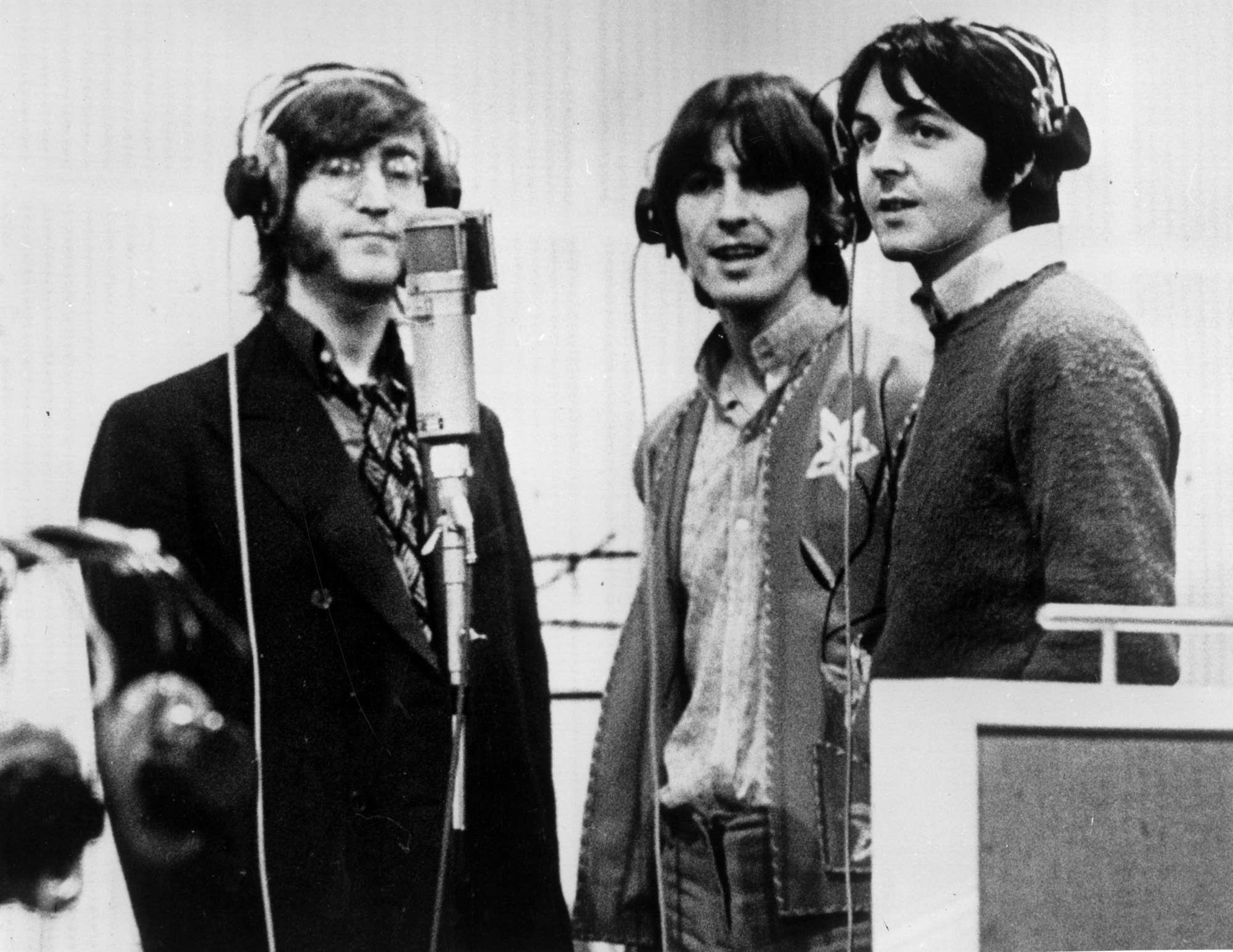
As the band released the successful A Doll's House, John Lennon, influenced by his wife, wanted the group to release a full experimental record with the outtakes and tracks of the sessions, similarly to the then-unreleased Revolution 9.
"Well, John was deeply into Yoko's influence, and persuaded us to make something... similar to Revolution 9. Actually we wanted to do something different, and we had those jams recorded in 1968, but we didn't want to go under that avant-garde rubbishness, so we moved to do a 'novelty record'. And thus, teaming up with Billy Preston, The Prairie Wallflowers were born!"
-Paul McCartney, 2013 
"Well, Paul had his idea to that documentary about 'how does Beatles produce their albums', and I hooked with them to help to record it. And one day John came to me wondering if I would like to join them to record a few more stuff to an 'untitled alternate project' to Get Back, and then told me to choose a new name."
-Billy Preston, 1995
The idea for Joe Prairie & The Prairie Wallflowers popped up after a reunion of the Beatles in George's Kinfauns, after a listening of the unreleased tapes of the 1968 sessions. The name for the group came from the song Los Paranoias. The concept of a Beatles' record under an alias seemed interesting and was approved by the manager Brian Epstein, who booked sessions for them in secrecy at the Trident Studios.

Paul picked the frontman's name, Joe Prairie, while John named himself as Stu Prairie as a tribute to his late friend and early member of The Beatles, Stuart Sutcliffe, Billy Preston chose Willy, George used Nelson and Ringo chose Leon.

The album was recorded over three days, then mixed by George Martin, packed to release with a shot of The Beatles' rooftop concert. Joe Prairie's name was first mentioned in an interview with Paul McCartney and John Lennon on BBC, announcing the new, non-Beatle album, with the premiere release of the single 'Come and Get It' two days later. Next, Brian clarified that the album was made with recordings dating since the sessions of 1968.

Joe Prairie & The Prairie Wallflowers  Back in Your Safely Beds
Joe Prairie & The Prairie Wallflowers - Back in Your Safely Beds (1969)
Genre: Jam band, rock and roll, psychedelic folk, experimental
Total: 41:32

Side A - 20:51
1. "Can You Take Me Back? (There You Are, Eddie)" (Joe Prairie) - 4:05
2. "Dig It" (Joe Prairie, Stu Prairie, Tom Prairie, Nelson Prairie, Leon Prairie) - 0:50
3. "Suzy Parker" (J. Prairie, S. Prairie, T. Prairie, N. Prairie, L. Prairie) - 2:00
4. "Wild Honey Pie" (J. Prairie) - 0:54
5. "What's The New Mary Jane" (S. Prairie) - 6:12
6. "(You're So Square) Baby I Don’t Care" (Jerry Leiber, Mike Stoller) - 0:42
7. "Maggie Mae" (traditional, arr. The Prairie Wallflowers) - 0:40
8. "St. Louis Blues/Heart of the Black Country" (J. Prairie/W. C. Handy) - 1:10
9. "You Know My Name (Look Up The Number)" (S. Prairie) - 4:21

Side B - 20:41
10. "Blue Moon/I Will" (Richard Rodgers, Lorenz Hart/J. Prairie) - 2:57
11. "Come and Get It" (J. Prairie) - 2:30
12. "Apple Jam" (J. Prairie, S. Prairie, T. Prairie, N. Prairie, L. Prairie) - 2:20
13. "Medley: Rip It Up/Shake, Rattle And Roll/Blue Suede Shoes" (Robert Blackwell, John Marascalco/Charles Calhoun/Carl Perkins) - 3:18
14. "Step Inside Love" (J. Prairie) - 1:34
15. "Los Paranoias" (J. Prairie) - 3:58
16. "Ain't She Sweet" (Jack Yellen, Milton Ager) - 2:08
17. "Mailman, Bring Me No More Blues" (Bill Katz, Ruth Roberts, Stanley Clayton) - 1:56

Back in Your Safely Beds is a studio album, parallel to the Get Back project, released by The Beatles plus Billy Preston under the pseudonym of Joe Prairie & The Prairie Wallflowers. The album is filled with studio jams and remaining content spanning from the sessions back from Umbrella, A Doll's House, and the upcoming Abbey Road and Get Back albums. The album was recorded by the band in secrecy, then mixed and produced by George Martin.

The album is comprised of several cover versions of rock and roll numbers, studio jams, and experimental compositions of the group. The album was revealed when Paul McCartney and John Lennon were interviewed, while a few days later, Apple/NEMS issued Come and Get It as the lead single for the album. Back in Your Safely Beds was received with a big interest and generally positive reviews by music critics, citing it as an impressive way to reuse discarded songs into a new work. The album peaked in number 3 in UK Albums Charts and reached number 7 in Billboard Top LP's.

Musicologist and author Ian MacDonald said that the pseudonym strategy to release more experimental music was very helpful, since if the band released the album under their own name it was going to be a critical failure similar to Magical Mystery Tour.

Beach Boy Carl Wilson mentioned Back in Your Safely Beds as a heavy influence on Beach Boys' Carl and the Passions. The same concept was revived on George Harrison's supergroup, The Traveling Wilburys, with Bob Dylan, Roy Orbison, Tom Petty, and Jeff Lynne. Forgotten for a while, the record was later re-evaluated by the fans and received a cult following status. John Lennon later referred to the album as one of his favorite records during The Beatles. The band would later revive the concept in 1976 as their last work before the hiatus, but shelved the album.


Author's comments:
The idea for Joe Prairie & The Prairie Wallflowers was loosely inspired by the Beatles' experimental albums in Strawberry Peppers and Something Creative, but I didn't want to... make another version of those albums (which are amazing, by the way). Then, the idea for the band emerged as a way to reutilize some of the unused material, like the cover numbers from The Beatles that were recorded during that period.
And, as I said, no more New Yardbirds, or any plot related to Led Zeppelin. Instead, however, there will be an alternative version of Atomic Rooster with the inclusion/fusion of Arthur Brown's Kingdom Come. The main issue is that Led Zeppelin and Renaissance had two very different styles to work with.

Sources:
Syd Barrett - Clowns and Jugglers:
  • Syd Barrett - The Madcap Laughs
  • Syd Barrett - Opel
  • Pink Floyd - The Early Years
Joe Prairie & the Prairie Wallflowers - Back in Your Safely Beds:
  • The Beatles - White Album (Deluxe Edition)
  • The Beatles - Let It Be
  • The Beatles - Anthology 2
  • The Beatles - The Black Album [bootleg]

Saturday, May 29, 2021

1968: Brand New Beginnings

Take a look inside

Greasy Asylum's debut album was expected to be released on December 1968. The lead single, a cover version of The Beatles' With a Little Help from My Friends, reached the top of UK Singles Charts and peaked number 68 on the Billboard Hot 100. The song featured the then-Yardbirds guitarist Jimmy Page and Procol Harum drummer B.J. Wilson. Backed by Marjorine, it was the first biggest hit of Greasy Asylum, while the upcoming album was being hyped as a potential groundbreaking record.

Greasy Asylum – Look Inside the Greasy Asylum
Greasy Asylum - Look Inside the Greasy Asylum (1968)¹
Genre: Psychedelic rock, blues rock, art rock
Total: 38:20

Side A - 18:51
1. "With a Little Help from My Friends" (John Lennon-Paul McCartney) - 5:12
2. "Indian Style" (Leon Russell, Marc Benno) - 3:46
3. "Change In Louise" (Joe Cocker, Chris Stainton) - 3:22
4. "Death of the Flowers" (Russell, Benno, Greg Dempsey) - 3:15
5. "Sandpaper Cadillac" (Cocker, Stainton) - 3:16

Side B - 19:29
6. "Medley: N.Y. Op./Land of Dog/Henri the Clown" (Cocker, Stainton, Russell, Benno) - 6:07
7. "Marjorine" (Cocker, Stainton) - 2:38
8. "Soul Food" (Bill Boatman, James Markham) - 2:10
9. "Something's Coming" (Cocker, Stainton) - 2:15
10. "The New Age of Lily" (Cocker, Stainton) - 2:15
11. "Thieves in the Choir" (Russell, Benno, Jerry Riopelle) - 4:04

The debut album of Greasy Asylum was produced by Denny Cordell, being released on 17 December 1968. Look Inside the Greasy Asylum was the fifth release of the Apple Records label, and one of the two records released by the group under that label. The album is full of original numbers by the members of the group, except for two cover numbers, With a Little Help from My Friends (by Joe Cocker), and Soul Food (by Leon Russell). It is the best-selling record of the group, followed by Mad Dogs & Englishmen and I Can Stand a Little Rain.

The Greasy Asylum's version of With a Little Help from My Friends was so successful that it became a classic song in their setlist, being included on Joe Cocker's solo tours later. The album peaked in number 10 on UK Album Charts and number 35 on Billboard. Besides the lead single, Death of Flowers was released as single in early 1970 but failed to chart. The album is commonly regarded as very influential in Blues, Soul music, and R&B. Jimi Hendrix listed Look Inside the Greasy Asylum as one of his all-time favorite records.
"I became interested on their sound when they released that single, and then I bought the record and the stuff inside was... mindblowing. [...] I met Joe Cocker at the Woodstock Festival, and we chatted a bit about his career, his group, and he was such a great person..."
-Jimi Hendrix, 1990 

Apples and Umbrellas

Apple Studios, at 3 Saville Row.

Before the trip for India, the band reunited with their manager to persuade him to establish a new company to give them more creative freedom. By reaching an agreement, Brian and The Beatles established the Apple/NEMS, and along with it, the new recording label, Apple Records. The company had a contract with EMI to the distribution of the songs and albums.
"The director's board always had a cordial relationship with Brian and Beatles. The establishment of Apple/NEMS would've been a big loss for EMI and Capitol if they let them just go, but offer the distribution of albums and singles was a big move by the label."
-Bob Spitz, The Beatles: The Biography
The Beatles recording 'Umbrella', 1968.

Following the return from Maharishi's course in India, and with a big quota of new material written, The Beatles gathered at the EMI Studios to once record a new album. Though arguments inside the group were increasing, mainly between George and Paul, Brian Epstein always had to appease the situation.
"George was emerging on his songwriting period, and wanted more space from Paul and John, and both were complaining about it. After the release of Umbrella, I reunited with the boys to determine the issue with the track listings. We've agreed that George could fit four tracks on the albums, three only if Ringo had something in his hands."
-Brian Epstein, 1972.
"Actually was funny in terms. During A Doll's House, John and Paul called me frequently and to try to give me their songs to suppress George's space. But Brian himself discovered that quite quickly and warned both about the problems that they would have later.
 -Ringo Starr, 2015.
In the same period, John Lennon's relationship with avant-garde artist Yoko Ono was flourishing. In May 1968, both recorded the Two Virgins album in one night. John's relation with Yoko would deteriorate his relationship with Cynthia. One time, John brought Yoko into a recording session, but she was dismissed after Brian wanting John to follow the policy regarding that wives and girlfriends couldn't attend the sessions. Still, Yoko was somewhere at the studios.

The band recorded Umbrella in a three-month-run. One of the songs, Ob-La-Di, Ob-La-Da involved several days of work, which annoyed George and John over Paul's perfectionism for the track, who continuously would work on the track. Both expressed vocally their dislike of the song, with George referencing it later on Savoy Truffle.

Despite Umbrella being finished, The Beatles still proceeded to go to the studios to record the remaining songs for the follow-up of the album. The album was announced in late July, to be released in September of the same year. The band released Savoy Truffle backed with Ringo's rendition of Johnny Mercer's Dream. The song's performance on charts was disappointing, peaking number 4 in Billboard Hot 100 and number 2 in UK Singles Charts.

The Beatles – Umbrella
The Beatles - Umbrella (1968)²
Genre: Rock, pop, folk-rock, blues, lo-fi
Total: 43:42

Side A - 21:08
1. "Glass Onion" (John Lennon-Paul McCartney) - 2:17
2. "O-Bla-Di, O-Bla-Da" (Lennon-McCartney) - 3:08
3. "The Continuing Story of Bungalow Bill" (Lennon-McCartney) - 3:14
4. "Birthday" (Lennon-McCartney) - 2:42
5. "Don't Pass Me By" (Richard Starkey) - 4:45
6. "Why Don't We Do It On the Road?" (Lennon-McCartney) - 1:41
7. "Only a Northern Song" (Harrison) - 3:24

Side B - 22:34
8. "Martha My Dear" (Lennon-McCartney) - 2:28
9. "I'm So Tired" (Lennon-McCartney) - 2:03
10. "Savoy Truffle" (George Harrison) - 2:54
11. "Yer Blues" (Lennon-McCartney) - 4:01
12. "Mother Nature's Son" (Lennon-McCartney) - 2:48
13. "Everybody's Got Something To Hide Except Me and My Monkey" (Lennon-McCartney) - 2:24
14. "Sexy Sadie" (Lennon-McCartney) - 3:15
15. "Honey Pie" (Lennon-McCartney) - 2:41

Umbrella, the ninth studio album by The Beatles, was released on 21 September 1968, produced by Paul McCartney and John Lennon, but credited to The Beatles. The name of the album was introduced by McCartney while the band was in India when he conceived a new record with the songs composed during that period. The album was recorded at the EMI Studios and at the recently inaugurated Apple Recording Studios. The sessions of the album were remarked by growing tensions by the members of the group.

Most of the lyrics of the album were written in India, except for Only a Northern Song, Birthday, Don't Pass Me By and Savoy Truffle. For the sessions of the album, The Beatles wished for full autonomy on production, while they kept George Martin as arranger for the record. With the differences growing between the Fab Four, particularly due to Paul's perfectionism, The Beatles avoided being involved in producing their albums until the 70's.

The performance of the album was disappointing to the band and bad for Apple Records' early reputation. Umbrella topped in the United Kingdom but peaked number 4 on Billboard. After the repercussion, manager Brian Epstein decided to bring George Martin back to the producer role, leaving The Beatles to record the songs. In later years, The Beatles expressed dissatisfaction with the record. Yer Blues was later released as John's solo single, being played at The Rolling Stones' Rock and Roll Circus. The album was target from Rolling Stone's controversial article in the following week: The Fall of the Giants. Both the releases of Wild Honey and Umbrella were dubbed as the truce between The Beatles and The Beach Boys.
"You can see by my face in the cover what I feel about the album. I mean, [Umbrella] has very few bad songs in general, but it was stressful and tiresome to produce, and we ended up unsatisfied with the final result. It was a goddamn inconsistent record, a result of all the sessions and our year. Probably the next thing to an 'annus horribilis' to all of us."
-John Lennon, 1976

Apples and oranges, an old woman with a casket...

Syd Barrett in April 1968, in front of a Hendrix poster.

Meanwhile, the former Rubber Band guitarist Syd Barrett was recording his first solo effort after two break-ups with his former bands. He and his backing band, formed by Vincent Crane, fellow drummer Steve Took, and The Deviants' bass player Paul Rudolph, recorded the album throughout February and April, being assisted by Norman Smith, who was in charge of produce the album. In January, Syd recorded Apples and Oranges, Scream Thy Last Scream and Jugband Blues. To Interstellar Overdrive, recorded previously during the sessions of The Piper at the Gates of Dawn, it was added overdubs to the song.

During the recording sessions, Syd decided to step back from drugs, realizing that it was influencing his decisions in the music business. His sister, Rosemary, helped him during the rehabilitation period while both lived in the same apartment in London. In the period, Syd decided to call the album: Rooftop in a Thunderstorm Row Missing the Point; a reference to a lost song from Pink Floyd times. After the sessions, teamed with Crazy World of Arthur Brown, Syd went to another tour in the United Kingdom, France, and the Netherlands.
"I remember using drugs a lot between '66 and '67, L.S.D., sugar cubes, but then I realized that it was harming me and people around me, and I needed to stop for a little while. I still smoked pot until these days occasionally, but not at the same levels of what I was doing at that time."
-Syd Barrett, 2004 
Blackhill Records released Apples and Oranges, backed by Pow R. Toc. H., as a promotional single for Syd's upcoming album. The song peaked in number 3 in Britain but fell out quickly, and reached number 25 on Billboard Hot 100, surprisingly hitting in the Western Coast of the United States. Despite being released without Syd's consent, he expressed happiness by the success of his debut single.

Syd Barrett – Rooftop in a Thunderstorm Row Missing the Point
Syd Barrett - Rooftop in a Thunderstorm Row Missing the Point (1968)³
Genre: Psychedelic rock, space rock, acid rock, psychedelic folk
Total: 43:35
All songs written by Syd Barrett, except when noted.

Side A - 21:39
1. "Vegetable Man" - 2:31
2. "Apples and Oranges" - 3:04
3. "In the Beechwoods" - 4:43
4. "Pow R. Toc H." (Syd Barrett, Vincent Crane, Paul Rudolph, Steve Took) - 4:26
5. "Scarecrow" - 2:11
6. "Scream Thy Last Scream" - 4:42

Side B - 21:56
7. "Interstellar Overdrive" (Barrett, Crane, Rudolph, Took) - 16:40
8. "The Gnome" - 2:13
9. "Jugband Blues" - 3:02

Rooftop in a Thunderstorm Row Missing the Point is the debut studio album by the British singer-songwriter Syd Barrett. The sessions for the album started immediately after the break-up of his band, Rubber Band. The album was released on 19 August 1968 by the Blackhill Records in the United Kingdom and distributed by Capitol in the United States. It was produced by Norman Smith, who produced Rubber Band's final album and was backed by The Deviants' Paul Rudolph, former Rubber Band drummer and friend Steve Took, and Crazy World of Arthur Brown keyboardist Vincent Crane.

Syd's album was successful at the time by reaching number 8 on UK Albums Charts and number 130 on Billboard, with its performance better than Bowie's debut album. The Gnome was released after Apples and Oranges, and it was backed by Pink Theme. The single became very popular among the youth, but eventually, it was noticed ambiguous interpretations of the song, such as allegories to psychedelic drugs to an ordinary fairy tale to children. Syd later commented that the song was based on J. R. R. Tolkien's fiction.

Despite the album being released in August 1968, Syd first played it entirely at the Hyde Park Festival in June, backed by his studio band, and featuring Pink Floyd members Richard Wright and David Gilmour. Besides the songs from Rooftop, Syd also played a set of songs from the Rubber Band years. He also toured in Europe and North America for his first time.

The record became a fan favorite in the following years, with most of the songs from the album being part of the regular set. The album is regarded as highly influential in the Neo-psychedelic and Indie scenes. Along with "Clowns and Jugglers" and the 1972 album, Syd cited the album as his favorite record by its effervescing authenticity and creative freedom at the time.
"The more I was becoming a successful musician, the stress of recording/releasing/touring was becoming intense. That thing started to happen when I was recording Clowns and Jugglers, when the label put me a deadline. That's why I did Have You Got It Yet?, y'know, the pressure that [Peter] Jenner was putting upon me was exhausting! And that's why I like my debut album, because I had time and creative freedom to do what I wanted."
-Syd Barrett, 1979

Flowers to a tyrannosaurus...

Marc Bolan, 1968.

As for Marc, a few things were already set to him to make a debut album. Quicker than Syd and Bowie, Marc grabbed The Flowers' Rick Wills and Willie Wilson founding Tyrannosaurus Rex, with Marc Bolan as the frontman. Tyrannosaurus Rex was, in fact, somewhat of a solo project of Bolan, since he was the major contributing force to the group while Rick and Wilson were just sort-of the backing band for him.

Blackhill hired Tony Visconti, who was appointed by Marc Bolan to produce his debut album under Tyrannosaurus Rex. For Bolan, the album's music represented a rejection of the electric guitar-driven music he'd been playing with his previous band, Rubber Band, and a protest to the suggestions that Bowie and Syd had given back during the sessions.

Throughout the first semester of 1968, Bolan, Wills and Wilson were confined in the Advision Studios recording two albums at once. "I had actually a lot of short songs. The longer ones I generally saved for the end, but most of them were in the two-minute range.", Marc Bolan. The first album was Beyond the Risin' Sun or the Beginning of Doves, while the second one was My People Were Fair and Had Sky in Their Hair... But Now They're Content to Wear Stars on Their Brows. The former was far more concentrated on the catalogue back from the pre-Rubber Band days, while the latter was pushed through new content and far more into the psychedelic folk scene.
"Beyond the Rising Sun [or the Beginning of Doves] was not a bad album, but it sure sounded like an audition or a demo album, haha! It clearly is a taste of what would come years after that 'mystical phase'."

 -Marc Bolan


Tyrannosaurus Rex - Beyond the Rising Sun or the Beginning of Doves
Tyrannosaurus Rex - Beyond the Rising Sun or the Beginning of Doves (1968)
Genres: Psychedelic folk, psychedelic rock, blues rock, mod
Total: 30:07
All songs written by Marc Bolan.

Side A - 14:29
1. "Jasper C. Debussy" - 2:11
2. "Observations" - 2:14
3. "Misty Mist" - 1:56
4. "Jasmine Forty-Nine" - 2:27
5. "Rings of Fortune" - 2:33
6. "Black and White Incident" - 1:46
7. "Cat Black" - 1:22

Side B - 15:38
8. "Beyond the Risin' Sun" - 2:18
9. "Lunacy's Back" - 2:17
10. "Pictures of Purple People" - 2:22
11. "One Inch Rock" - 2:16
12. "The Beginning of Doves" - 1:47
13. "Sally was an Angel" - 2:43
14. "Charlie" - 1:55

Beyond the Rising Sun or the Beginning of Doves is the debut album of the British rock band Tyrannosaurus Rex. It is the first album released by Marc Bolan after his departure from Rubber Band, and the first album from a member after Rubber Band. The album was produced by Tony Visconti and released on 13 April 1968 under Blackhill Records. The album merges some of Marc's older works involving rock and roll and mod influences and mystical psychedelia.

Marc's album was midly received by the press at the time, with mixed views, reaching number 24 at UK Album Charts and failing to chart in the US. Marc preferred to not release a single, even though Jasper C. Debussy was released, reaching number 30 on the UK Single Charts. The album cover was made by reusing a poster from earlier gigs with Tyrannosaurus Rex.

To the mainstream public at the time, the album passed virtually unnoticed, but it was warmly received by more Underground fans. In 1972, it was re-released separately, along with the double album with My People Were Fair and Prophets, Seers & Sages, reaching number 15 on the United Kingdom. The rock and roll influence, that would later return on Unicorn and future T. Rex records would be absent for the next two albums.

Notes:
[1] All songs are sourced from Joe Cocker's With a Little Help from My Friends and Leon Russell & Marc Benno's Look Inside the Asylum Choir.

[2] All songs are sourced from The Beatles' White Album, except for Only a Northern Song, from the Yellow Submarine soundtrack.

[3] All songs are sourced from Pink Floyd's The Piper at the Gates of Dawn, A Saucerful of Secrets, London '66-'67, and The Early Years (1965-1972).

[4] Tyrannosaurus Rex's debut album is exactly the same, except that Mustang Ford was swapped with Debora.

Author's addendum:
1) So basically, the Greasy Asylum have two frontmen, Joe Cocker and Leon Russell. Both represent the group on interviews, and on stage, Cocker and Russell are the only two voices singing beside the background singers... by now. Yeah, Greasy Asylum is rising quickly to the fame.

Wednesday, May 26, 2021

1967/1968: Forever and Ever

A magical and mysterous tour...

The Beatles filming Magical Mystery Tour.

Between the Sgt. Peppers the Transcendental Meditation, The Beatles initiated the project Magical Mystery Tour with Paul McCartney. Most of the filming occurred between 11 and 25 September 1967, while the soundtrack was conceived between the Sgt. Peppers sessions and 7 November 1967. The sessions have been characterised by some biographers as aimless and unfocused, with the band members overly indulging in sound experimentation.

The Beatles finished working on Magical Mystery Tour by November of that year, and decided to strenghten the ties with the Maharishi Mahesh Yogi. The band stood in Bangor for ten days, leaving Bangor and directly going to film the movie. Plans to take part on Maharishi's training course in Rishikesh were made to late October, however, at Epstein's urging, they postponed the trip until the new year to work on their Magical Mystery Tour film project.

With the end of the filming sessions, the soundtrack for Magical Mystery Tour was set to be released in 27 November in the United States (as a LP) and 8 December in the United Kingdom (as a double EP). The movie was premiered at BBC1 in 26 December 1967, ultimately becoming The Beatles' first critical failure and commercial flop, albeit the album was generally successful.

The Beatles – Magical Mystery Tour
The Beatles - Magical Mystery Tour (1967)
Genre: Psychedelic rock, art rock
Total: 34:47
All songs written by John Lennon & Paul McCartney, except when noted.
This is the LP version of Magical Mystery Tour, originally released in the United States.

Side A (film soundtrack) - 19:05
1. "Magical Mystery Tour" - 2:48
2. "The Fool on the Hill" - 2:59
3. "Flying" (Harrison, Lennon, McCartney, Richard Starkey) - 2:16
4. "Blue Jay Way" (Harrison) - 3:54
5. "Your Mother Should Know" - 2:33
6. "I Am the Walrus" - 4:35

Side B (singles) - 15:42
7. "Hello, Goodbye" - 3:24
8. "Being for the Benefit of Mr. Kite!" - 2:37
9. "When I'm Sixty-Four" - 2:37
10. "Baby You're a Richman" - 3:07
11. "All You Need Is Love" - 3:57

A premature end

David Bowie and Marc Bolan, a shot of Marc's TV show. An encounter that would only happen in 1977.

After a brief European tour to promote There is a Happy Land, David Bowie, Marc Bolan, Steve Took, and Syd Barrett returned to the studios to record Rubber Band's second album. Teaming up with guitarist Big Jim Sullivan, keyboardist Vincent Crane, and producer Norman Smith, the band already had songs enough to the album. It seemed a perfect scenario if the group simply didn't want to take the band into different directions. While Syd and Took wanted to bring the band in a step to an experimental direction, Bowie preferred to follow a baroque, progressive-esque way, similar to the debut album, and Bolan suggested to go into the psychedelic, folk-y way, resorting in more acoustic and tribal-sounding music, instead of feedbacks and reverberations of Syd and the lushed arrangements of Bowie.
"In the following years I stopped to think about that period, regretting so many things that I said, thinking how would have been different if we shared the same vision, but it was, and still sometimes is, really sad that we didn't follow with Rubber Band. But I'm really grateful for what the guys did with me, and how Rubber Band was a pretty interesting part of our history."
-David Bowie, 2001
"The thing is that, following the sessions, I didn't see neither Bowie, neither Bolan as partners anymore, and I presume that both of them neither. We just became a... group of friends who were desperately seeking for a way to dispatch the Rubber Band quickly. Coincidentally, we improved our relations after we dissolved the band *laughs*. It is kind of ironic though... since the album has experimental and baroque songs of each members, you know?"
-Syd Barrett, 2007
The sessions of The Piper at the Gates of Dawn, otherwise from the debut album, were exhausting for both members. The group ended up co-leading a short tour in the UK with the Crazy World of Arthur Brown, and later entering into an indefinite hiatus, with both members focusing on their solo careers, to an eventual end. The album was released in April, with lead single See Emily Play, a big hit in United Kingdom and France, and Love You 'till Tuesday, a minor hit in Britain, while a big hit in Italy.

In early 1968, Syd Barrett tried to negotiate a return to Pink Floyd Sound, being denied by the band, more because of his deteriorating relationship with Roger Waters. In February, Syd Barrett entered the studios with the same backing band from The Piper at the Gates of Dawn and began to record his debut solo album, provisionally entitled Just a Syd Barrett Album.

"Roger was still angry with Syd, and we already had David replacing him, and it worked fine. Roger then became kind of mad when he saw Syd crawling back to us, and as the leader behind-the-scenes he immediately denied it. Nick and I were quite uncomfortable due to after all that stuff that happened in less than a year before, and David... well, he was there. He didn't talk too much during the early years."

-Richard Wright, 2005
As for David Bowie, he started to record his debut album at the Record Plant Studios, in New York, with overdubs made at the Trident Studios, in London. Tony Visconti, producer who was producing with Tyrannosaurus Rex was recommended by Marc Bolan to help Bowie at the Trident. Tony indicated new people to work with, remaining only drummer Willie Wilson to record the drums for a few songs.

Rubber Band – The Piper at the Gates of Dawn
Rubber Band - The Piper at the Gates of Dawn (1968)
Genre: Psychedelic rock, psychedelic pop
Total: 41:12

Side A - 19:37
1. "Astronomy Domine" (Syd Barrett) - 4:12
2. "Hippy Gumbo" (Bolan) - 2:28
3. "Lucifer Sam" (Barrett) - 3:07
4. "Eastern Spell" (Bolan) - 2:46
5. "Chapter 24" (Barrett) - 3:42
6. "When I Live My Dream" (Bowie) - 3:22

Side B - 21:35
7. "The Perfumed Garden of Gulliver Smith" (Bolan) - 2:45
8. "Silly Boy Blue" (Bowie) - 4:36
9. "See Emily Play" (Barrett) - 2:53
10. "Silly Crazy Child" (Bolan) - 2:27
11. "Sell Me a Coat" (Bowie) - 2:58
12. "The Bike Song" (Barrett) - 3:21
13. "Please Mr. Gravedigger" (Bowie) - 2:35

Produced by Norman Smith, the second and final album of the British band Rubber Band was released on 12 April 1968. Recorded during an unstable period which resulted in the break-up of the group, The Piper at the Gates of Dawn was noted by the fairly better production than the debut album by Norman Smith, by the wide experimentation in some music, and by the pop ventures of the group. The lyrics are noted by the acid humor on some tracks, such as Please Mr. Gravedigger, and the mysticism on Chapter 24.

The album was better received than There is a Happy Land, providing two last performances of the group at John Peel Sessions, where both announced that the break-up was likely. Though, the singles See Emily Play and Sell Me a Coat were successful, with the first peaking in number 15 and the second in number 28 in the United Kingdom. The album reached number 4 in the UK Albums Charts and number 85 on Billboard Top LPs.

Piper at the Gates of Dawn is regarded as one of the most influential records in the UK Underground and in the Neo-psychedelic scene and remains as the most popular album of Rubber Band. The band would reunite for multiple times, such as in 1972, at the end of Ziggy Stardust tour (with noted abscence of Marc Bolan), in 1977 at Marc Bolan's TV show, in 1985 in Live Aid, 1996/98 in a reunion tour, and for the last time in 2012.

Prominent band, ambitious project

The Bee Gees in 1967.
L-R: Barry Gibb, Robin Gibb, Vince Melouney, Maurice Gibb, and Colin Petersen.

Noted by the press by their Beatles-esque sound, the Bee Gees were rising as a prominent 60's band filled with baroque and psychedelic sounds reminiscent of Beatles' Sgt. Pepper's, Beach Boys' Pet Sounds, and vocals influenced by Roy Orbison and Frankie Valli. Enjoying the success of their hit singles such as New York Mining Disaster 1941, To Love Somebody and Massachusetts, the band's frontman, Barry, along with his brother, Maurice, envisioned an ambitious project which was called 'an opera inside an album'. The intended album would be postponed by manager Robert Stigwood, who booked new sessions after the Christmas holiday for another album.

Though part of the members of the band didn't want to start the project too soon (Vince Melouney and Robin Gibb), the group ended up starting to record a big amount of songs besides the ones for the upcoming album. The unceasing disagreements between the members, mainly between Melouney and Barry occasioned on the only Bee Gees' track written by one besides the Gibb brothers, with Vince's Such a Shame, recorded for Marley Purt Drive.
"It was a really hard routine, Robert [Stigwood] was a pain in our back. Record something for Marley Purt Drive, then a tour in the UK, then another in Germany, record new things, then a TV performance back in England, it wasn't healthy, and then Barry comes with that Opera-concept for an album, it was really too much pressure."
 -Vince Melouney, 1973.
"Frequently Robin, Maurice and I met at my house to discuss about the songs that would fit for the album [City on the Black Sea]. Songs that were discarded, were recorded for Marley Purt Drive, so then I believe that the album is a bunch of leftovers from City on the Black Sea, though Robert wanted us to record some of the songs we left for the opera."
-Barry Gibb, 1996.
The last session of Marley Purt Drive is considered 25 June 1968, when the group finalized recording Jumbo and quickly proceeded into recording more tracks for another album, with the working name An American Opera. In between the sessions, the Bee Gees toured in the United Kingdom and West Germany performing the songs from Marley Purt Drive, Horizontal, Bee Gees' 1st, and a set of covers.

Eat up, eat up honey


Beach Boys, 1968 sans Brian.

Once finishing Smile, the band already started to record the follow-up, with the working name Smiley Smile. In a month, the group recorded only four short songs at Brian Wilson's home studio. Some of the tapes recorded were later recalled as The Bedroom Tapes, released in future boxsets. At the same time, the group was recording the sequel, they were worried about the psychological conditions of Brian Wilson in his performance at the studio and/or at the concerts.
"We didn't have done pretty much anything but recorded four short songs at that time, and also we were in a hurry to perform at the Monterrey Pop Festival, and then Hawaii. After those sessions at Wally Heider, we reassured to make a standard studio album, as a normal band, like before 'Pet Sounds' or '[The] Beach Boys' Today!'".
-Mike Love, 1985.
"Technically, Mike and I took the lead role on Wild Honey, that's why the album has a wide R&B influence, a different style compared to Smile, Pet Sounds, and even 20/20. We wanted to step back, because the last album was somewhat too much perfectionism of Brian. But still the work had a massive influence of Brian's arrangements."
-Carl Wilson, 1981.
Moreover, Brian Wilson was becoming tired of produce to the Beach Boys, requesting to Carl and Dennis to help in the process. In a break of the sessions, the Beach Boys also joined the course of Transcendental Meditation of the Maharishi, which influenced the tracks recorded after February. Al Jardine recalls that after Maharishi's course, the behavior of the group, and even Brian Wilson, had a significant improvement. Mike Love returned from his retreat a few days after the band, and the band started to record a few remaining songs.
"Then I noticed that... the label [Brother Records] wasn't going well too. We had a distribution contract with Capitol, but we were accumulating debt, sustaining the label without any notion of business. So we needed to call for help from somebody."
-Carl Wilson, 1981.
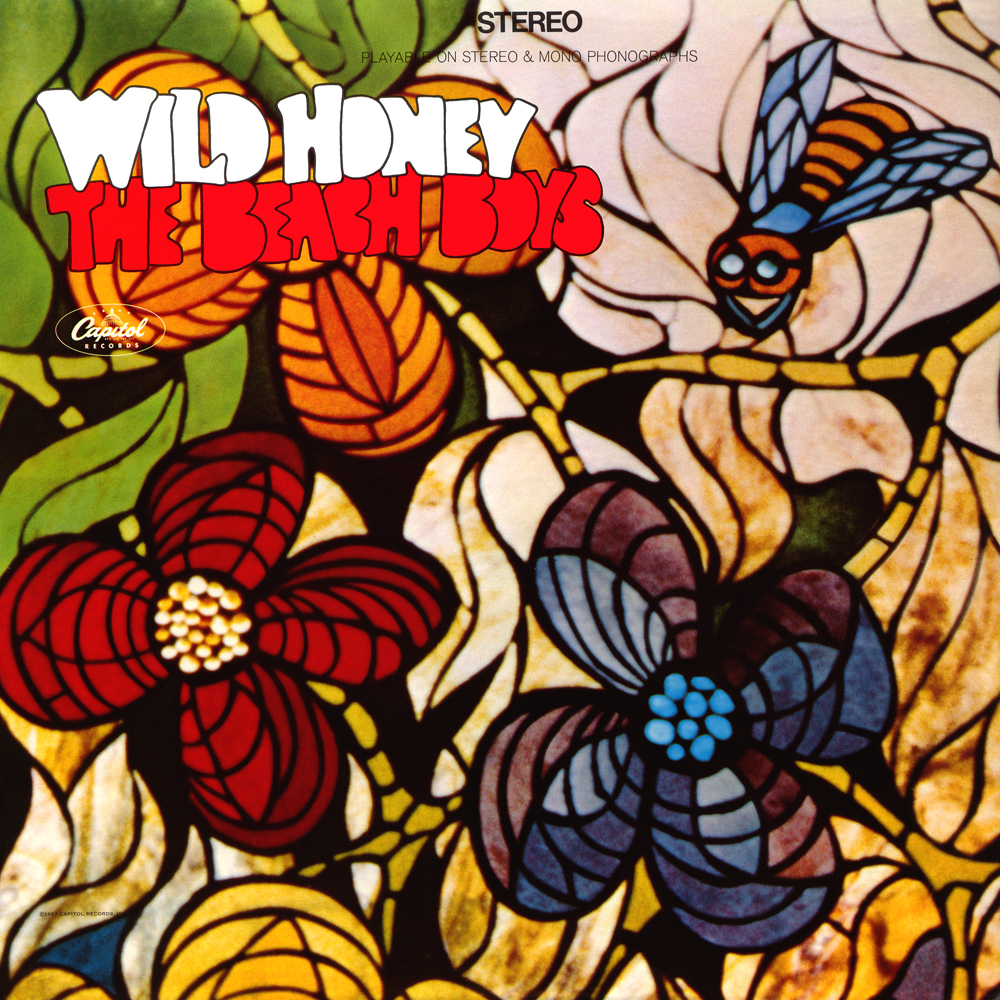
The Beach Boys – Wild Honey
The Beach Boys - Wild Honey (1968)²
Genre: Psychedelic pop, blue-eyed soul, R&B, lo-fi, bedroom pop
Total: 63:34

Side A - 15:21
1. "Meant for You" (Brian Wilson, Mike Love) - 1:50
2. "I Was Made to Love Her" (Henry Cosby, Sylvia Moy, Lula Mae Hardaway, Stevie Wonder) - 2:05
3. "You're With Me Tonight" (B. Wilson) - 2:17
4. "Friends" (B. Wilson, Carl Wilson, Dennis Wilson, Al Jardine) - 2:32
5. "Aren't You Glad" (B. Wilson, Love) - 2:16
6. "Rock and Roll Woman" (Stephen Stills) - 2:19
7. "Little Bird" (D. Wilson, Steve Kalinich) - 2:02

Side B - 15:47
8. "Darlin' (Thinkin' 'Bout You Baby)" (B. Wilson, Love) - 2:12³
9. "Transcendental Meditation" (B. Wilson, Love, Jardine) - 1:51
10. "How She Boogalooed It" (Love, Bruce Johnston, Jardine, Wilson) - 1:56
11. "Gettin' Hungry" (B. Wilson, Love) - 2:27
12. "A Thing or Two" (B. Wilson, Love) - 2:40
13. "Be Here in the Mornin'" (B. Wilson, C. Wilson, Love, Jardine) - 2:17
14. "Passing By" (B. Wilson) - 2:24

Side C - 15:54
15. "Wild Honey" (B. Wilson, Love) - 2:37
16. "Here Comes the Night" (B. Wilson, Love) - 2:41
17. "I'd Love Just Once to See You" (B. Wilson, Love) - 1:48
18. "When a Man Needs a Woman" (B. Wilson, D. Wilson, C. Wilson, Jardine, Steve Korthof, Jon Parks) - 2:07
19. "Lonely Days" (B. Wilson, Love) - 1:45
20. "Anna Lee, the Healer" (B. Wilson, Love) - 1:51
21. "Busy Doin' Nothin'" (B. Wilson) - 3:05

Side D - 16:32
22. "Diamond Head" (Al Vescovo, Lyle Ritz, Jim Ackley, B. Wilson) - 3:39
23. "My Little Red Book" (Burt Bacharach, Hal David) - 2:48
24. "Let the Wind Blow" (B. Wilson, Love) - 2:19
25. "Be Still" (D. Wilson, Kalinich) - 1:24
26. "Country Air" (B. Wilson, Love) - 2:20
27. Their Hearts Were Full Of Spring" (Bobby Group) - 2:33
28. "Wake the World" (B. Wilson) - 1:29

Wild Honey is the thirteenth studio album of The Beach Boys. The album was produced by Brian and Carl Wilson and was the first studio release under the Brother Records label, distributed by Capitol. It was released on 24 June 1968. The album was recorded as an attempt to 'redefine Beach Boys as a democratic band'. Although numerous compositions by Brian Wilson, the album is noted by the significant contribution of the members of the group in the lyrics, and by the Wilson Brothers and Mike Love leadership, since Brian was temporarily away from his functions.

The album was firstly received with mixed to negative reviews by the critics but ended up well-received by the fans and public in general. It was observed a different style since the previous album, by bringing R&B and Soul influences to the album, mixed with general psychedelia similar to the albums which precede Smile and Pet Sounds, named as "exquisite, unorthodox mainstream pop music". The lead single, Darlin', has shown that the popularity of the band was slightly increasing since the stylistic change, hitting number 5 on Billboard Hot 100. Wild Honey topped the UK Album Charts and reached number 7.

Regarded as one of the prettiest Beach Boys albums, Wild Honey is recalled as a step back of Brian Wilson's ambitiousness merging into an oddly satisfying, low-budget record, being sometimes considered even better than Smile. It is considered one of the most influential records on Indie and Lo-fi music.

Notes:
[1] Tracks sourced from Pink Floyd's The Piper at the Gates of Dawn and David Bowie's self-titled debut album.

[2] Tracks sourced from Wild Honey, Smiley Smile, Friends, and Wake the World: The Friends sessions. Meant for You is an alternate mix including the session intro.

[3]  Thinkin' 'Bout You Baby is the original name of Darlin'.

Author's addendum:
Yeah, ladies and gentlemen, the first break-up of a group. Although were friends, Syd and Bowie couldn't reach an agreement to stay as a competent duo, needing to put into an indefinite hiatus.
And here is the first not-so-common band in alternate histories, Bee Gees! It would be an interesting plot to see what if Robin Gibb didn't briefly leave the band, and what if the Bee Gees' Odessa would've fulfilled its proposal. I've done a little plot with Bee Gees in my other timeline, Projection, but this time I want to work further into a new, and prolonged plot.
And for The Beatles and Beach Boys, I wanted to give roles reversed in a way... with Beach Boys releasing a double album in 1968 instead of Wild Honey and Friends, and set The Beatles to release two albums instead of the White Album.

Monday, May 24, 2021

1967: Psychedelic Boom

Considered by many as the year of the boom of Psychedelic music, in 1967, Blackhill Enterprises saw many of their artists debuting in the music industry. Considered the peak of the 60's Counterculture, Summer of Love occurred that year. Throughout the year, Blackhill signed with the psychedelic band Tomorrow, garage rock band The Deviants and especially, the psychedelic band Pretty Things.
"It was insane to see many underground artists moving to Blackhill when in the previous year was, like, only Pink Floyd and Soft Machine. [Peter] Jenner and [Andrew] King did an impressive job by signing with a lot of groups."
-John Peel, 1994

Taking Four to Know

Promotional photo of Rubber Band, 1967. (L-R: Steve Took, David Bowie, Marc Bolan, Syd Barrett)

For Rubber Band, the success of Arnold Layne and Rubber Band's Theme reflected into their managers, who saw the group as potential golden-egg layers. The band produced the songs during the recording sessions of their debut album, There Is a Happy Land.

For the album, the band had Rick Wills and Willie Wilson, then from the Flowers backing them, and keyboardists Richard Wright, who was invited by Syd to help eventually, and Vincent Crane, who was recruited from the gigs in the British Underground. Mike Vernon was guaranteed to help the band to produce the album. Syd and Bowie recorded the album from 14 January to 25 April 1967, being released two months later.
"[...] I invited Rick because we still talked since that day when I left Pink Floyd and we had a cordial friendship. Vernon offered us other people, but Rick was quite fun to work with."
"When I still was in Pink Floyd, we recorded a session with our tunes, but we actually never released it until 2015, when Gilmour and I wanted to do it. I had other couple of new songs written, but I can say that about a half of my songs on There Is a Happy Land were written before 1966."
-Syd Barrett, 2018 (A Breath of Fresh Air - The Music Times)
The duo got old songs to record them, with Syd bringing old songs such as Lucy Leave and Candy and a Currant Bun, while Bowie brought his singles which failed to another opportunity, like Baby Loves That Way and You've Got a Habit of Leaving, recorded with his previous bands as Lower Third and The Buzz, while Marc Bolan brought his set of songs that haven't been recorded as demos. Steve Took was the only member that had any songs.
"I've seen a lot of potential coming in those songs, but it wasn't at the right time, y'know, and I felt that re-recording them would make'em better known. I also had a few new songs, as Syd had, because Jenner and King wanted a new set of music to perform to the public, so we shown a few new tracks."
-David Bowie, 2003
The recording sessions finished with the last takes and overdubs to the title track, There Is a Happy Land. Four days later, the group, backed by Vincent Crane (now a member of the Crazy World of Arthur Brown) and the Flowers, would present themselves at the 14 Hour Technicolor Dream, performing the entire album plus the then-unreleased Interstellar Overdrive (without David Bowie), and unreleased songs of the next album, The Piper at the Gates of Dawn.

Rubber Band – There is a Happy Land
Rubber Band - There is a Happy Land (1967)
Genre: Psychedelic pop, acid rock, mod, novelty, proto-punk
Total: 39:53

Side A - 20:28
1. "Lucy Leave" (Syd Barrett) - 2:53
2. "You've Got the Power" (Marc Bolan) - 2:35
3. "The London Boys" (David Bowie) - 3:20
4. "Matilda Mother" (Barrett) - 3:58
5. "You've Got a Habit of Leaving" (Bowie) - 2:31
6. "Desdemona" (Bolan) - 2:25
7. "Snowing" (Barrett) - 2:46

Side B - 19:25
8. "There is a Happy Land" (Bowie) - 3:11
9. "Mustang Ford (Go Go Girl)" (Bolan) - 2:37
10. "Let's Roll Another One (Candy and a Currant Bun)" (Barrett) - 2:45
11. "Rubber Band's Theme" (Bowie) - 2:17
12. "Midsummer Night's Scene" (Bolan) - 2:35
13. "Baby Loves That Way" (Bowie) - 3:03
14. "Arnold Layne" (Barrett) - 2:57

Released on 25 June 1967 and issued in both mono and stereo sounds, Rubber Band's debut album, There is a Happy Land, was received with mixed to positive critics. The characteristics of the album flirted with/merged Psychedelic music, folk tunes, blues sets and vaudeville into, mostly, novelty songs. Entirely written by Syd Barrett, Marc Bolan and David Bowie, the album is remembered by their unusual themes for the time, such as adultery, transvestism, explicit lyrics, which some critics harshed the content of the album.

The album was produced by Mike Vernon, with Syd Barrett playing the lead guitar, David Bowie playing the acoustic guitar, backed by The Flowers, composed by the former members of Jokers' Wild, the bass player Rick Wills, and drummer Willie Wilson, and featured the participation of Pink Floyd keyboardist Richard Wright.

There is a Happy Land had two songs released as singles before the album, the double A-side Arnold Layne and Rubber Band's Theme, backed by Candy and a Currant Bun. Both songs on A-side were successful. After the release, Bolan's Desdemona was released as single, being initially banned, but later was unbanned after the explicit verse was altered.

The album reached number 6 in UK Album Charts and number 126 in Billboard 200. In the following years, the duo expressed favorable opinions about the album, as did the members of Pink Floyd. John Lennon's opinion on the album was favorable, regarding it as the best thing that came out from 1967. There is a Happy Land was very well-received by the public, mostly by the UK Underground, and in later years, it outstands as one of the records of the Summer of Love.
"After the sessions of A Coeur Joie, Michael [Magne] came to me and Nick and said commented how There is a Happy Land, mostly Arnold Layne, Desdemona and Rubber Band were big inspirations to write the soundtrack for the film. We shared that Syd was our friend and Rick contributed for the album."
-David Gilmour, 2015
Still, the Rubber Band didn't stop going to the studios. A week after the Games for May concert, both started to record their second album with the working name, Astronomy Dominé, working in the scheme of touring and recording the album. The band also began to tour in France, Netherlands, Belgium, Sweden, and Denmark.

Pink Floyd in 1967, before a BBC Session.

And the Pink Floyd saw the surprising success of their former frontman, so then Roger Waters demanded to record Pink Floyd's debut album. Norman Smith was hired as Pink Floyd's new producer, mentored by engineer Pete Bown.

During the sessions, musician Michael Magne approached the band to record two songs in the soundtrack for the upcoming film, A Coeur Joie. Obliged to stay at the EMI Studios, Magne and the band reached a deal, with Rick needing to record the songs with the Pink Floyd . The band recorded two Magne's compositions, I Must Tell You Why and Do You Want to Marry Me?. Later asked, Magne agreed to let the band to feature the songs in their debut album.

In the same week, Pink Floyd recorded two jams, both entitled Nick's Boogie and Reactioning, the first one credited to the entire band, and the second to the entire band plus Syd (since the group performed it with him before). The last song to be recorded was Rick's Remember a Day, when the There is a Happy Land sessions ended, with Norman Smith playing drums, since Nick couldn't play the right part. The name, Projection, was suggested by Syd, after a private listening with Gilmour and Wright.
"The sessions of Projection were really different from There is a Happy Land, it looked like an alternate universe, or something. Whilst the time I passed with Syd and Bowie remained happy and mellowed, the sessions with Pink Floyd were... a bit cold, y'know? Certainly Roger was competitive, and with Syd, the man who dared to leave the band, surely it wouldn't be so different." 
-Richard Wright, 2001 (Wearing the Inside Out: Stories Inside the Pink Floyd)
"I never broke my ties with the guys [members of Pink Floyd]. Me and Roger we technically avoided each other since that day. We just started to talk with each other again... two years later, I guess. Even I suggested to them the Projection name, it surely combined with the amazing album that was."
-Syd Barrett, 2007 
Although Pink Floyd finished the sessions in the first week of June, they've performed the album in its entirety at the 14 Hour Technicolor Dream and Games For May. In the first, the band co-headlined with Rubber Band, performing at the festival around 5AM after a concert in the Netherlands on the same night. In the latter, both bands performed the albums, with Pink Floyd featuring Syd Barrett and without Roger, performing Reactioning and Interstellar Overdrive. The concert was known by both bands being banned from the Queen Elizabeth Hall and the steal of the mixer, the Azimuth Co-ordinator.

Blackhill Enterprises released I Must Tell You Why b/w Nick's Boogie, peaking in number 10 in UK Singles Charts, and being Pink Floyd's debut and first hit in France. One month after the release, Pink Floyd decided to release Remember a Day b/w Take Up Thy Stethoscope and Walk. Remember a Day peaked in number 4 in Britain, while the backing single failed to chart.

Pink Floyd – Projection
Pink Floyd - Projection (1967)
Genre: Psychedelic rock, freakbeat, experimental
Total: 40:39

Side A  - 21:32
1. "Remember a Day" (Richard Wright) - 4:33¹
2. "Walk With Me Sydney" (Roger Waters) - 3:11²
3. "I Must Tell You Why" (Michael Magne, David Gilmour) - 2:36³
4. "Take Up Thy Stethoscope and Walk" (Waters) - 3:054
5. "Set the Controls for the Heart of the Sun" (Waters) - 5:27¹
6. "Do You Want To Marry Me?" (Magne, Gilmour) - 2:40³

Side B - 19:07
7. "Nick's Boogie" (Waters, Wright, Gilmour, Nick Mason) - 11:49²
8. "Reactioning" (Waters, Wright, Gilmour, Mason) - 7:18²

Pink Floyd's debut album, named Projection, was released on 4 August 1967 in the United Kingdom by EMI Records. The album had a controversy when Tower Records, responsible to distribute the album in the US, released the first pressings as an Extended play, omitting the entire second side. Fulfilling the contract with subsidiary Tower, the distribution in the US was briefly interrupted until the creation of Blackhill Records and signing with the main label, Capitol, when the albums started to be released with Side B. The extended play pressings became a rare item in the following years.

The album was promoted by Syd Barrett, having mixed opinions about the wide different sound from Rubber Band's There is a Happy Land. Two of the songs were featured in Serge Bourguignon's Two Weeks in September (À Coeur Joie), credited to guitarist David Gilmour and composed Michael Magne. Highlighted songs were Remember a Day, released as single, and Set the Controls for the Heart of the Sun, and the Side B on its entirety. The lyrics verge between being sick, love and nostalgia, while Side B are two experimental instrumentals.

Produced by Beatles' engineer Norman Smith, Projection peaked in number 9 in UK Album Charts and number 177 in US Billboard 200. David Gilmour played the lead guitar, Roger Waters was the bass player, Richard Wright played the keyboards, and Nick Mason played the drums (except Remember a Day).

In contemporary opinions, interviewer Hans Keller blamed the album for being too loud, and Syd Barrett expressed his passion for the album. In later opinions, Iggy Pop said the album was highly influential on The Stooges, while Nirvana's Kurt Cobain affirmed that Projection is one of his favorite albums. David Gilmour and Roger Waters later expressed their dissatisfaction with Projection, contrasting with the opinions of Richard Wright and Nick Mason.

Author's addendum:
And there are the first debut albums! Syd, Bolan and Bowie, as a group, manages to rise into an early fame in Britain and throughout Europe, while Pink Floyd still tries to carve their path to success in Europe (for a while in the United Kingdom and France). In the next part, there'll be the plots of Soft Machine, Beatles and Beach Boys.

Track sources:
Rubber Band - There is a Happy Land:
[1] Pink Floyd - The Early Years: Cambridge Sta/tion
[2] Pink Floyd - The Piper at the Gates of Dawn
[3] David Bowie - Early On (1964-1966)
[4] David Bowie - David Bowie (1967)

Pink Floyd - Projection:
[1] Pink Floyd - A Saucerful of Secrets
[2] Pink Floyd - The Early Years: Cambridge Sta/tion
[3] Michel Magne ‎- Bande Originale Du Film "A Cœur Joie"
[4] Pink Floyd - The Piper at the Gates of Dawn